
Excavator Bucket Teeth, Pins & Wear Parts
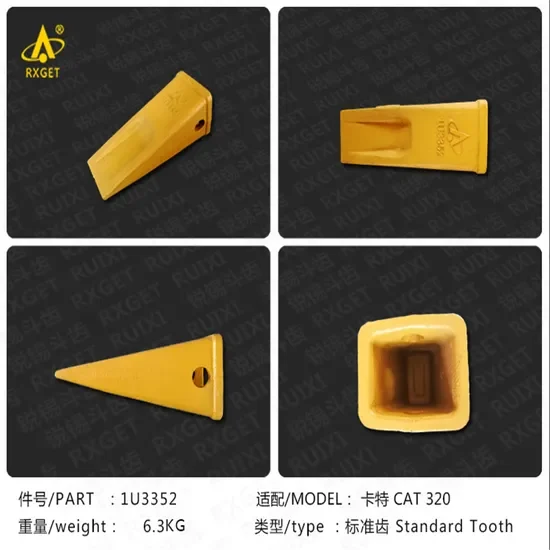
1U3352 J350 Bucket Tooth — 8E6358 Pin / 8E6359 Retainer
6.2 kg cast long tooth for the J350 side-pin system; teeth-only, retaining sets and adapter orders.
1U3352 · J350
Excavator Bucket Teeth, Pins & Wear Parts
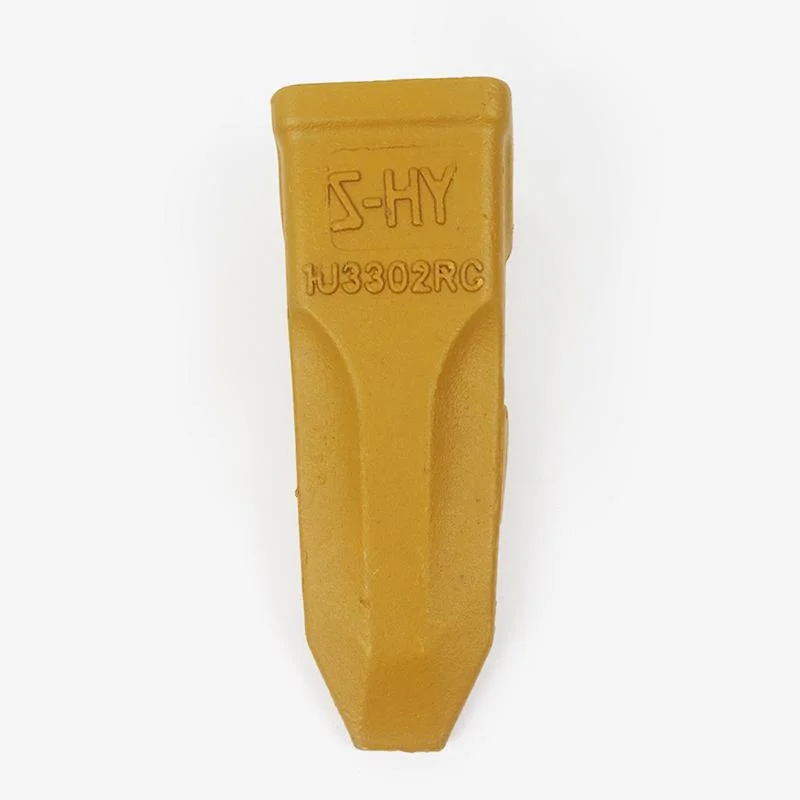
1U3302 is the standard long tooth for a J300 adapter. Its conventional retention uses a 9J2308 pin and an 8E6259 retainer. It serves digging and loading buckets with the J300 nose system. A bucket’s installed adapter identifies the tooth size; the excavator’s operating weight does not identify the adapter by itself.
| Model / part number | 1U3302 / J300 |
|---|---|
| Tooth number | 1U3302 |
| Tooth system | J300 |
| Shape | Standard long |
| Retention | Horizontal side pin |
| Standard pin | 9J2308 |
| Standard retainer | 8E6259 |
| Heavy-duty pin option | 132-4766 |
| Heavy-duty spiral lock option | 149-5733 |
| Sales unit | Tooth / tooth-and-retaining set |
The tooth point, retaining pin and lock are individually replaceable. The standard combination uses 1U3302 / 9J2308 / 8E6259. The heavy-duty pin and spiral lock are another combination, so the lock choice belongs on the order.
| Function | Standard combination | Heavy-duty retention choice |
|---|---|---|
| Digging point | 1U3302 | 1U3302 |
| Retaining pin | 9J2308 | 132-4766 |
| Retainer / lock | 8E6259 | 149-5733 |
The long point gives a projecting cutting tip for ordinary earth digging and loading. Twin-tiger and rock forms change penetration shape and wear distribution while keeping their specified tooth system. Order the intended profile alongside the J300 identity rather than mixing shapes under a single part number.
A bucket with four tooth positions needs four retaining sets for a complete point replacement. Workshop spares and dealer stock add quantities beyond the installed set. Use separate quantity columns for teeth and retention if pins are being reused.
The 1U3352 entry belongs to J350 and uses 8E6358 / 8E6359 retaining parts. It does not turn a J300 adapter into a J350 nose.
The 1U3302 point is the same in both J300 combinations; only the retaining parts change. The standard pair is the 9J2308 pin with the 8E6259 retainer. The heavy-duty choice is the 132-4766 pin with the 149-5733 spiral lock. Deciding between them is about how hard the bucket works and how often teeth are being lost.
| Working pattern | Suggested starting point | Reason |
|---|---|---|
| General digging and truck loading in earth | Standard 9J2308 / 8E6259 | Normal loads; quick changes and widely stocked parts |
| Mixed ground with occasional rock | Standard, with new retainers at every change | Most tooth losses come from tired retainers, not from the pin type |
| Repeated tooth losses on a sound adapter | Consider heavy-duty 132-4766 / 149-5733 | Higher retention where impact and vibration loosen the standard pair |
| Shot rock, ripping or demolition rubble | Consider heavy-duty, with a rock profile point | High impact and side loading on the teeth |
| Tooth losses on a worn adapter | Repair the adapter first | No retention choice cures a tooth rocking on a worn nose |
Keep each combination complete. A 132-4766 pin belongs with a 149-5733 lock, and a 9J2308 with an 8E6259; mixing parts from the two combinations leaves a connection that is neither standard nor heavy-duty. If a bucket changes over, record it, so the next order does not revert to the old parts by habit.
J300 and J350 teeth look alike in photos, and both use a horizontal side pin. They are different sizes with different pins and retainers, so a wrong guess costs a full set. Confirm the system on the bucket before ordering.
If the bucket turns out to carry J350 adapters, the 1U3352 J350 point with 8E6358 / 8E6359 retaining set is the matching order. Buckets that have been rebuilt can even carry a mix, so check every position on older buckets rather than just one.
The 1U3302 is a standard long point and suits most earthworks. Other J300 profiles exist for particular materials; they keep the J300 nose and retention, so the decision is about penetration against wear life.
| Material | Point to consider | What to watch |
|---|---|---|
| Topsoil, loam and moist clay | Standard long 1U3302 | Wear is moderate; change before the tip turns blunt |
| Sand and gravel loading | Standard long or an abrasion profile | Fast underside wear; check more often |
| Hard or frozen ground | Tiger or twin-tiger point | Better penetration but shorter life |
| Trench work with a square floor | Twin tiger on the corners, standard across the lip | Corners wear first and need separate counts |
| Shot rock and rubble | Rock profile with heavy-duty retention | Impact damage to tips and adapters |
Order any alternative profile as its own line beside the 1U3302, with the position on the bucket it is meant for. That keeps the next reorder from defaulting every position to a single shape.
Pins that have been in place for a full tooth life are often packed with fines and rust. Forcing them carelessly is how chips and broken punches happen. Follow the tooth system instructions and work safely.
A pin that comes out bent or grooved should not go back in. Fit the new tooth with a new retainer, and a new pin from the same combination when the old one is marked.
Tooth life varies widely with material, operator and digging angle, so the useful figure is the life you measure on your own machine. Log the hour-meter reading each time a set is changed and the stock plan follows.
| Step | Example figure | How it is used |
|---|---|---|
| Tooth positions on the bucket | 5 | One 1U3302, one pin and one retainer per position |
| Measured life of a set in this material | 250 hours | From your own change log |
| Machine hours per week | 40 hours | From the hour meter or timesheets |
| Weeks per set | About 6 | 250 ÷ 40 |
| Sets per quarter (13 weeks) | 2 to 3 | Round up for safety |
| Quarterly order | 15 teeth, 15 retainers, 10–15 pins | Pins may be reused when straight and unmarked |
Corner positions often need replacing between full changes, so add two or three extra teeth to the figure. Re-measure set life when the machine moves to a different job; a quarry face and a housing site give very different numbers.
A store that holds both J300 and J350 parts needs clear separation, because the parts look similar on a shelf. A few simple rules prevent the wrong tooth or pin reaching the bucket.
The same labelling makes dealer replenishment straightforward: each bin corresponds to one order line, with the J300 and J350 systems on separate lines as explained in the bucket teeth system overview.
Most tooth changes happen on site, away from the workshop. A small kit kept in the machine or service vehicle means a lost or broken point is a half-hour stop instead of a lost shift.
Restock the kit as soon as it is used. The parts in it should match the system on the bucket the machine is currently running.
A quick goods-in check catches mixed systems and miscounts before the parts reach the shelf or a bucket on a remote site.
Report any shortfall or mismatch with the order reference and photos of the labels; the attachment and order support page covers parts and order questions.
Teeth are the cheapest part of the bucket’s digging end. If a new set of 1U3302 points does not restore digging performance, look further back along the bucket.
A lip rebuild is also the moment to decide whether to stay on J300 or move to another system. Staying on J300 keeps existing stock useful; changing means clearing the shelves of old parts. When the bucket is past repair, compare replacements in the excavator bucket range and note the tooth system the new bucket carries.
| Product | System | Shape | Order lines |
|---|---|---|---|
| 1U3352 / J350 | J350 | Long | Tooth + matching pin and retainer |
| 1U3302 / J300 | J300 | Long | Tooth + matching pin and retainer |
9J2308 is the standard pin and 8E6259 is the standard retainer. One tooth position uses one of each.
The J300 long-tooth combination also has a 132-4766 heavy-duty pin and 149-5733 spiral lock option. Order the pin and lock as the matching combination.
The fitted bucket can have a different nose system or a replacement lip. Read the adapter or tooth identity and the retaining arrangement; a machine model alone does not define the bucket tooth system.
Yes. List 1U3302 with its J300 retaining quantities and 1U3352 with its J350 retaining quantities as separate packed lines.
Keep the combinations whole. The page lists 9J2308 with 8E6259 as the standard pair and 132-4766 with the 149-5733 spiral lock as the heavy-duty pair. Mixing a pin from one with a lock from the other gives a connection that was not designed as a set, and it may not lock reliably. Order both parts of the chosen combination together.
No. The 1U3302 is the standard long J300 point for general digging and loading. Rock profiles in the J300 system have more material at the tip and a different shape to resist impact. In mixed ground with occasional rock the long point is often enough; in shot rock or rubble a rock profile usually lasts longer.
Change it when the tip has worn back and gone blunt, and before wear approaches the end of the adapter nose inside the pocket. A blunt tooth makes the excavator work harder and slows cycles. If the pocket walls are worn thin or the tooth has started to rock, it is overdue and the adapter should be checked.
The usual causes are a worn or reused retainer, a pin from the wrong combination, or an adapter nose worn enough that the tooth moves and works the pin loose. Fit a new 8E6259 retainer with each standard change, confirm the pin is a 9J2308, and check the nose. If the adapter is sound and losses continue, consider the heavy-duty combination.
Not by itself. The 1U3302 reference comes from Caterpillar numbering and is used across the aftermarket to describe the J300 long tooth fit, which is why people search for cat 1u3302. What it describes is the nose and pin fit, not the manufacturer; the casting and retention details for this tooth are in the specification table above.
Only if the bucket has J300 adapters. Mini excavator buckets normally carry smaller systems, and fitting a larger tooth system would mean replacing the adapters and often the lip. Identify the adapter on the mini excavator bucket and order teeth for that system.
Base it on your own change log. Hold at least one full bucket set plus two or three extra teeth for corner positions, with retainers for every tooth and some spare pins. For machines on abrasive work, multiply by the number of changes expected before the next delivery.
Use the fitting method and tools given in the instructions for the 132-4766 pin and 149-5733 spiral lock; the sequence is not the same as for the standard pair. Whatever the method, the lock must be fully engaged. Check every position by hand after fitting, and again after the first few hours of digging.
6.2 kg cast long tooth for the J350 side-pin system; teeth-only, retaining sets and adapter orders.
Send your machine model, required quantity and destination. Add installation items, wear parts and service quantities to the same inquiry.