
01
On-Site Concrete Recycling & Roadstone Processing
Plan breaking, crushing, screening and material reuse around the excavator and the final aggregate.
Find equipment for this work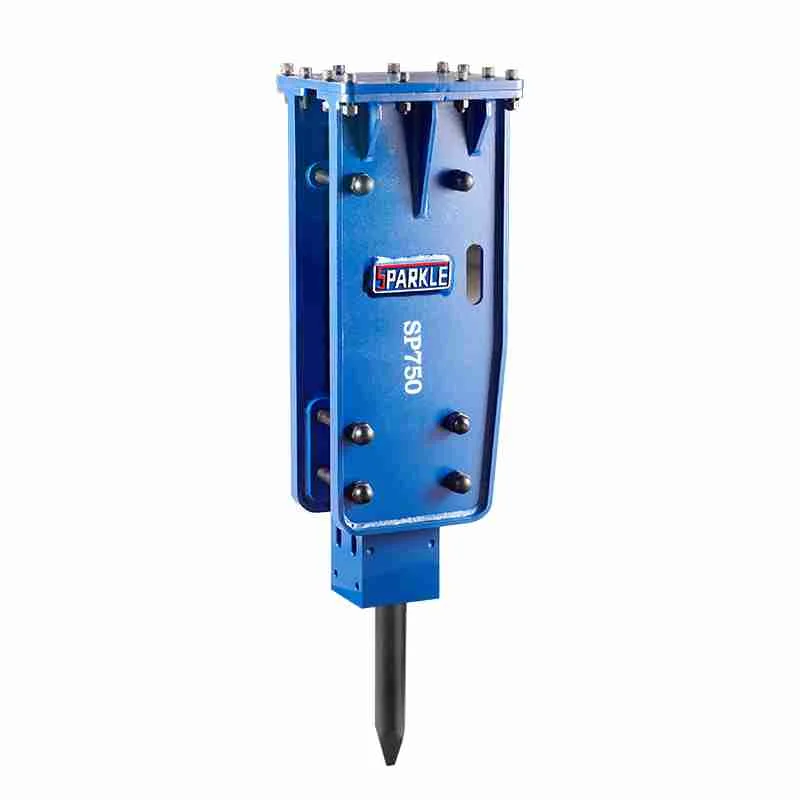
WORK BY APPLICATION
Choose equipment around the material, the machine and the result you need.
Plan breaking, crushing, screening and material reuse around the excavator and the final aggregate.
Find equipment for this workChoose a breaker, ripper and bucket sequence for resistant ground, loading and aggregate handling.
Find equipment for this work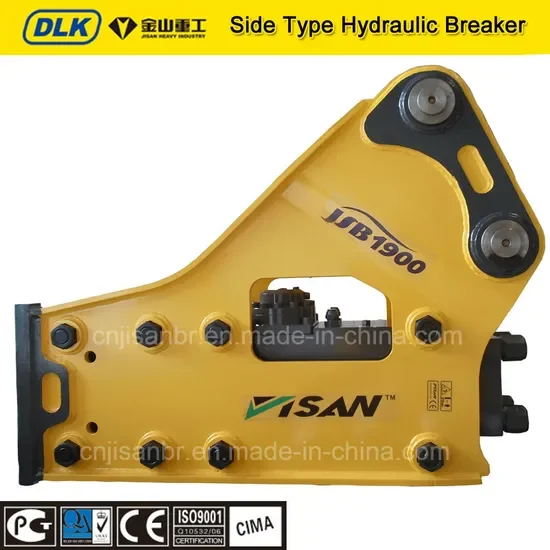
Compare fixed and rotating grabs for pickup, truck alignment, stacking and yard movement.
Find equipment for this work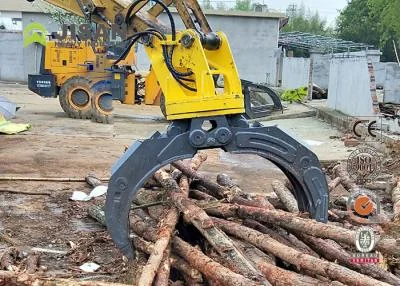
Combine an auger drive, tilt bucket and compact screener around the hole, finished grade and reused material.
Find equipment for this work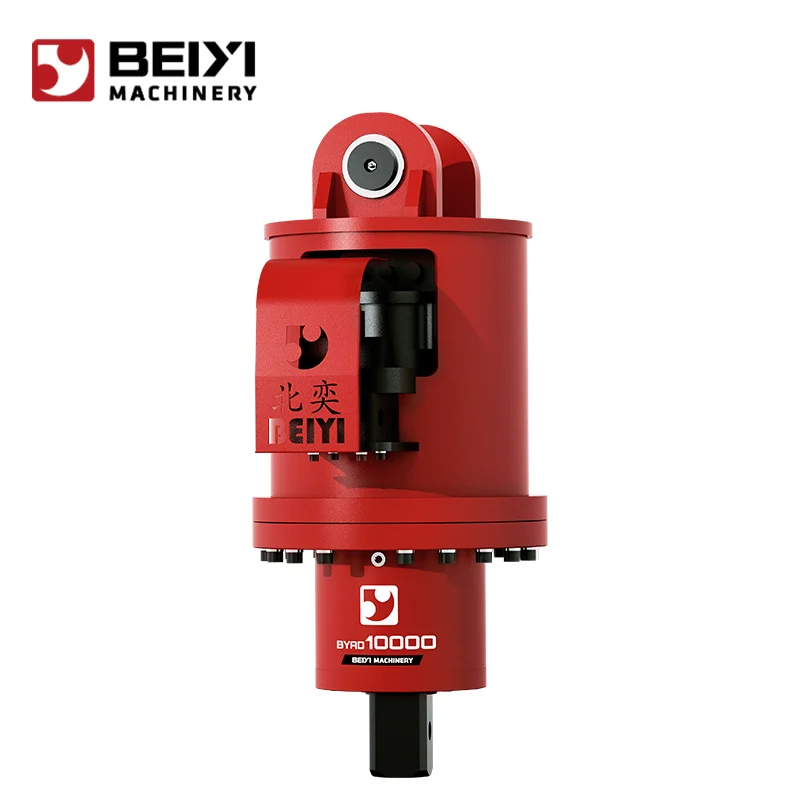
Choose the screening mechanism, target fraction and excavator together, then plan feed and stockpiles.
Find equipment for this work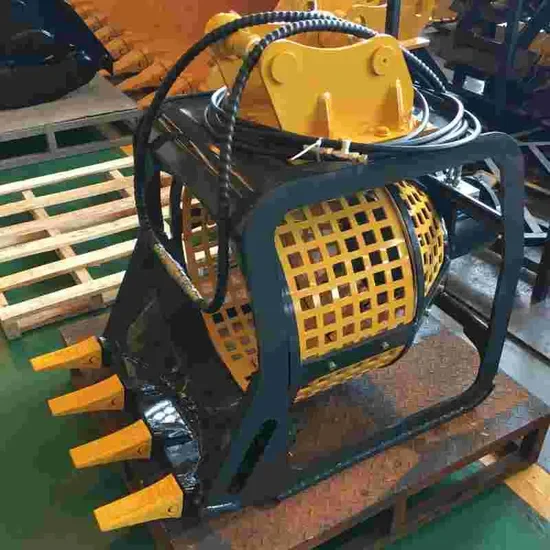
Each application page follows the same method. First describe what you are working on: rock, demolition concrete, timber, soil, a bank to trim or a hole to drill. Then describe the result: a sized aggregate, a loaded truck, a screened topsoil, a finished slope. Only then pick the excavator or loader and the attachment that sits between the two. Choosing in that order avoids the most common mismatch, which is a capable tool bought for a machine that cannot carry or power it, or a tool that produces the wrong output.
| Application | Typical starting material | Typical result | Main attachment families |
|---|---|---|---|
| Concrete recycling and roadstone | Slabs, footings, boulders, mixed rubble | Sized aggregate for sub-base or fill | Breaker, pulverizer, crusher bucket, screening bucket |
| Rock excavation and quarrying | Hard or layered ground, limestone, loose rock | Opened ground, loaded material, compacted backfill | Ripper, breaker, rock bucket, compactor |
| Log loading and timber yards | Logs, poles, brush around the yard | Loaded trucks, sorted stacks, cleared edges | Fixed or rotating grapple, cutting heads |
| Drilling, slopes and landscaping | Soil for posts and planting, banks, site spoil | Holes, finished crossfall, reusable soil | Auger drive, tilt bucket, compact screener |
| Topsoil screening | Topsoil with stones, roots and debris | A named soil fraction plus retained oversize | Rotary or blade screening bucket |
If your job crosses two rows, read both pages. A recycling job that ends with screened fill shares its last stage with topsoil screening; a quarry that backfills its own trenches shares compaction with site work.
Attachments are easier to compare by the action they perform than by their name. A crusher bucket and a screening bucket look alike from a distance but do opposite things: one makes pieces smaller, the other sorts pieces by size. A breaker fractures; a ripper loosens; a bucket removes and loads. Once the action is clear, the right family usually follows.
| Action | Attachment | Where it appears |
|---|---|---|
| Fracture rock or concrete | Hydraulic breaker | Recycling, quarrying |
| Loosen hard or layered ground | Single-shank ripper | Quarrying, earthmoving |
| Crush concrete and cut rebar | Pulverizer, demolition shear | Recycling |
| Reduce pieces to a set size | Crusher bucket | Recycling, quarrying |
| Separate by size | Screening bucket | Topsoil, recycling, landscaping |
| Dig and load | Rock or general bucket | Quarrying, earthmoving |
| Trim and grade a slope | Tilt bucket or tiltrotator | Landscaping |
| Drill a hole | Auger drive and bit | Landscaping, foundations |
| Grip and place | Log grapple, thumb | Timber yards, demolition sorting |
| Compact a lift of fill | Plate compactor, compaction wheel | Earthmoving, trench backfill |
The crusher versus screening bucket guide goes further into that one pair, because it is the choice buyers most often get backwards.
Every attachment on the site is published against a carrier range. That range reflects the attachment’s mass, the hydraulic flow it needs and the structural load it puts into the stick. Grouping the range by machine size shows what a given excavator can realistically run.
| Machine size | Breaking and reducing | Separating and grading | Handling and drilling |
|---|---|---|---|
| 2–6 t compact | SP530 for 2.5–4.5 t; SP680 for 4–7 t | PAB02-3 for 3.5–5.5 t; TB50 tilt bucket, 5 t class | BY-AD60 auger, 2–6 t; JT-02 grapple, 4–6 t; JT-mini compactor, 2–4 t |
| 6–17 t midi | SP750 for 6–9 t; SCB crusher, 15 t | PAB12-1 for 12–17 t | SC12 compaction wheel, 10–15 t; EC219 tiltrotator, 14–19 t |
| 18–30 t | SB81 side-type breaker, 19–26 t; BP 2050 pulverizer, 18–27 t | PAB16-3 for 18–23 t | JSG-DL20 fixed grapple, 20 t; JSR10 ripper, 23–30 t |
| 30 t and over | HWPD40 crusher, 30–40 t | — | JSG-DL36 rotating grapple, 36 t |
Use the table to narrow the field, then confirm on the product page. Carrier ranges overlap on purpose: a 6 tonne excavator sits at the top of one breaker’s range and the bottom of the next. Within an overlap, the heavier tool usually works faster and the lighter tool is easier on the machine and more forgiving when reaching out.
Weight class is a starting point, not a final check. Auxiliary flow and pressure, the mounting and, for lifting work, the machine’s lift chart at the working radius all have to agree as well.
Most attachments in these applications are hydraulically powered, and they do not all use the excavator’s auxiliary circuit in the same way. Checking the circuit type before ordering prevents the most expensive installation surprise: a tool that arrives and cannot be connected without a new valve section.
Published flow figures give a sense of scale. On the PAB screening range, demand rises from 30 to 80 to 110 L/min as the drum grows from 610 to 1,000 to 1,350 mm. The JSG-DL20 fixed grapple needs 100–140 L/min; the rotating JSG-DL36 needs 200–250 L/min. Compare each with what the machine actually delivers at the auxiliary outlet, measured if possible, not only the brochure figure for the main pumps.
Recycling, quarrying and landscaping jobs usually involve several attachments working in sequence. Output for the day is set by the slowest stage, so plan that stage first and size the others around it.
| Job | Sequence | Stage that often limits output |
|---|---|---|
| Concrete to sub-base | Break or pulverize, cut rebar, crush, screen, load | Crushing, because feed size and discharge setting control throughput |
| Rock excavation | Rip or break, dig, load, backfill, compact | Breaking in massive rock; loading in already fractured ground |
| Topsoil reuse | Strip, feed, screen, stockpile | Screening when the soil is wet or high in clay |
| Fencing and planting | Mark, drill, set posts, finish surface | Drilling where stones or roots stop the auger |
| Timber yard | Pick up, orient, load, stack | Orientation when logs must be turned to fit the truck |
Two practical consequences follow. First, buying a larger tool for a stage that is not the bottleneck rarely raises output. Second, preparing the feed for the limiting stage often helps more than a bigger attachment: breaking boulders below the crusher’s feed opening, or letting wet topsoil dry before screening, can raise production with the same equipment.
Where one machine performs several stages, the time spent changing tools also counts. A quick hitch or tiltrotator shortens each change.
Two jobs with the same material can need different equipment because of the site. List these factors with the inquiry, as they often decide between two otherwise suitable tools.
Each application wears a different part of the equipment. Knowing which items go first lets you order them with the attachment rather than after a breakdown.
| Application | Items that wear first | What to record |
|---|---|---|
| Concrete recycling | Breaker tools and bushes, crusher jaw plates, pulverizer teeth and blades | Tool shank, jaw-plate set, blade position |
| Quarrying and rock | Bucket teeth and adapters, side cutters, ripper tooth, breaker tools | Tooth system, pin and retainer numbers |
| Timber handling | Grapple pins and bushes, cylinder seals, rotator seals | Cylinder and rotator assembly numbers |
| Drilling and landscaping | Auger teeth and pilot, tilt-cylinder seals, bolt-on bucket edges | Bit diameter, tooth type, cylinder kit |
| Topsoil screening | Screen sets or panels, drum bearings, drive parts | Bucket model, screen opening, drum size |
Hydraulic hoses wear in every application, especially where they flex at the stick end or rub against the boom. Record bore, ends and finished length of each attachment hose so a replacement can be ordered by description rather than by sending the damaged hose.
Most poor results with attachments trace back to a handful of choices made at the inquiry stage. They are easy to avoid once you know them.
For breaker sizing in particular, the breaker selection guide compares tool diameter, carrier class and flow window side by side.
An application inquiry differs from a parts inquiry: it describes a job, so the details are about material and site as much as machine. The following list covers what is needed to propose a working package rather than a single tool.
The application pages, from concrete recycling to timber-yard handling, each show how this list narrows to specific models for that job.
Usually the excavator is already on site, so the attachment is chosen to suit it. Start with the material and the result, then narrow to attachments whose published carrier range includes your machine, and confirm flow, pressure and mounting. If you are choosing both, size the machine for the most demanding attachment you plan to run, often the breaker, crusher or rotating grapple.
Sometimes. A screening bucket serves topsoil work and the final stage of concrete recycling. A rock bucket digs and loads in quarrying and general earthmoving. A tilt bucket grades slopes and cleans ditches. Where the outputs differ, for example crushed aggregate and screened soil, you need two tools because the actions differ.
A crusher bucket reduces the size of each piece between moving jaws, set to a discharge size. A screening bucket does not break material; it lets pieces smaller than the opening pass through and retains the rest. Recycling often uses both: crush first, then screen into fractions.
Check the machine’s auxiliary circuit specification, or better, have the flow measured at the auxiliary outlet with a flow meter under load. Compare that figure with the attachment’s published range. Being near the bottom of the range usually means slow but workable; being below it means poor performance.
Not necessarily, but it saves time when tools change often. Without one, each attachment must match the stick pins directly and changes take longer. With one, each attachment must match the coupler. Hydraulic couplers also need a control circuit, and every coupler must be checked for lock engagement after each change, following the manufacturer’s instructions.
The timber-yard handling page includes brush cutters, flail mowers, forestry mulchers and stump grinders for work around the handling area. Each has its own carrier and hydraulic needs: several are skid-steer heads, and the mulcher needs high flow. Treat clearing as a separate purchase from the log grapple.
Yes. Describe the material, the result you need and the machine available, and add photos of the site and material if you can. That is enough to suggest which attachment family fits and which details still need to be measured.
It depends on the material, the feed size, the operator and the slowest stage of the job, so a single figure is rarely reliable. A short trial on the actual material gives the best estimate. Prepare the feed well, keep the receiving area clear and plan stockpile space; these usually change daily output more than a step up in attachment size.
Send your machine model, required quantity and destination. Add installation items, wear parts and service quantities to the same inquiry.