
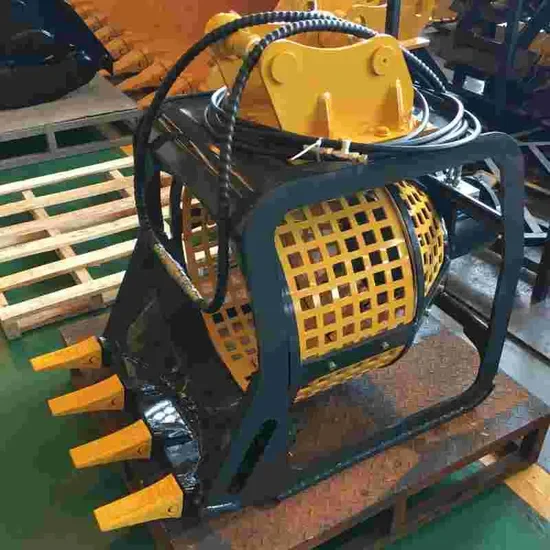
Excavator Rotary Screening Buckets
PAB02-3 Rotary Screening Bucket — 3.5–5.5 Tonne Excavators
245 kg, 610 mm drum and 30 L/min flow for compact soil-and-stone separation.
30 L/min · 610 mm drum
PRODUCT CATEGORY
Compare PAB02-3, PAB12-1 and PAB16-3 by carrier size, oil flow, drum diameter and screen openings.
| Product | Carrier | Weight | Oil flow / pressure | Drum diameter |
|---|---|---|---|---|
| PAB02-3 | 3.5–5.5 t | 245 kg | 30 L/min · 150 bar | 610 mm |
| PAB12-1 | 12–17 t | 1020 kg | 80 L/min · 230 bar | 1000 mm |
| PAB16-3 | 18–23 t | 1920 kg | 110 L/min · 250 bar | 1350 mm |
3 products
245 kg, 610 mm drum and 30 L/min flow for compact soil-and-stone separation.
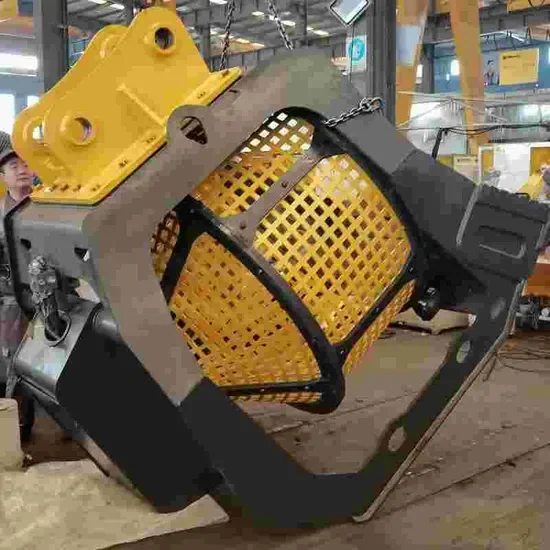
1020 kg, 1000 mm interchangeable drum and 80 L/min hydraulic flow.
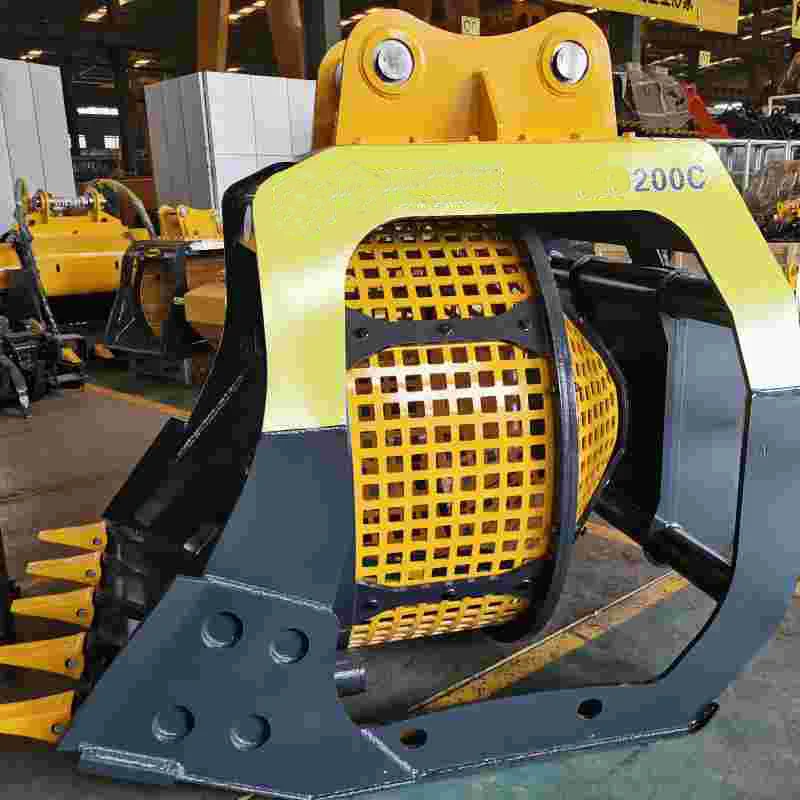
1350 mm drum, 1920 kg attachment and 110 L/min flow for larger soil-and-stone handling.
Send the part number or describe the equipment you need.
Send a sourcing requestThe PAB range uses interchangeable screens with conventional openings from 30 to 80 mm. Select the opening for the retained stone and the material being reused. A fine topsoil task is a different specification from coarse backfill separation.
A screen separates particles already present in the feed. It does not replace a jaw crusher when stones must be reduced. Plan separate stockpiles for screened material and retained pieces, and order a second screen set for a different grading task.
| Structure | How the material moves | Selection task |
|---|---|---|
| Rotary basket / PAB range | The drum rolls material across its openings | Carrier, drum, screen sections and passing fraction |
| Skeleton bucket | Material passes between fixed bars during handling | Bar spacing and mechanical bucket work |
| Shaft screener | Driven shafts work material through the screening elements | Material condition, shaft elements and hydraulic drive |
The PAB purchase range uses 30–80 mm conventional openings. Select the fitted opening and add a second screen set when another job requires a different fraction. A 30 mm opening is about 1.18 inches; 50 mm is 1.97 inches; 80 mm is 3.15 inches. Keep these opening sizes alongside the drum-panel positions rather than ordering only a bucket model name.
A rotating screening bucket for an excavator is a perforated drum mounted inside a bucket frame and turned by a hydraulic motor on the attachment circuit. The operator scoops feed into the open front, lifts the bucket clear of the stockpile and runs the drum. As the drum turns, the load tumbles over the screen openings; anything smaller than the opening drops through to the pile below, and anything larger stays inside. When the drum has finished separating, the operator moves to a second pile and tips the retained stones, roots or debris out of the front.
Because the excavator itself loads, lifts and discharges, the bucket replaces a separate feeder, conveyor and stockpiling machine on small and medium jobs. That is the main reason contractors choose excavator screening buckets over a mobile screening plant: the material is processed where it was dug, and the excavator already on site does the work. The trade-off is output. A drum on the end of a dipper arm handles one bucket load per cycle, so it suits site-won material, landscaping, trench backfill and recycling at the scale of a single project rather than quarry production.
The three PAB rotary screening buckets cover compact, mid-size and 20-tonne-class excavators. Match the bucket to the carrier first, then check that the excavator can hold the bucket plus a full load of wet soil at the radius you intend to work. A drum that is light enough when empty can still exceed a comfortable working load once it is filled with damp topsoil, which typically weighs well over 1.5 tonnes per cubic metre.
| Model | Carrier class | Empty weight | Circuit | Drum | Typical job |
|---|---|---|---|---|---|
| PAB02-3 compact screening bucket | 3.5–5.5 t | 245 kg | 30 L/min · 150 bar | 610 mm, 60 rpm | Garden and landscaping soil, small backfill piles, tight access |
| PAB12-1 mid-size rotary bucket | 12–17 t | 1020 kg | 80 L/min · 230 bar | 1000 mm, 65 rpm | Site-won backfill, trench padding, road-edge and drainage projects |
| PAB16-3 large rotary bucket | 18–23 t | 1920 kg | 110 L/min · 250 bar | 1350 mm | Larger stockpiles, coarse stone separation on civil sites |
Treat the carrier range as the starting filter, not the only check. A 12-tonne excavator on a long reach arm and a 17-tonne machine with heavy counterweight sit in the same class but have different lift charts. Read the chart at the actual working radius and height, with the mounting bracket or quick coupler included, and keep a margin for the material inside the drum. For a mini excavator screening bucket, stability over the side is usually the limit rather than hydraulic power.
A hydraulic rotary screen bucket uses the excavator’s auxiliary circuit to drive the drum motor. The published flow and pressure for each PAB model describe that attachment circuit, not the excavator’s total pump output. Set the auxiliary flow close to the bucket figure: excess flow overspeeds the drum, heats the oil and throws material round with the screen, while too little flow lets the drum stall under a heavy load.
On machines without proportional auxiliary control, a flow-limiting valve or a mode setting in the excavator’s attachment menu is the usual way to bring the flow down to the bucket figure. Record the settings once the drum runs at a steady speed with a full load, so the next operator can reproduce them.
A rock screening bucket for excavator use separates stone that is already loose in the feed. It does not break rock. Oversize pieces stay in the drum and are discharged as a separate fraction, which can then be used as drainage stone, fed to a crusher or removed from site. If the job needs the large stones reduced to a smaller size, pair the screen with a crusher bucket or plan a crushing stage; the crusher versus screening bucket guide sets out where each one belongs.
Stone is hard on screens. Large, angular pieces dropped into the drum from height bend panels and loosen fixings, and a single boulder that is too heavy for the drum motor will stop rotation. Good practice for rock-heavy feed:
The PAB range uses conventional screen openings from 30 to 80 mm. Within that range, the opening is chosen from the use of the passing material, not from the bucket model. The table below gives typical starting points; trial a load and adjust when the feed is unusual.
| Material | Typical opening | What passes | Watch for |
|---|---|---|---|
| Topsoil for landscaping | 30 mm | Soil and fine stones for seeding and planting beds | Roots and turf wrapping the drum; moisture blinding the holes |
| Pipeline padding or trench bedding | 30–50 mm | Stone-free fill to place around pipes and cables | Specification limits on maximum particle size near the pipe |
| Site-won backfill | 50 mm | Reusable fill without large cobbles | Clay lumps that stay intact and end up in the retained pile |
| Coarse separation of stony ground | 80 mm | Soil and gravel with cobbles removed | Heavy feed loading the drum motor and panels |
| Demolition fines and hardcore | 50–80 mm | Fines separated from broken concrete and brick | Rebar, wire and timber catching in the openings |
A topsoil screening bucket earns most of its value on jobs where good soil would otherwise be removed and replaced. For the full route from excavation to stockpile, see the topsoil screening workflow. A padding bucket for excavator pipeline work is the same principle used next to the trench: spoil is screened and the passing fraction is placed directly around the pipe.
Excavator screener bucket output depends more on the feed and the operator than on the published bucket figures. A drum that is filled to the top screens poorly, because only the outer layer of material touches the openings. Most operators get the best rate with the drum filled to roughly a third or half, rotated until the passing fraction stops falling, then emptied. Overfilling also adds weight at the end of the arm and slows the cycle.
Moisture is the biggest variable. Dry, friable soil passes quickly. Wet clay sticks to the mesh, forms balls and blocks the openings. Screening after a dry spell, stockpiling under cover, or choosing a coarser opening for the wet season all help. No screening bucket will turn a saturated clay into clean topsoil.
Rotating screen buckets carry most of their wear in the screen sections, the drum support and the hydraulic drive. The PAB design uses interchangeable mesh around the drum and replaceable rear sections, so worn or damaged panels are changed without replacing the bucket.
| Item | Check | Typical action |
|---|---|---|
| Screen panels | Cracked welds, bent bars, holes worn oversize | Replace by position and opening size |
| Panel fasteners | Loose or missing bolts | Retighten and replace missing fixings before work |
| Drum bearings and supports | Play, noise, grease condition | Grease at the manufacturer’s interval; investigate noise early |
| Hydraulic motor and hoses | External leaks, chafed hose covers | Repair leaks; reroute or sleeve chafed hoses |
| Bucket frame and mounting | Cracks near the bracket, pin wear | Inspect pins and bushes with the excavator linkage |
Clean packed soil out of the drum at the end of the shift. Material left to dry inside adds weight, unbalances the drum and hides cracks. When ordering spare panels, state whether they are for the main drum or the rear section, the opening size and the fixing layout.
With these details the bucket, bracket, screen set and hose kit can be quoted together, and the fitted opening can be marked on the order instead of assumed.
A screening bucket separates loose material into two fractions on site. Soil, gravel or fines small enough to pass through the screen fall into one pile, and stones, roots or debris that are too large stay in the bucket and are tipped into another. Contractors use screening buckets to recover topsoil, prepare backfill, produce padding for pipes and cables, and separate fines from demolition waste without bringing in a screening plant.
They do different jobs. A skeleton bucket shakes material between fixed bars and suits coarse sorting of rock and debris where a rough cut is enough. A rotating screening bucket tumbles the load over a defined opening, so the passing fraction is more consistent and finer separations are practical. Choose the rotary drum when the screened material has a reuse specification, and a skeleton bucket when you only need to remove large pieces.
Yes, if the bucket is built for that carrier class. The PAB02-3 serves 3.5–5.5 tonne excavators, weighs 245 kg and runs on 30 L/min at 150 bar. On a mini excavator the practical limits are lifting stability with a loaded drum and the auxiliary flow available. Check the lift chart at your working radius and set the auxiliary flow to the bucket figure.
For landscaping topsoil a 30 mm opening is a common starting point within the PAB 30–80 mm range, because it removes stones and roots while keeping a reasonable output. If the soil is damp or the job only needs cobbles removed, a coarser opening screens faster. Run a trial load and inspect the passing pile before committing a whole stockpile.
Wet clay sticks to the screen bars and forms balls that block the openings, so less material can pass each turn. Reduce the fill level, rotate the drum in both directions if the circuit allows, and clean the drum between loads. Screening when the stockpile is drier or using a coarser opening usually helps more than running the drum longer.
It depends on the model. In the PAB range the compact bucket needs 30 L/min at 150 bar, the mid-size bucket 80 L/min at 230 bar and the large bucket 110 L/min at 250 bar. These are attachment circuit figures. Set the excavator’s auxiliary flow to match, rather than feeding the full pump output into the drum motor.
Yes, as long as the rock is already loose and the pieces are not too large or heavy for the drum. Scalp out boulders first, fill the drum without dropping material from height, and use the coarsest opening that meets the reuse requirement. The retained rock comes out as a separate pile that can be used as drainage stone or sent to crushing.
Send your machine model, required quantity and destination. Add installation items, wear parts and service quantities to the same inquiry.