
Engine Oil, Hydraulic & Fuel Filters
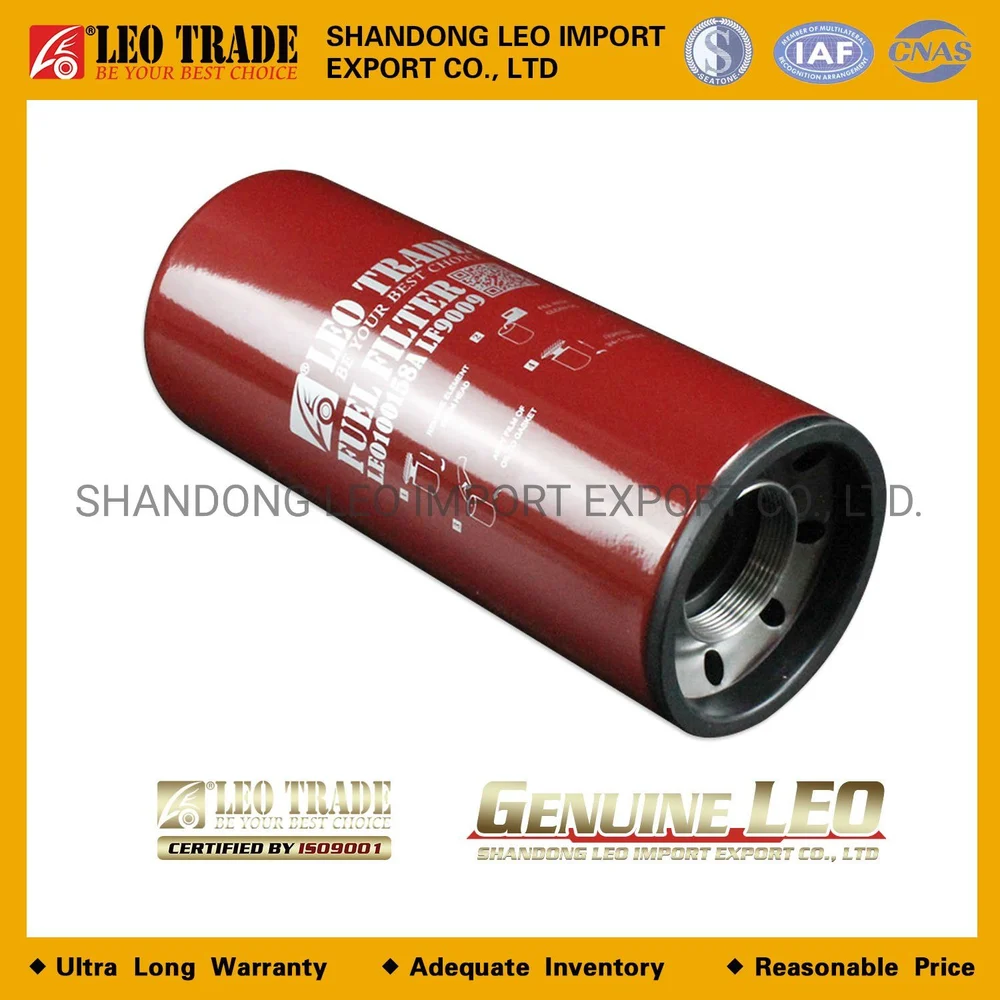
LF9009 Replacement Engine Oil Filter — LEO100158A
LEO TRADE spin-on oil-filter entry for the 6L-375 / 6C-300 engine list; individual filters and mixed maintenance orders.
LF9009 · engine oil
PRODUCT CATEGORY
Compare engine-oil, hydraulic and secondary fuel filters by complete number, filtration stage, body dimensions and supplied brand. Order individual filters or a maintenance list.
| Product | Circuit | Identity | Order unit |
|---|---|---|---|
| LEO100158A / LF9009 | Engine oil | LEO100158A / LF9009 | Piece |
| P550388 | Hydraulic oil | P550388 spin-on | Piece |
| Cat 1R-0750 | Secondary fuel | Original Cat spin-on | Piece |
3 products
LEO TRADE spin-on oil-filter entry for the 6L-375 / 6C-300 engine list; individual filters and mixed maintenance orders.
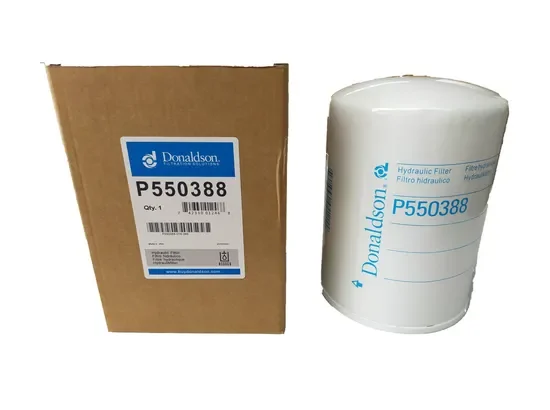
Spin-on hydraulic filter with 1½-16 UN mounting, 128/120 mm gasket and cellulose media.
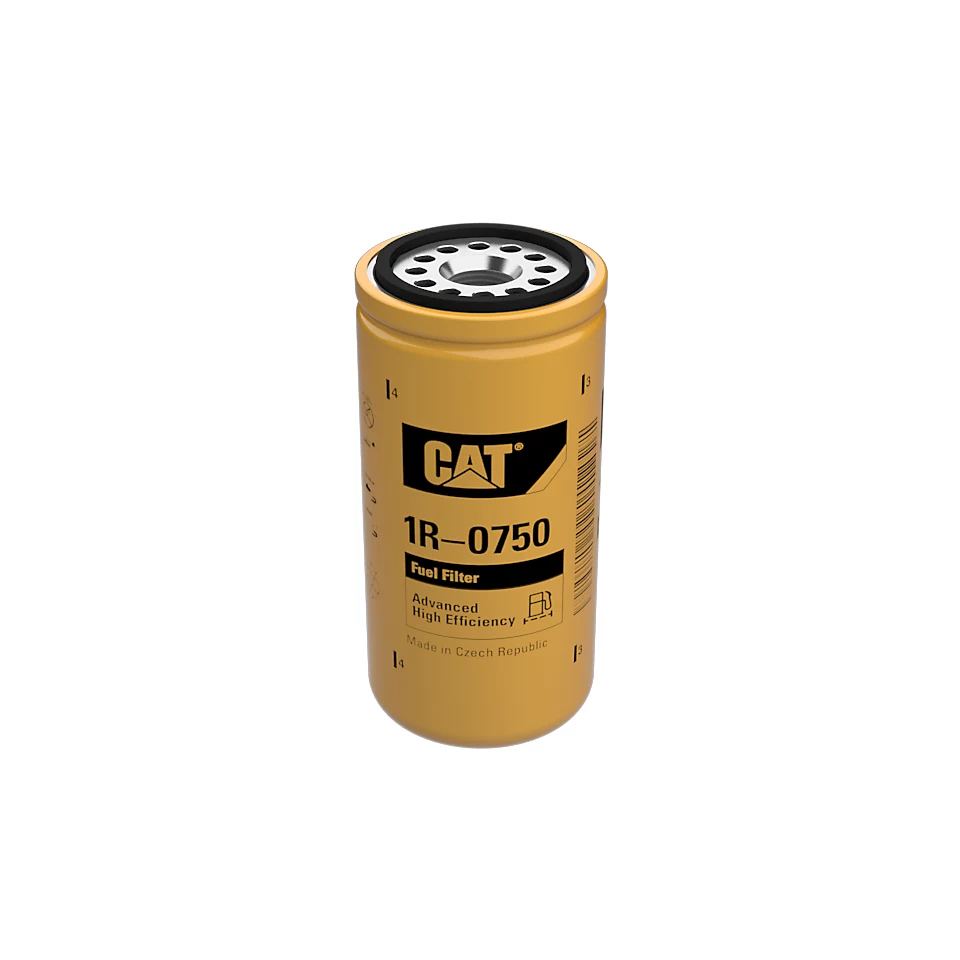
Original Cat spin-on secondary fuel filter, 85.7 mm diameter and 181.5 mm length, for individual or mixed maintenance orders.
Send the part number or describe the equipment you need.
Send a sourcing requestA spin-on filter uses a thread and gasket to fit its head. Height and removal space define the installation envelope. Media, particle-size rating and efficiency define the filtering duty. Keep those fields with the old number when comparing filter offers.
List oil, fuel, air and hydraulic filters by number and quantity. Grouping them by machine makes the next service order easier to repeat.
Thread and gasket dimensions identify how a spin-on fits its head. Particle-size and beta-value fields identify filtration efficiency. The P550388 filter uses a 1½-16 UN thread and 128/120 mm gasket, with 7 µm at Beta 2 and 23 µm at Beta 1000.
The 1R-0750 secondary fuel filter is an 85.7 mm diameter, 181.5 mm long spin-on element with an out-to-in flow path. Keep primary fuel/water-separator, engine-oil and hydraulic filters as separate lines in the maintenance order.
A tracked excavator or wheel loader carries several filters, each on its own circuit and each with its own number. They are not interchangeable even when two of them happen to share a thread. The table lists the usual positions; the exact set depends on the engine and hydraulic system, and the machine parts book is the reference.
| Filter | Circuit | What it protects | Typical form |
|---|---|---|---|
| Engine oil filter | Lubrication | Bearings, turbocharger, valve train | Spin-on or cartridge, full-flow; some engines add a bypass stage |
| Primary fuel filter / water separator | Fuel, suction or low-pressure side | Lift pump and secondary filter; removes water | Spin-on with drain, often with a clear bowl or sensor |
| Secondary fuel filter | Fuel, before the injection pump | Injection pump and injectors | Spin-on or cartridge, fine media |
| Air filter, outer and inner | Engine intake | Cylinders, rings and turbocharger | Dry element in a housing, with a safety element |
| Hydraulic return filter | Oil returning to tank | Pumps, valves and motors | Element in the tank or spin-on head |
| Pilot filter | Pilot control circuit | Pilot valves and solenoids | Small spin-on or cartridge |
| Suction strainer and tank breather | Tank inlet and vent | Pump inlet and tank air | Mesh strainer; breather element |
The current range covers three of these positions: an engine-oil filter (LF9009 / LEO100158A), a spin-on hydraulic filter (P550388) and an original Cat 1R-0750 secondary fuel filter. Each is listed with its own dimensions and circuit.
A spin-on filter is a complete sealed unit: a steel can, a pleated media pack, a baseplate with a threaded centre hole and a rubber gasket on the face. The whole can is screwed onto a fixed head on the engine or machine and is thrown away at the change. A cartridge or element filter is only the media pack; it sits in a permanent housing or bowl that is opened at the change, and it seals on O-rings rather than a face gasket.
The two types are not swapped by choice. The head or housing on the machine decides which one fits. Some engine families moved from spin-on to cartridge between generations, so the engine serial number matters when two parts lists disagree.
A filter rating answers two questions: what particle size is being measured, and how many of those particles are stopped. A nominal rating alone, such as “10 micron”, says little because it does not state the efficiency. A beta value does. The beta ratio is the count of particles above a given size upstream of the filter divided by the count downstream in a standard multi-pass test.
| Beta ratio | Particles passed per 1,000 | Capture efficiency |
|---|---|---|
| 2 | 500 | 50% |
| 10 | 100 | 90% |
| 75 | about 13 | 98.7% |
| 200 | 5 | 99.5% |
| 1000 | 1 | 99.9% |
The P550388 data on this page is a good example of how to read the pair of figures. It captures half of the 7 µm particles (Beta 2) and 99.9% of the 23 µm particles (Beta 1000). A finer filter on the same head is not automatically better: finer media can restrict flow when the oil is cold and may open the bypass valve sooner. Use the rating the machine maker specifies for that circuit.
Many engine oil and hydraulic filters contain a bypass valve. When the media is clogged or the oil is very cold, the pressure drop rises until the valve opens and lets oil pass round the media, so that the engine or pump is not starved. The opening pressure is set for the circuit. Fitting a filter with a different bypass setting can mean unfiltered oil runs more often, or that the filter collapses under a pressure it was not built for.
Engine oil filters mounted on their side or upside down usually have an anti-drain-back valve, a rubber flap that holds oil in the can when the engine stops so that oil pressure builds quickly at the next start. Secondary fuel filters normally have no bypass, because unfiltered fuel reaching the injection system does more harm than a restricted filter. When comparing an alternative number, check these valve details as well as the thread and gasket.
The engine manual and the machine operation and maintenance manual set the change interval for every filter, usually in service hours, along with the oil grade and fill quantity. Use those figures as the starting point. Site conditions are the reason to shorten them, never to stretch them.
Record the filter number, date and hour-meter reading on the service sheet each time. It saves looking up the number again and shows whether a filter is blocking faster than it should.
Changing a fuel filter lets air into the low-pressure side. Air in the fuel causes hard starting, rough running or a stall shortly after start-up. Diesel engines on construction machinery are primed in one of two ways, and the manual says which applies.
If the engine still will not hold a steady idle after priming, check the filter seals and the fuel lines for air leaks on the suction side. Pumps, injectors and priming parts are covered on the fuel system parts page.
Filter makers publish cross-reference lists that pair their own numbers with original equipment numbers. These lists are useful, but an entry can mean a full functional equivalent or only a physical fit. Before accepting an alternative number, compare the thread, gasket diameters, outside diameter, length, media type, beta rating, bypass setting and anti-drain-back valve against the original. If any field is missing or different, ask before ordering.
Do not move a filter between circuits because it screws on. A hydraulic spin-on and an engine oil spin-on can share a thread and differ completely in media, rating and valve settings. The method for confirming numbers from data plates and parts books is set out in the replacement parts identification guide.
The quickest order to quote and to repeat is one list per machine, grouped by service. Read the numbers printed on the cans or elements currently fitted, then confirm them against the engine plate and the machine serial number.
| Line | Circuit | Number to record | Quantity per service |
|---|---|---|---|
| 1 | Engine oil | Number printed on the can | Per manual |
| 2 | Fuel primary / water separator | Number and bowl or sensor type | Per manual |
| 3 | Fuel secondary | Number printed on the can | Per manual |
| 4 | Air, outer and inner | Both element numbers | One of each |
| 5 | Hydraulic return and pilot | Element or spin-on numbers | Per manual |
Add the engine model and serial, the machine model and serial, and how many services the order should cover. Where only an old filter is available, send a photograph of its printed number and its measured length, diameter and thread.
The primary filter, often combined with a water separator, sits on the suction or low-pressure side and removes water and coarser dirt. The secondary filter sits after it, just before the injection pump, and uses finer media to protect the pump and injectors. They have different numbers, different media and are changed as separate lines on the service sheet, even when both are changed at the same interval.
No. A matching thread only means the can will screw on. Hydraulic and engine oil filters differ in media, micron rating, bypass valve setting and sometimes the anti-drain-back valve. The wrong filter can starve the engine of oil at start-up or let unfiltered oil through. Use the number specified for that circuit.
Hand tight plus the turn stated on the filter or in the manual, measured from the moment the gasket touches the head. Over-tightening with a wrench distorts the gasket and makes the next removal difficult; under-tightening lets it weep. Check for leaks with the engine or system running.
Usually air in the fuel. The system needs priming after the change, either with the hand primer or by cycling the electric lift pump as the manual describes. If it still stalls, check that the old gasket was removed, that the new filter is tight and that no suction-side line is drawing air.
Not on its own. The machine’s pumps and valves are specified for a cleanliness level that the original filter rating achieves. Much finer media on the same head can restrict flow, open the bypass more often in cold weather and block faster. Use the specified rating and keep the oil clean through good handling and breathers.
Usually yes. Breaker work runs the oil hot and continuously, and dust is drawn in around the tool and seals. Breaker manufacturers commonly recommend shorter hydraulic oil and filter intervals than standard digging work. Follow the breaker manual together with the excavator manual and use oil analysis to confirm.
Measure the can outside diameter and overall length, the thread size of the centre hole, and the gasket outside and inside diameters. Note which circuit the filter came from, and photograph the filter head. Add the engine and machine serial numbers so the number can be confirmed from the parts book.
Send your machine model, required quantity and destination. Add installation items, wear parts and service quantities to the same inquiry.