Start with the machine plate and component number
A full machine model and serial number connect the part to a specific machine generation. A pump or engine component can also have its own plate. Photograph both: the machine plate describes the host, while the component number describes the old assembly.
Cat 320D and 320D2: one generation changes the order
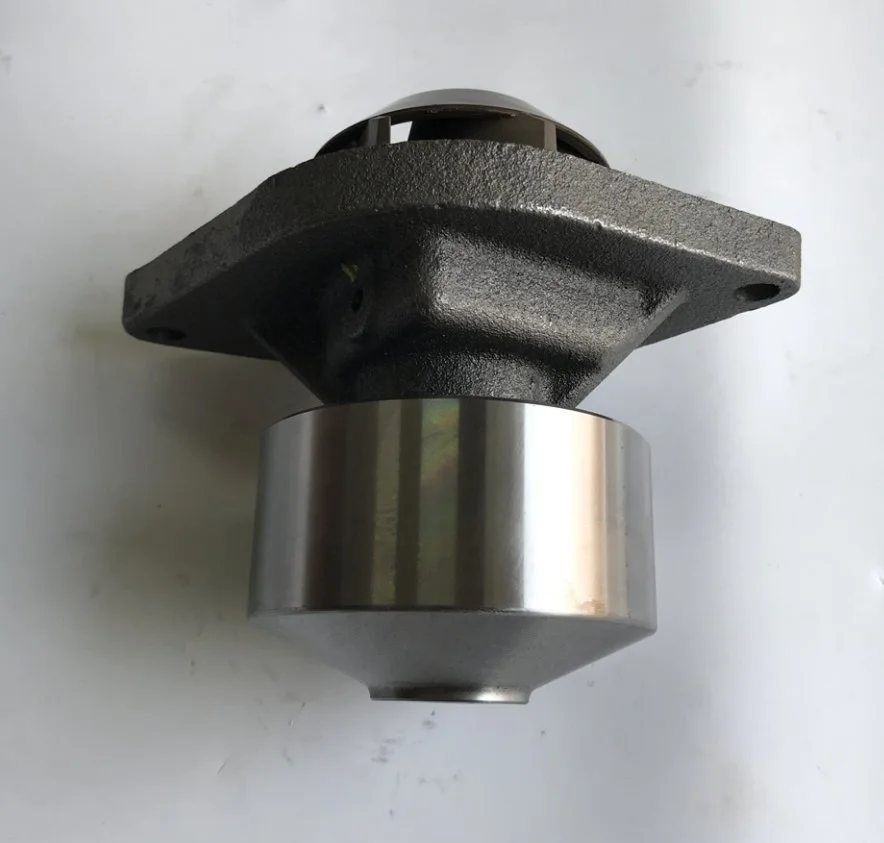
The Cat 320D and 320D2 example shows why the machine generation belongs in a parts inquiry. The 320D KGF/GDP entry uses water pump 178-6633, while 320D2 DNS/ZCS/RAR entries use 485-4894. The alternator numbers also change.
| Machine / serial prefixes | Water pump | Alternator |
|---|---|---|
| Cat 320D · KGF / GDP | 178-6633 | 212-8561 |
| Cat 320D2 · DNS / ZCS / RAR | 485-4894 | 344-5081 |
PC200: keep generation and component position together
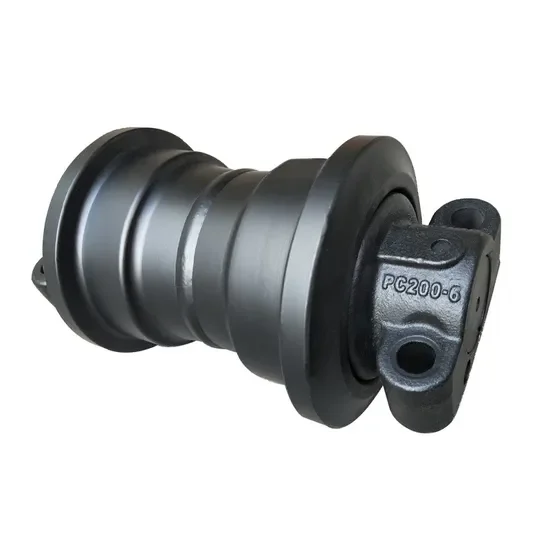
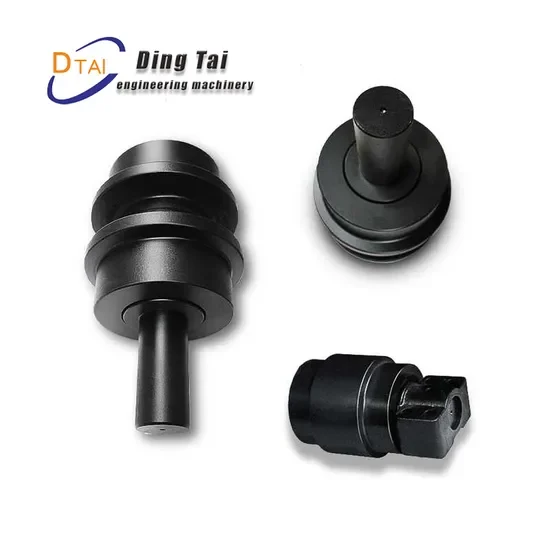
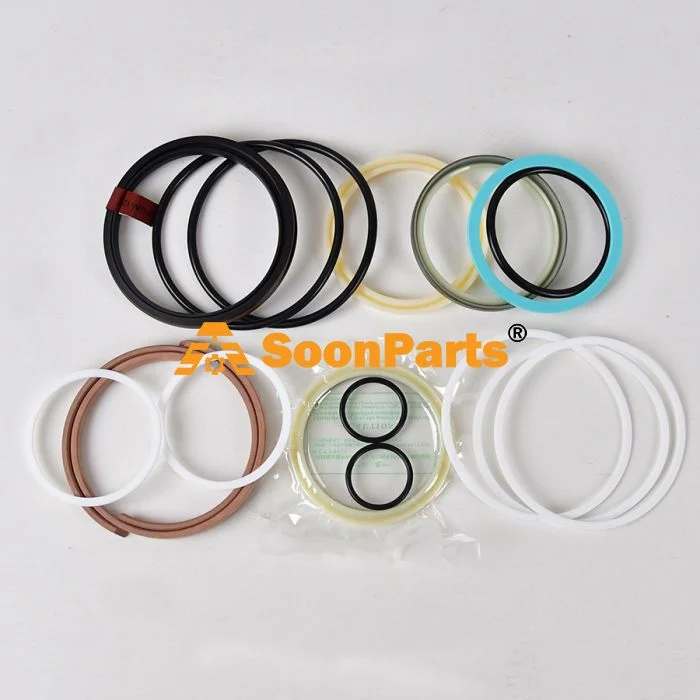
The PC200-7 bottom roller 20Y-30-00016 supports the lower track run; carrier roller 22U-30-00021 supports the upper run. Position distinguishes these two parts on the same generation. For the cylinder examples, the boom kit 707-99-47790 uses a 90 mm rod and 130 mm bore, while arm kit 707-99-57160 uses 95 / 135 mm.
| Position | Part / kit | Identification field |
|---|---|---|
| PC200-7 bottom roller | 20Y-30-00016 | Lower track run and roller assembly |
| PC200-7 carrier roller | 22U-30-00021 | Upper track run and shaft mounting |
| Boom-cylinder seal kit | 707-99-47790 | 90 mm rod / 130 mm bore |
| Arm-cylinder seal kit | 707-99-57160 | 95 mm rod / 135 mm bore |
Rubber tracks: read width, pitch and link count
Track dimensions are written as width × pitch × link count. A T650 track entry of 320 × 86 × 52 differs from a 320 × 84 × 53 multi-bar configuration. The number of links and pitch belong together; width alone does not identify the track.
| Machine / arrangement | Track dimensions | Example part number |
|---|---|---|
| T650 · premium | 320 × 86 × 52 | 6680149 |
| T650 · multi-bar | 320 × 84 × 53 | 7261331 |
| T870 · roller suspension, premium | 450 × 86 × 58 | 7277043 |
| T870 · torsion suspension, premium | 450 × 60 × 86 | 7266334 |
A belt track and an over-tire track are different purchases
A mini-excavator or compact-track-loader belt is identified by width, pitch, link count and its inner guide arrangement. An over-tire track fits around the tyres of a wheeled skid steer, so tyre size, axle spacing, clearance and the selected track links / pads belong to that purchase.
Use installation views when the number is unreadable
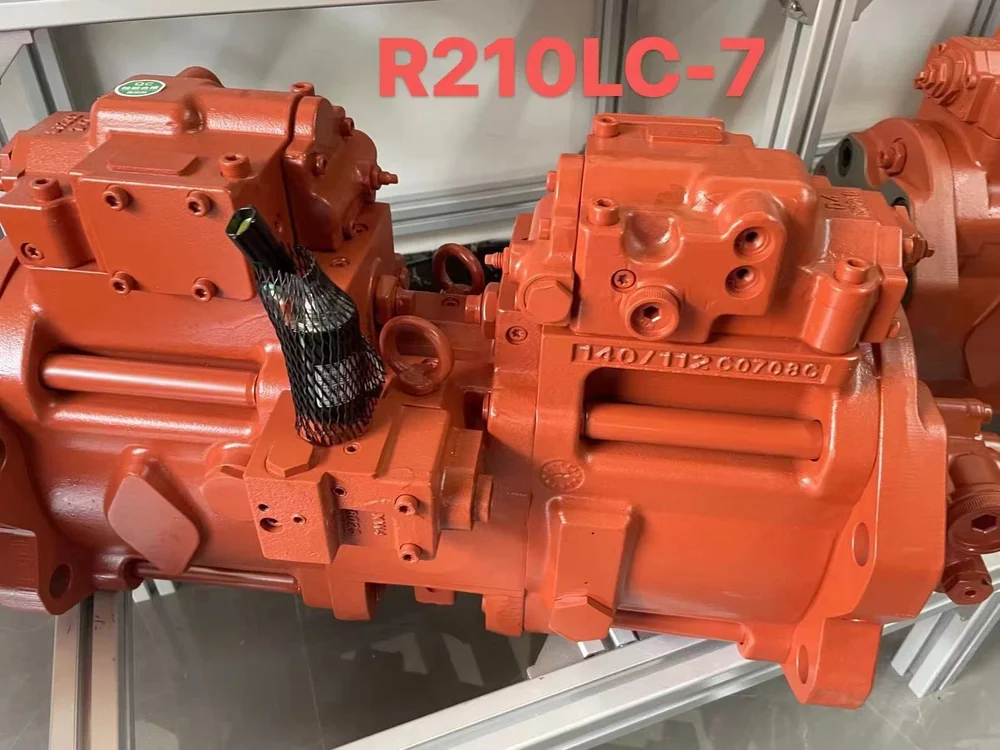
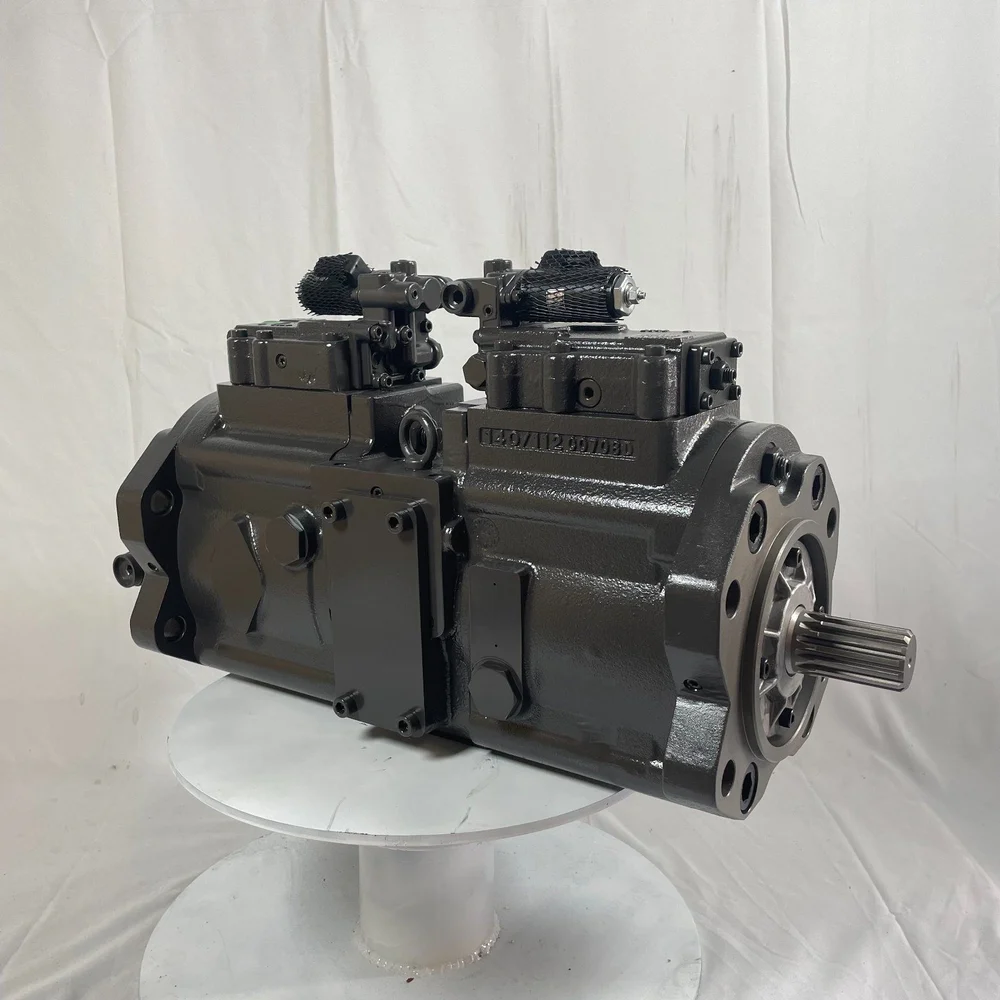
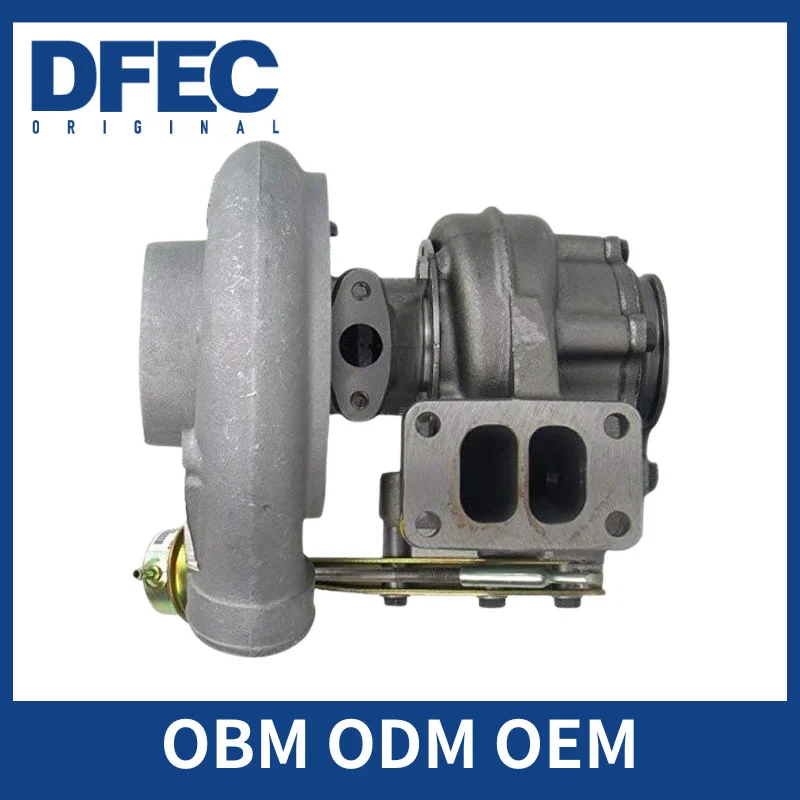
For a pump, show regulator, shaft, flange and ports. For a turbocharger, show housing direction, actuator and oil connections. For a roller, show its frame position, flange and mounting holes. Keep these photos with the parts list so the next order can start from the same identity.
Find a main pump from its complete assembly record
A Cat 320 hydraulic main-pump search contains several generations. The 114-0602 assembly is listed with legacy 320-A / 320L entries; 173-3381 has a 320C purchase. The full number, regulator and drive faces keep those choices separate from an engine fuel pump or an unnamed “320 pump”.
For a K3V112 order, retain the complete DT / DTP model and suffix. For a repair kit, retain the component position and dimensions: JCB 991/00152, for example, is a cylinder-seal kit for a 60 mm rod and 100 mm bore.
Oil and hydraulic filter dimensions
Fleetguard LF9009 combines full-flow and bypass engine-oil filtration. Donaldson P550388 is a cellulose hydraulic spin-on. Their threads and canister dimensions are different.
| Number / design brand | Circuit | Thread | Outside diameter | Height / length |
|---|---|---|---|---|
| LF9009 · Fleetguard | Engine oil | 2¼-12 UNS-2B | 118.31 mm | 301.76 mm |
| P550388 · Donaldson | Hydraulic oil | 1½-16 UN | 123.5 mm | 169.2 mm |
Measure the mounting and the removal space
The mounting uses the thread and gasket; the canister uses space around and below the filter head. Record thread size and pitch, gasket outside/inside diameter, overall length and the room needed to remove the old filter.
Read particle size together with efficiency
For P550388, the 7 µm rating is Beta 2 and the 23 µm rating is Beta 1000. Beta 2 means half the counted particles at that size pass downstream; Beta 1000 means one in a thousand. The beta value makes the micron figure meaningful for a filter comparison.
Keep supplied identity on the maintenance order
For the LEO filter, retain LEO100158A and the LF9009 replacement number together. A mixed-service list can then separate that engine-oil order from P550388 hydraulic filters, with quantities for each machine.
How to find a replacement part in six steps
How to find a replacement part for an excavator comes down to building one record that a supplier can check without guessing. The sequence below works for pumps, rollers, filters, seal kits and engine parts alike. Each step adds a field that rules out a wrong match.
- Record the machine plate: brand, model, dash-number generation and full serial number. Photograph it rather than copying by hand.
- Find the component’s own number on its plate, label, casting or forging. Photograph it before cleaning the part.
- Note the position on the machine: left or right, front or rear, boom, arm or bucket, upper or lower track run.
- Measure the interfaces: threads, bores, shafts, bolt patterns, port sizes and overall length, using the method for that part type.
- Write the purchase scope: complete assembly, sub-assembly, repair kit or single seal.
- Send the photos, numbers, measurements and scope together, with quantity and destination.
A part number on its own is a strong start, but the machine serial and the measurements are what catch a superseded number, a previous non-original repair or a generation change. When all three agree, the identification is safe to order against.
Spare part number, alternate part number and supersession
The same physical part can carry several numbers, and each one means something different. Mixing them up is the most common reason an order arrives that looks right and does not fit.
| Number type | What it identifies | How to use it |
|---|---|---|
| OEM spare part number | The machine brand’s service part for a position and serial range | Primary identity for ordering; check it against the serial range |
| Superseded number | An older OEM number replaced by a newer one | Valid lead, but confirm the newer number fits your serial |
| Alternate part number | A cross-reference from another maker, filter brand or kit supplier | Use only after the dimensions are checked against the original |
| Component maker’s number | The pump, motor, turbo or roller maker’s own model code | Often the best clue when the OEM label is missing |
| Casting or forging number | The raw housing or body before machining | A clue to the family; one casting can be machined into several parts |
| Supplier catalogue number | A seller’s internal reference | Keep it with the OEM number so reorders match |
The LEO100158A filter on this guide shows the pattern: the supplier’s own number is kept together with the LF9009 replacement reference, so the order can be traced either way.
Using an alternate part number search without buying the wrong part
An alternate part number search returns candidates, not answers. Cross-reference lists are built by different companies for different purposes, and they sometimes match a part by one dimension while another differs. Treat any alternate number as a hypothesis to verify.
| Check | Pass | Stop and verify |
|---|---|---|
| Source of the cross-reference | Published by the part maker or the OEM | Found only on a marketplace listing or forum |
| Critical dimensions | Threads, bores, lengths and bolt patterns match the original | Any dimension missing or slightly different |
| Direction of interchange | Listed as replacing your number | Your number listed as replacing it, but not the reverse |
| Kit contents | Same seal count and profiles as the original kit | Fewer pieces or different seal types |
| Rating or specification | Same pressure, micron or load rating | Rating not stated |
Filters show why ratings matter: two filters can share a thread and size but differ in media and efficiency, which is why the guide reads particle size together with the beta value.
Worked example: a bottom roller with an unreadable number
A crawler excavator has a leaking bottom roller and the stamped number has worn off. The owner knows the model but not the generation. Here is how the identity is rebuilt.
- Read the machine plate. The serial number places the machine in a generation, which narrows the roller family.
- Confirm the position: lower track run, single or double flange, and whether it is a front, middle or rear station.
- Clean one end and look for a second marking. Undercarriage makers often stamp their own number or a casting code on the roller body or end collar, separate from the machine brand’s number.
- Measure the overall width, flange-to-flange width, tread diameter, shaft diameter and mounting-bolt spacing.
- Photograph the roller in place, showing the track frame and how it bolts on.
- Send the generation, position, measurements and photos. A match such as the PC200-7 bottom roller listed on the undercarriage parts page can then be confirmed or ruled out.
Note that a bottom roller and a carrier roller from the same machine are different parts. Position alone separates them before any measurement is taken.
Worked example: a seal kit for a cylinder rebuilt before
An arm cylinder is leaking past the rod. The OEM kit number is known, but the cylinder was resealed by another workshop two years ago. A previous repair can change what the cylinder needs, so the number alone is not enough.
- Measure the rod diameter with a micrometer at several points along the stroke, away from any damaged area.
- Measure the bore inside the tube, or read it from the piston diameter once the cylinder is apart.
- Compare with the kit’s stated sizes. On this site, the boom kit 707-99-47790 is 90 mm rod and 130 mm bore; the arm kit 707-99-57160 is 95 mm rod and 135 mm bore.
- Inspect the old seals. If they are a different profile from the OEM type, ask whether the gland or piston was changed in the earlier repair.
- Check the rod for chrome damage and the tube for scoring; a new kit will not seal a damaged surface.
When the measured sizes match the kit and the grooves are original, order by the OEM number. When they do not, send the measurements to the seal kit range as a sourcing request rather than forcing the nearest kit.
Identification mistakes that send the wrong part
- Ordering by model name alone when the machine has several generations or serial breaks.
- Copying a number from a part that was itself a previous wrong or non-original replacement.
- Reading a casting number as the part number; the casting is often shared by several machined variants.
- Dropping the suffix or the last digits of a pump, motor or valve number.
- Measuring a worn surface and treating it as the nominal size, such as a worn pin or rod.
- Confusing left and right, or upper and lower track run, on undercarriage and drive parts.
- Assuming that an alternate number works in both directions.
- Leaving the purchase scope unclear, so a kit is quoted when a complete assembly was needed.
For pins and bushings, the bucket pin measuring guide shows where to measure so that wear is not mistaken for size. For hoses, the hose specification guide sets out how to read the ends, length and pressure.
A parts-inquiry record to keep on file
Keeping the identification record after the first order saves the work on every reorder. A simple table per machine is enough.
| Field | Example entry |
|---|---|
| Machine | Brand, model, generation, serial number, hours |
| Component and position | Arm cylinder seal kit, left-hand travel motor, lower roller station |
| Numbers found | OEM number, component maker’s number, casting code |
| Measurements | Rod and bore, thread and pitch, bolt pattern, length |
| Photos | Plate, part in place, interfaces, label |
| Supplied identity | Number and condition of what was actually fitted |
Replacement part identification questions
What is the difference between a part number and a serial number?
A part number identifies a design that many machines share. A serial number identifies one individual machine or component. Suppliers need both: the part number says what the part is, and the machine serial number shows whether that part belongs to the generation and build you own. Some major components carry both on their plate.
Can I trust an alternate part number from a cross-reference site?
Use it as a lead, not a final answer. Check the critical dimensions, ratings and kit contents against the original, and prefer cross-references published by the part maker or the machine brand. If any dimension is not stated, ask for it before ordering, because a near match can fit badly or fail early.
What if the original part number has been superseded?
A superseded number usually points to a newer OEM number that replaced it. The replacement often fits, but not always across every serial range, so confirm the new number against your machine serial. Keep both numbers on the record so the history of the change is clear.
How do I find a spare part number when the label is missing?
Start from the machine serial number and the component position, then look for secondary markings such as the component maker’s code or a casting number. Add measurements of the mounting interfaces and clear photos. Together these let a supplier identify the part even when the main label is gone.
Is a casting number the same as a part number?
No. A casting number identifies the raw housing or body as it left the foundry. One casting can be machined into several finished parts with different bores, ports or threads. It is a useful family clue but should not be used as the order number on its own.
Should I send photos even when I have the part number?
Yes. A photo of the plate confirms the number was read correctly, and a photo of the part in place shows its position and interfaces. They also reveal if the fitted part is a previous non-original replacement, which changes what should be ordered.