
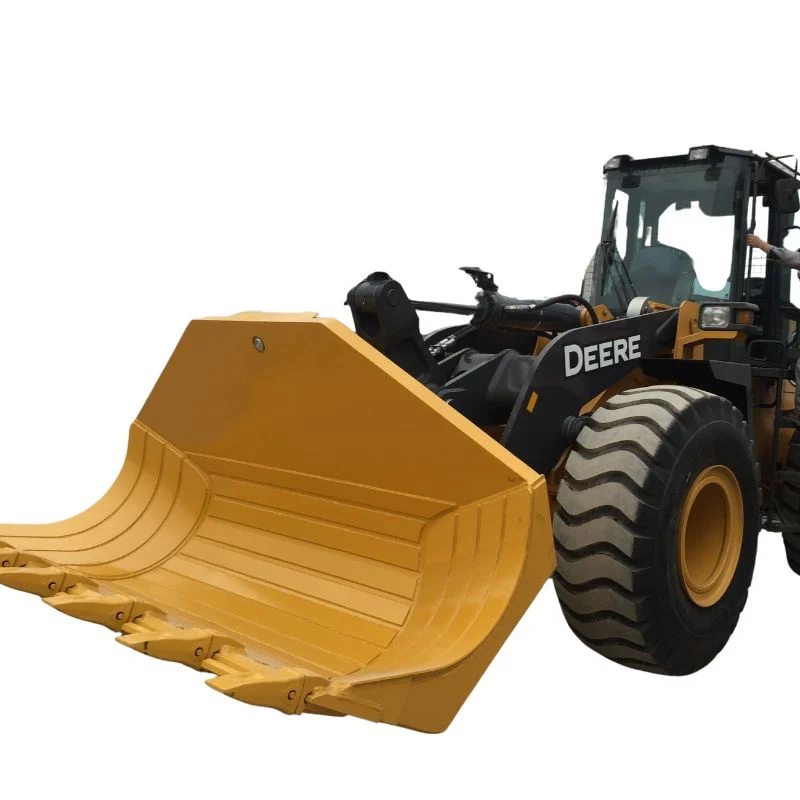
Side Dump Buckets for Skid Steers & Wheel Loaders
HWSD879 1.2 m³ Wheel-Loader Side Dump Bucket
2380 mm wide, 1350 kg side-discharge bucket for the 4 tonne wheel-loader class.
1.2 m³ · 2380 mm width
PRODUCT CATEGORY
Compare MAXX skid-steer side dump with Hongwing 1.2 and 1.5 m³ wheel-loader buckets, discharge build, mounting, mass and site clearance.
| Product | Mounting | Capacity | Empty mass |
|---|---|---|---|
| MAXX 5643D1 | Skid-steer plate | 0.60 yd³ / 0.459 m³ | 567 kg |
| HWSD879 | Wheel-loader linkage | 1.2 m³ | 1,350 kg |
| HWSD9869 | Wheel-loader linkage | 1.5 m³ | 1,890 kg |
3 products
2380 mm wide, 1350 kg side-discharge bucket for the 4 tonne wheel-loader class.
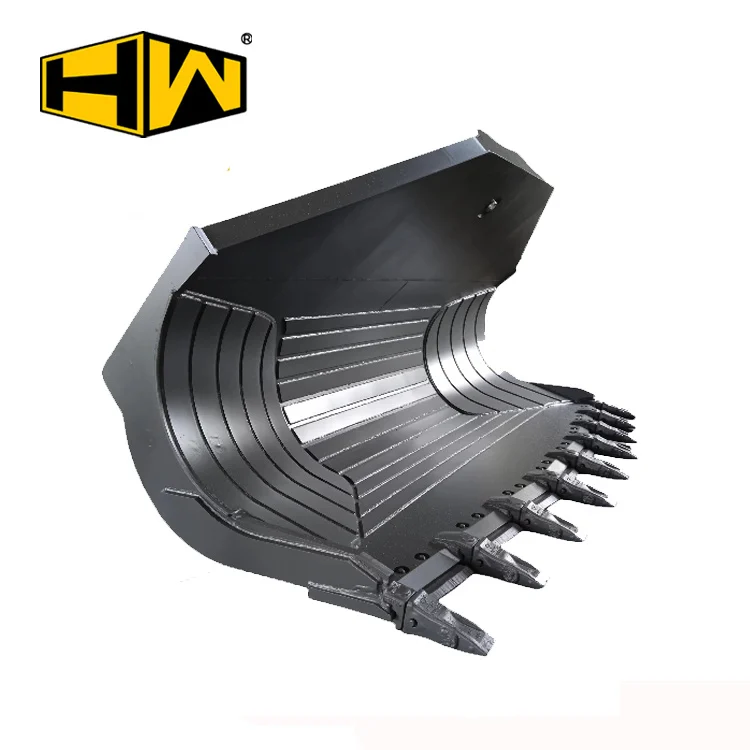
2600 mm wide, 1890 kg bucket with 45° side-dump specification for the 5 tonne loader class.
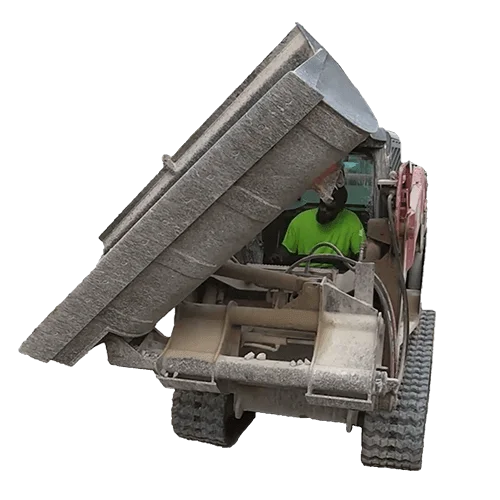
0.60 yd³ / 0.459 m³ skid-steer side-dump bucket; 567 kg; left- or right-discharge build.
Send the part number or describe the equipment you need.
Send a sourcing requestA side dump bucket lets the loader feed a trench or receiving area alongside its path. Tunnel work and restricted turning space make lateral discharge useful. Record the dumping side, receiving height, overhead clearance and the loader linkage.
At a specified bulk density of 1.6 t/m³, 1.2 m³ represents 1.92 t of material and 1.5 m³ represents 2.40 t. Add the attachment mass when considering the loader’s handling task.
MAXX 5643D1 uses a skid-steer mounting plate, 0.60 yd³ capacity and a selected left- or right-discharge build. HWSD879 and HWSD9869 use wheel-loader linkages at 1.2 and 1.5 m³. Start with the mounting and the receiving lane, then compare bucket volume, empty mass and the tipped envelope.
| Product | Machine interface | Volume | Width / empty mass | Discharge |
|---|---|---|---|---|
| MAXX 5643D1 | Skid-steer plate | 0.60 yd³ / 0.459 m³ | 567 kg empty | Left or right build |
| HWSD879 | Wheel-loader linkage | 1.2 m³ | 2,380 mm / 1,350 kg | 45° side-dump specification |
| HWSD9869 | Wheel-loader linkage | 1.5 m³ | 2,600 mm / 1,890 kg | 45° side-dump specification |
For a job using 1.6 t/m³ material, the 1.2 m³ bucket holds 1.92 t and the 1.5 m³ bucket holds 2.40 t. Bucket plus material totals are 3.27 t for HWSD879 and 4.29 t for HWSD9869. The larger choice adds 0.30 m³, 220 mm width and 540 kg empty mass, so it changes both lane clearance and the loader’s handling task.
A side dump bucket, sometimes just called a side bucket, has two parts. A sub-frame bolts or pins to the loader: a skid-steer plate on the MAXX 5643D1, the wheel-loader linkage on the HWSD879 and HWSD9869. The bucket body sits on that frame on a pivot running front to back along one side. One or more hydraulic cylinders roll the body over that pivot so material leaves over the side edge; the Hongwing models list a 45° side-dump angle.
The loader’s own tilt still works, so the same bucket loads and dumps forward like a standard bucket. The side-tip is an extra function and needs an auxiliary circuit: the front auxiliary on a skid steer, or a third valve on a wheel loader. The discharge side is fixed by the build, which is why the MAXX bucket is ordered as a left-hand or right-hand version.
The terms overlap, so it helps to separate them. In underground mining and tunnelling, side-dump loaders and overhead shovel loaders are purpose-built machines for narrow headings, where there is no room to turn. On surface sites, a side dump loader is usually an ordinary skid steer or wheel loader fitted with a side dump bucket, which is what this category supplies.
| Bucket type | Where material leaves | Typical job |
|---|---|---|
| Standard bucket | Forward over the front edge | Truck loading and stockpiling |
| Side dump bucket | Sideways over one side edge | Trench backfill, kerb lines and narrow lanes |
| Bottom-dump or 4-in-1 combination bucket | Down through the opened clam | Controlled placing, grading and grabbing |
| Spreader bucket | Through an adjustable gate or slot | Laying an even layer of gravel or sand |
A side-spreader bucket, where offered, combines a controlled opening with lateral release. If an even layer matters more than fast discharge into a trench, ask about a spreader design rather than a side-tip bucket.
On each of these jobs the loader travels straight, tips sideways and reverses out, saving the turn and the second approach a forward-dump bucket would need.
Tipping sideways moves the load’s centre of gravity across the machine. A loader is much less stable sideways than forwards, especially with the arms raised. Side-dump with the bucket low, the machine on level ground, and never side-tip a raised load across a slope. Follow the loader and attachment manuals for any height or load limits.
Side dump buckets wear at the side pivot pins and bushes, the side-tip cylinder pins and seals, the front edge and the discharge-side edge. Grease the pivot and cylinder pins at the interval in the manual, because the pivot carries the full load whenever the bucket tips. Check for play between body and frame, which shows as a knock when the bucket returns to level. Order seal kits from the cylinder markings and edges with their fasteners.
Compare the MAXX 5643D1 skid-steer bucket, the HWSD879 for 4 tonne loaders and the HWSD9869 for 5 tonne loaders, then send the details through the quote request form.
Side bucket is a short name for a side dump or side-tip bucket: a loader bucket that tips sideways on its own pivot and cylinder, in addition to the normal forward dump. It lets the machine travel alongside a trench, kerb or hopper and discharge without turning. It needs an auxiliary hydraulic circuit to drive the side-tip cylinder.
Yes. The loader’s tilt cylinders still roll the whole bucket and frame forward, so it loads and front-dumps like a standard bucket. The side-tip is a separate movement controlled by the auxiliary circuit. Use whichever suits the receiving point, but keep loads low when side-tipping.
Choose the side you will tip to most often, which is usually set by the trench or kerb you work along and by where the operator sees the edge best. On builds with a fixed side, like the MAXX 5643D1, changing sides later is not a simple adjustment, so decide before ordering.
Usually, because it carries a sub-frame, a pivot and a cylinder as well as the bucket body. The listed models weigh 567 kg for 0.459 m³, 1,350 kg for 1.2 m³ and 1,890 kg for 1.5 m³. That extra mass reduces the payload left within the loader’s rated load, so add it when sizing the bucket.
Send your machine model, required quantity and destination. Add installation items, wear parts and service quantities to the same inquiry.