
Excavator Bucket Teeth, Pins & Wear Parts
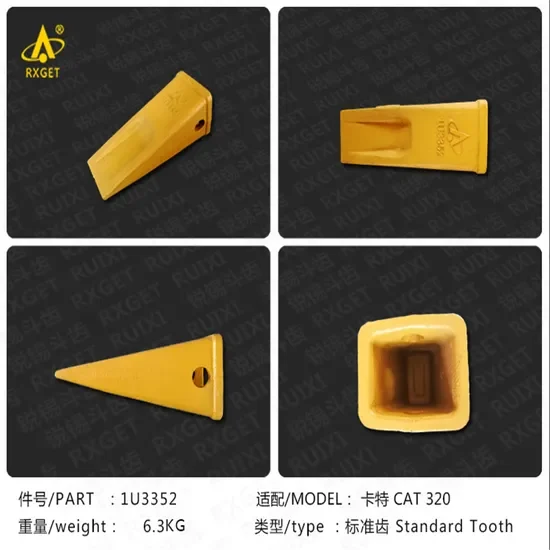
1U3352 J350 Bucket Tooth — 8E6358 Pin / 8E6359 Retainer
6.2 kg cast long tooth for the J350 side-pin system; teeth-only, retaining sets and adapter orders.
1U3352 · J350
PRODUCT CATEGORY
J350 1U3352 and J300 1U3302 long teeth with adapter, pin and retainer purchasing guidance.
| Product | System | Shape | Order lines |
|---|---|---|---|
| 1U3352 / J350 | J350 | Long | Tooth + matching pin and retainer |
| 1U3302 / J300 | J300 | Long | Tooth + matching pin and retainer |
2 products
6.2 kg cast long tooth for the J350 side-pin system; teeth-only, retaining sets and adapter orders.
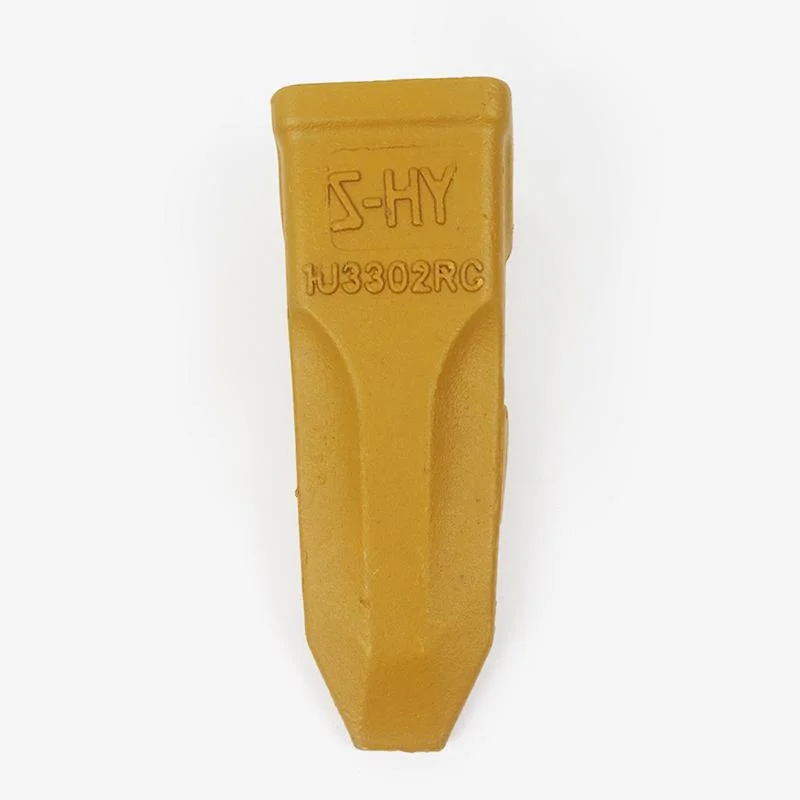
J300 long point with a horizontal retaining connection, available as loose teeth or counted tooth-and-lock sets.
Send the part number or describe the equipment you need.
Send a sourcing requestJ300 and J350 teeth use different system sizes. Similar part numbers do not make the two interchangeable. A first order should include the tooth number, adapter view and pin-lock arrangement.
List teeth, pins and retainers separately by system. A complete bucket set and additional shelf spares can be packed in the same order without losing the fitted quantity.
A point-only line renews the cutting tip. A complete retaining set adds the selected pin and retainer. An adapter repair adds the bucket-lip connection and its own workshop job.
| Point | System | Standard pin | Standard retainer | Adapter purchase |
|---|---|---|---|---|
| 1U3302 / J300 | J300 | 9J2308 | 8E6259 | Selected J300 base / lip |
| 1U3352 / J350 | J350 | 8E6358 | 8E6359 | 3G8354 for38.1 mm weld-on lip |
Excavator bucket teeth are the front end of a chain of wear parts. Each link has its own job, its own replacement interval and its own line on an order, which is why excavator wear parts are bought as systems rather than as single castings.
Digging force travels from the tooth tip through the pocket into the adapter nose, then into the lip. A well-fitted tooth seats firmly on the nose so the pin only retains it; the pin is not meant to carry the digging load. Once the nose or pocket wears, the tooth rocks, the pin starts to take load and pins break or teeth are lost. That is the main reason worn adapters are worth replacing on time.
The retention method decides how a tooth is fitted, what tools the change needs and which pins and locks go on the order. Teeth from different retention systems do not cross over, even when they look similar.
| Retention type | How it locks | Typical change tools | Notes |
|---|---|---|---|
| Horizontal side pin (J-series and similar) | A pin is driven through tooth and adapter from the side and held by a retainer | Hammer and pin punch | J300 and J350 on this site; pin and retainer are matched to the system size |
| Vertical or top pin | The pin drops through the top of the tooth and nose, often with a rubber or spring lock | Hammer and punch | Common on several makers’ systems; vertical pin sets are not interchangeable with side-pin sets |
| Hammerless mechanical lock | A rotating or wedge lock built into the tooth or adapter | Socket or lever tool | Faster, safer changes; the lock is specific to the brand and size |
| Weld-on or bolt-on teeth | Teeth fixed directly to the lip without a separate adapter | Welder or spanners | Seen on some mini excavator and special-purpose buckets |
The two systems listed here are side-pin types: the 1U3352 J350 tooth with its 8E6358 pin and 8E6359 retainer, and the 1U3302 J300 tooth with its 9J2308 pin and 8E6259 retainer.
Within one tooth system there are usually several point shapes. The shape changes penetration, wear life and the finish the bucket leaves; the system size and retention stay the same.
| Profile | Shape | Best suited to | Trade-off |
|---|---|---|---|
| Standard long | Straight point with a moderate taper | General digging and loading in earth and mixed ground | A balanced choice; neither the sharpest nor the longest-lasting |
| Heavy-duty or abrasion | Extra wear material on the underside | Sand, gravel and abrasive loading | Penetrates less readily as it wears blunt |
| Rock chisel | Thick, reinforced body with a chisel edge | Shot rock, ripped rock and demolition rubble | Heavier, and slower in soft ground |
| Single tiger | Narrow, sharp single point | Frozen ground, hard clay and compacted material | Wears quickly in abrasive ground |
| Twin tiger | Two points in a V | Trenching corners and hard ground needing extra penetration | Points can break if used to pry |
| Flare or wide | Wide, flat cutting face | Loose material, clean-up and a flat trench floor | Poor penetration in hard ground |
Tiger teeth on an excavator are chosen for penetration, not life. Many operators run twin tigers on the corners for trenching and standard or rock teeth across the middle, which is fine as long as every point belongs to the same system. Choose the profile for the hardest material the bucket meets regularly, not the occasional bad patch.
The excavator model does not identify the teeth. Buckets get rebuilt, lips are replaced and aftermarket buckets arrive with whatever system the builder chose. Read the parts on the bucket itself.
The same discipline applies to any machine part; the replacement-part identification guide sets out which plates, castings and measurements to collect before asking for a quote.
Original equipment part numbers are widely used as references in the aftermarket. A tooth sold to the 1U3352 reference is made to fit a J350 adapter nose; the number describes the fit, not the machine it came from. Searches for cat excavator bucket teeth, komatsu bucket teeth or jcb bucket teeth all lead back to the same question: which nose system is on the bucket?
Checking teeth at the start of each shift costs a minute. Running them too long costs an adapter, and running a bucket without a tooth costs a lip repair. Tooth makers publish wear limits for their own systems; the table gives general signs to act on.
| Part | Change it when | Risk of running on |
|---|---|---|
| Tooth | The tip is worn back and blunt, or wear is approaching the end of the adapter nose | The nose starts to wear, and the next new tooth will sit loose |
| Retainer | At every tooth change, or when it is cracked, perished or loose | The pin walks out and the tooth is lost |
| Pin | It is bent, grooved or no longer a firm fit | The tooth rocks and the pin shears |
| Adapter | A new tooth rocks on the nose, or the nose shows cracks, heavy wear or weld cracking | Broken pins, lost teeth and possible lip damage |
| Lip between adapters | The edge is thinning or scalloping | A lip rebuild instead of fitting lip shrouds |
| Corner teeth and side cutters | They wear noticeably faster than the centre | Side-wall and corner damage on the bucket |
Corner teeth often wear first. Some operators swap centre and corner teeth part-way through their life to even out wear; check that the system’s corner positions use the same tooth before doing this.
Teeth only protect the front of the bucket. In sand, gravel, shot rock or demolition material the heel, floor, side walls and lip edge wear too, and bucket rebuilds are far more expensive than bolt-on or weld-on wear parts.
When a bucket needs replacing rather than protecting, the excavator bucket range covers digging, rock and tilt buckets; rock buckets are usually built with thicker plate and more of these wear parts from new.
An excavator ripper tooth fits the nose on a ripper shank, not a bucket adapter. It is usually a long, heavy point built for penetration into rock, frozen ground or compacted layers. The shank’s nose system has to be identified exactly as for a bucket. Single-shank rippers for larger carriers are listed under excavator rippers.
Mini excavator bucket teeth are small, so it is tempting to buy by eye. The pins are often short, and the retainers are easily lost when the tooth is driven off. Order spare pins and locks with every set, and avoid welding teeth to adapters on small buckets: the heat softens hardened castings and the tooth can no longer be changed in the field.
A tooth order can be confirmed in one exchange when the request carries the identity of the system, the counts and the retention choice. Missing details usually mean a second round of photos.
Keep a copy of the confirmed list against the bucket’s serial or fleet number. The next order is then a repeat of known lines rather than a new identification job.
There is no fixed hour figure: abrasive sand and shot rock can wear a set out quickly, while clean topsoil may run far longer. Inspect teeth at the start of each shift and replace them when the tip is blunt and worn back, before wear reaches the adapter nose. Keeping a record of hours per set for each bucket and material makes reorder timing predictable.
Yes. “Digger” is the common UK and Australian word for an excavator, and the teeth are the same parts. What matters is the tooth system on the bucket, its size and the retention method, not what the machine is called. Identify the adapter and retaining parts before ordering, whatever the search term.
Yes, as long as every tooth belongs to the same system and size. A common arrangement is twin tiger teeth on the corners for trenching and standard or rock teeth across the middle. Mixing systems is different: a tooth from another system may slide onto the nose but will not seat or lock correctly, and it can be lost in work.
Retainers are inexpensive and lose their grip with use, so fitting new ones at each tooth change is good practice. Pins can be reused if they are straight, not grooved and still a firm fit, but many workshops replace them with the teeth to avoid a second stop. Order the pin and retainer pair that matches the tooth system.
It is not recommended. Teeth and adapters are heat-treated, and welding can soften them or cause cracking. A welded tooth also cannot be changed quickly when it wears out. If teeth keep falling off, look for a worn adapter nose, a missing or tired retainer, or a pin from the wrong system.
The tooth is the replaceable point that does the cutting and wears out. The adapter is the nose welded or bolted to the bucket lip that the tooth slides onto. Adapters last through several tooth sets but do wear, and once the nose is worn a new tooth will rock and break pins. Adapters need a workshop to replace; teeth can be changed in the field.
In hard, compacted or frozen ground they usually penetrate more easily, because the narrow point concentrates force. In abrasive ground they wear quickly and lose that advantage. For mixed earth digging and loading, a standard long tooth often gives the better overall balance of penetration and life.
A new tooth should seat firmly on a sound nose. Movement usually means the adapter nose has worn, the tooth belongs to a different system or size, or dirt is packed into the pocket. Clean the nose and pocket and try again; if the tooth still moves, measure the nose against a new adapter and plan its replacement before pins start breaking.
Send your machine model, required quantity and destination. Add installation items, wear parts and service quantities to the same inquiry.