
Excavator Rock Buckets & Hydraulic Tilt Buckets
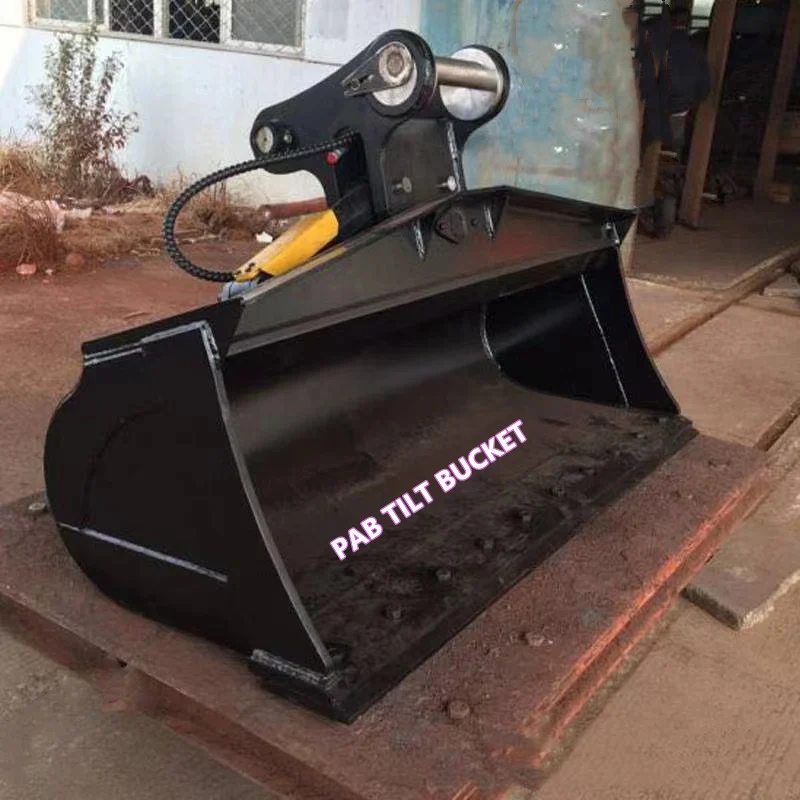
TB50 1200 mm Hydraulic Tilt Bucket — 5 Tonne Class
1200 mm wide, 0.3 m³, 45 mm pins and 45° tilt to each side for slope finishing.
1200 mm · ±45° tilt
Excavator Rock Buckets & Hydraulic Tilt Buckets
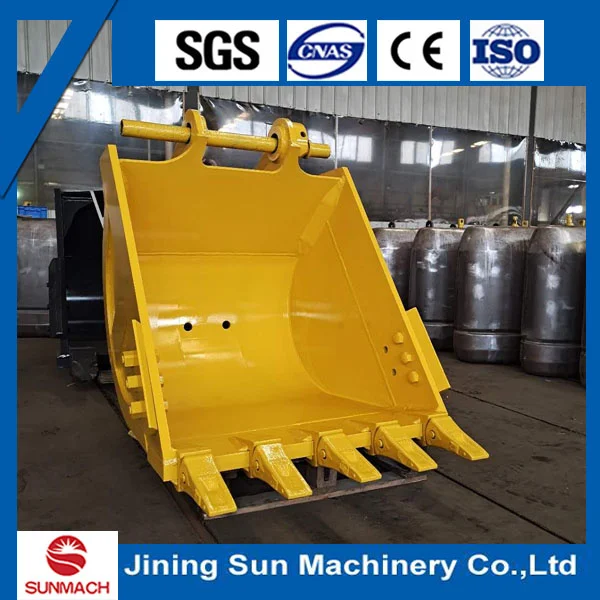
The PC200 0.8 m³ rock bucket is for digging and loading broken rock and abrasive ground. Its toothed edge gives the machine a digging face; the wear package protects the shell and sides. Specify the PC200 generation, mounting dimensions, tooth system and wear-plate selection in the bucket order.
| Model / part number | PC200-0.8m3 |
|---|---|
| Host excavator | Komatsu PC200 |
| Bucket capacity | 0.8 m³ |
| Bucket type | Heavy-duty rock bucket |
The PC200 bucket has a 0.8 m³ capacity. Its shell, cutting edge and external wear package perform different jobs: the shell carries the load, the edge supports the tooth adapters, and the wear strips protect the surfaces dragged through the material. For abrasive rock loading, compare where the wear steel is placed and how thick each replaceable surface is.
| Build | Material combination | Work |
|---|---|---|
| General purpose | Q345 | Soil, sand and gravel excavation |
| Heavy duty | Q345 + NM400 | Hard soil with softer stone |
| Rock duty / HDR | Q345 + NM400 or Hardox 400 | Abrasive gravel, broken rock and blasted material |
PC200 generation and the installed coupler identify the mounting arrangement. For a pin-on bucket, the two pin diameters, distance between pin centres and clear inside ear width define the bracket. For a quick-hitch bucket, those measurements describe the attachment pickup pins. The bucket drawing also includes working width, side profile, tip radius and clearance around the linkage.
Bucket breakout force is the force produced by the machine’s bucket linkage at a defined geometry. A wider cutting face engages more ground at once; it does not increase the excavator’s available digging force. Narrower digging faces and sharp teeth concentrate that force, while a wider smooth edge spreads and finishes material.
| Component | Write into the quotation |
|---|---|
| Bucket body | 0.8 m³, selected working width and plate specification |
| Mounting | Dimensioned bracket, pins and bushes |
| Ground-engaging tools | Adapters, teeth, pins and retainers by system |
| External protection | Side cutters, heel strips and side wear plates |
| Repeat-order package | Spare teeth and pin-lock sets per bucket |
| Drawing line | Choice recorded | Wear order |
|---|---|---|
| Structural shell | Q345 body; working width and plate schedule | Body repair plate locations |
| Rock protection | NM400 / Hardox 400 by bottom, heel and side position | Replaceable strips and side cutters |
| Cutting face | Lip and adapter arrangement; number of teeth | One tooth plus its pin/retainer per position |
| Mount | Pin-on or quick-hitch pickup geometry | Pins and bushes by mount position |
| Product | Machine | Capacity | Working feature |
|---|---|---|---|
| PC200-0.8m3 | Komatsu PC200 | 0.8 m³ | Toothed rock bucket |
| TB50 | 5 t excavator | 0.3 m³ | 1200 mm width · ±45° tilt |
The mounting is specified by machine generation and the fitted linkage or coupler. The order drawing records the two pin diameters, pin-centre distance and inside ear width, while the bucket body remains the 0.8 m³ configuration.
Bucket capacity does not increase the machine’s hydraulic digging force. Width, tip radius, tooth condition and the amount of ground engaged change how that force is applied. Choose width and wear protection for the digging task.
Choose the system installed on the bucket adapters. J300 and J350 teeth use different adapter noses and pin-lock sizes. Record the adapter number and take a side photograph before placing a replacement-teeth order.
Use the same volume, working width, bracket dimensions, plate thicknesses, wear-steel layout and tooth system. Include pins, bushes, side cutters and spare teeth as separate quantities.
1200 mm wide, 0.3 m³, 45 mm pins and 45° tilt to each side for slope finishing.
Send your machine model, required quantity and destination. Add installation items, wear parts and service quantities to the same inquiry.