
Excavator Auger Drives & Earth Drilling Tools
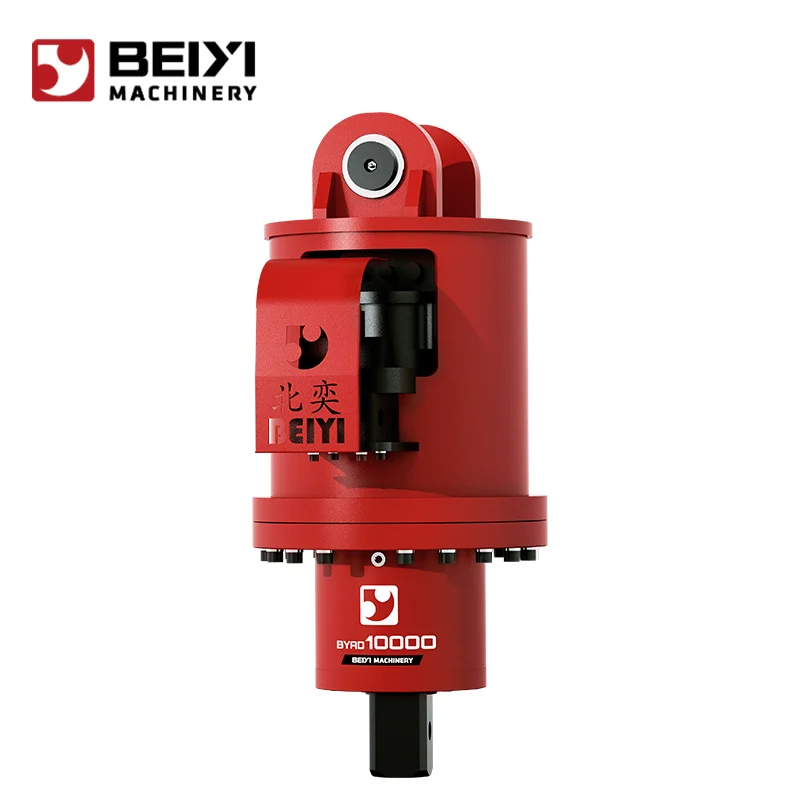
BEIYI BY-AD60 Hydraulic Auger Drive — 65 mm Round Shaft
2–6 tonne excavators, 1094–4117 Nm torque and 25–92 L/min flow.
65 mm shaft · 1094–4117 Nm
PRODUCT CATEGORY
BY-AD60 auger drive with 65 mm output shaft, torque, hydraulic range and earth/rock tooling options.
| Product | Carrier class | Torque | Hydraulic flow | Output |
|---|---|---|---|---|
| BY-AD60 | 2–6 t | 1094–4117 Nm | 25–92 L/min | 65 mm round shaft |
1 products
2–6 tonne excavators, 1094–4117 Nm torque and 25–92 L/min flow.
Send the part number or describe the equipment you need.
Send a sourcing requestHole diameter and depth define the drilling task. Soil, clay and rock define the teeth, pilot and auger style. The BY-AD60 drive is one component of a package that also needs a hitch, auger, connection pin, hoses and any extension.
Compare drive head, mounting hitch, auger diameter and length, spare teeth and extensions. Keep existing auger connections on the order when reusing tools.
| Work request | Cutting tool | Connection and replenishment |
|---|---|---|
| 150–300 mm fencing / landscaping holes | Earth auger; pilot and earth teeth | 65 mm round output; bit length and pin |
| 300 mm clay or shale hole | The published clay/shale size for BY-AD60 | Matching pilot, cutting teeth and holders |
| Up to 500 mm earth hole | Earth auger at the required diameter | Selected length, extension and lifting clearance |
BY-AD60 has a 65 mm round output shaft, equivalent to approximately 2.56 inches. A 2½-inch shaft is 63.5 mm, and a hex connection is a different profile. State the shaft form, actual dimension and retaining-pin position when adding a drive to existing augers. That keeps the new head and reusable tooling on the same procurement drawing.
“Bucket auger” is a name given to several quite different tools, and people searching for bucket augers are often after different things. Sorting out which one the drawing or the site actually calls for avoids quoting the wrong attachment.
| Name in use | What it is | Usual carrier | How spoil leaves the hole |
|---|---|---|---|
| Drilling bucket (bucket auger) | Steel barrel with cutting teeth on a base plate and an opening bottom; soil is cut up into the barrel | Rotary piling rig on a Kelly bar | The barrel is lifted out and its bottom opened to dump |
| Flight auger (earth auger) | Helical flight welded round a centre tube, with a pilot and teeth at the tip | Excavator or skid steer with a hydraulic auger drive | Spoil climbs the flight and is spun off at the surface |
| Bucket-mounted auger | Auger drive that clamps or hooks onto an existing digging bucket | Mini excavator or backhoe | Same as a flight auger |
| Skid steer “auger bucket” | Either an auger drive package or a mixing bucket with a discharge auger | Skid steer or compact loader | Depends on which of the two is meant |
| Soil-sampling bucket auger | Short open barrel on a T-handle for taking soil samples | Hand operated | Sample is tipped out of the barrel |
The excavator range on this page is the second type: a hydraulic drive head turning flight augers. A drilling bucket for bored piles relies on a rotary rig with a Kelly bar, crowd force and casing or support fluid, none of which a compact auger drive provides. Where a pile schedule specifies a bucket auger in loose or water-bearing ground, send the pile diameter, depth and ground report so the correct tool type is identified first.
Flight augers are the practical choice for post holes, tree pits, footing holes and fence lines up to the diameter the drive can turn. Because they lift spoil continuously, the operator only needs to pull the tool out a few times per hole.
An excavator drill unit has three working parts: a hydraulic motor, a planetary gearbox and an output shaft that carries the auger. Oil from the excavator’s auxiliary circuit spins the motor; the gearbox multiplies its torque and cuts its speed, so a compact head can turn a 300–500 mm rotary auger at a few dozen revolutions per minute.
For this reason an auger drive for excavator work is matched to the carrier’s measured auxiliary flow and relief pressure, not to machine weight alone. Two 5-tonne excavators with different auxiliary settings can turn the same head at noticeably different speed and torque. The BY-AD60 auger drive head publishes 25–92 L/min at 80–240 bar, giving 1094–4117 Nm and 30–68 rpm, which is the window to compare against the machine you intend to use.
Carrier weight is a first filter. It indicates roughly what auxiliary flow, lifting capacity and stability the machine has. Treat the table as a rule of thumb and confirm each figure against the actual circuit and the drive maker’s data.
| Carrier class | Typical auxiliary flow | Common hole diameters | Notes |
|---|---|---|---|
| 1–2 t micro and mini excavators | 15–40 L/min | 100–300 mm | Light drive heads and short augers; stability limits long drill strings |
| 2–6 t mini excavators | 25–90 L/min | 150–500 mm in earth | The BY-AD60 class: fencing, landscaping and footing holes |
| 6–10 t midi excavators | 60–150 L/min | 300–900 mm | Larger heads; extensions for deeper footings |
| Above 10 t | 100 L/min and more | 450 mm upward | Heavy drives for pre-drilling piles and large footings, often with rock tooling |
An auger for a 1.7 tonne excavator falls in the lightest group. Machines of that size often deliver roughly 20–40 L/min to the auxiliary line and have modest lifting height, so the drill string should stay short. The BY-AD60’s published class starts at 2 t; on anything smaller, compare the circuit flow with its 25 L/min minimum and check the 110 kg drive plus auger against the lift chart before choosing it.
Whether the carrier is a Kubota, Bobcat, Takeuchi or any other mini digger, an auger attachment needs the same three checks: auxiliary flow and pressure measured at the coupler, the bucket pin or hitch dimensions, and the thread or coupler type on the auxiliary lines.
Most post hole auger for mini excavator work is fence lines, signposts, pergola footings and tree planting. The drive and auger are only part of the result; hole spacing, plumb and spoil handling decide how many holes a shift produces.
On long runs an auger is best for discrete posts. For continuous cable, irrigation or drainage runs, a chain trencher is usually quicker than overlapping auger holes; the site’s chain trenchers are skid-steer mounted, so an excavator trencher attachment needs a separate enquiry.
A rock auger has a heavier flight, carbide or conical rock teeth set at a steeper attack angle, and a pilot designed to fracture the ground rather than scrape it. It will drill shale, soft sandstone, caliche, frozen ground and heavily compacted fill that would stop an earth auger. It is not a substitute for a rock drill in hard, unbroken rock.
The guide to earth augers, rock augers and core barrels compares each tool against soil type and is the place to start when a site investigation shows mixed layers.
The drive head hangs from a bracket on the excavator’s dipper, either pinned directly in place of the bucket or picked up by a quick hitch. Between bracket and drive there is a hanger pivot so the auger can hang vertically under its own weight at any arm angle.
An auger drill excavator setup is simple to operate, but the rotating flight is unforgiving. Most incidents involve people standing too close to the auger, buried services, or the machine becoming unstable with a loaded drill string at long reach.
The drive head is a long-life component when the hydraulic oil is clean and the gearbox oil is maintained. The cutting end is the consumable, and it is cheaper to replace teeth early than to rebuild a flight.
| Part | What wears | Replace when |
|---|---|---|
| Earth teeth | The tooth edge rounds off and shortens | The edge is blunt or worn back towards the holder |
| Carbide or rock teeth | The carbide tip chips or wears flush | Carbide is missing, or bullet teeth no longer turn in their holders |
| Pilot (centre point) | The point shortens and loses its spiral | The auger wanders as the hole starts, or needs heavy down pressure to centre |
| Flight outer edge | The edge thins and the cut diameter shrinks | Hole diameter falls below specification or the edge is knife-thin |
| Connection pin and socket | The pin bore goes oval and the socket wears | There is visible play between shaft and auger, or the pin is bent |
| Gearbox oil | Water and wear metal contaminate it | At the drive maker’s interval, or sooner if it looks milky or dark |
Order spare teeth and a pilot with every new auger and keep a set with the machine. Store augers off the ground with the connection end greased and capped, so the socket does not rust oversize.
A piling drilling bucket is designed for a rotary rig with a Kelly bar, crowd force and a high-torque rotary head, so it is not a direct fit on a standard excavator auger drive. For holes within the diameter an excavator drive can turn, a flight auger does the same work and clears its own spoil. Large bored piles in loose or wet ground normally need a piling rig or a dedicated excavator-based drilling unit.
Match the drive’s flow range to the carrier’s auxiliary flow and its pressure rating to the auxiliary relief. As a rough guide, 2–6 tonne mini excavators commonly run drives in the 25–90 L/min band, which suits earth holes of about 150–500 mm. Then check the combined weight of drive, auger and extension against the lift chart at the reach where you will drill.
Depth comes from the auger’s working length plus any extensions, limited by how high the arm can raise the whole string to withdraw it. Many standard flights are roughly 1.2–1.5 m long, and extensions add depth in steps. Torque does not increase with length, so deeper holes in heavy ground drill slower and need more frequent lifts to clear spoil.
Wet clay packs onto the flight and stops it lifting spoil, so torque demand rises until the circuit reaches relief pressure. Drill in shorter steps, lift often to spin the flight clean, and reverse briefly if it binds. A clay or shale auger with a more open flight and suitable teeth clears better. If it stalls at shallow depth in dry ground, check the auxiliary relief and the teeth.
More flow turns the auger faster, up to the drive’s maximum rated flow. Faster is not always better: in heavy ground, high speed with little torque polishes the teeth and fills the flight without cutting. Exceeding the rated flow overspeeds the motor and heats the oil. Keep flow inside the drive’s band and let torque do the cutting.
The augers can sometimes be reused if the shaft profile and size, pin bore and retaining position match the excavator drive. The drive mounting is different: skid steers use a loader quick-attach plate, while excavators need a pin-on or hitch bracket. Check the drive’s flow and pressure range against the excavator circuit before moving a drive from one machine to the other.
A hammer circuit is often set up for one-way flow with a direct return to tank, whereas an auger needs oil in both directions so it can reverse. Many excavators have a selectable auxiliary that switches between the two modes. Check the carrier’s auxiliary mode and relief before connecting; a one-way circuit drives the auger forward but cannot back it out of a jam.
Let the auger hang free on its hanger before rotation starts, sight it from two directions, and begin slowly so the pilot centres. Keep boom and arm movements small while drilling and correct early, because a hole that starts leaning tends to keep leaning. A worn pilot makes the auger wander, so replace it when the point loses its shape.
Send your machine model, required quantity and destination. Add installation items, wear parts and service quantities to the same inquiry.