Describe what changes below the surface
Give a ground description for the full drilling depth. A site may start with loose soil and continue into clay, gravel or rock. Include photographs from existing holes or excavations and any available ground information.
Tell us whether the job involves one hole size or several, and list the finished diameter and depth of each. The number of holes and available working space also help define the equipment combination.
Select the cutting tools for the ground
Earth and rock augers can use different pilots and tooth arrangements. A tool intended for ordinary soil should not be selected for rock solely because its diameter matches the hole. Describe the rock or mixed ground and ask which tooth and pilot combination is proposed.
Request the replacement tooth and pilot references with the quote. If conditions vary across the site, discuss whether separate augers or cutting-tool options are appropriate for the same drive.
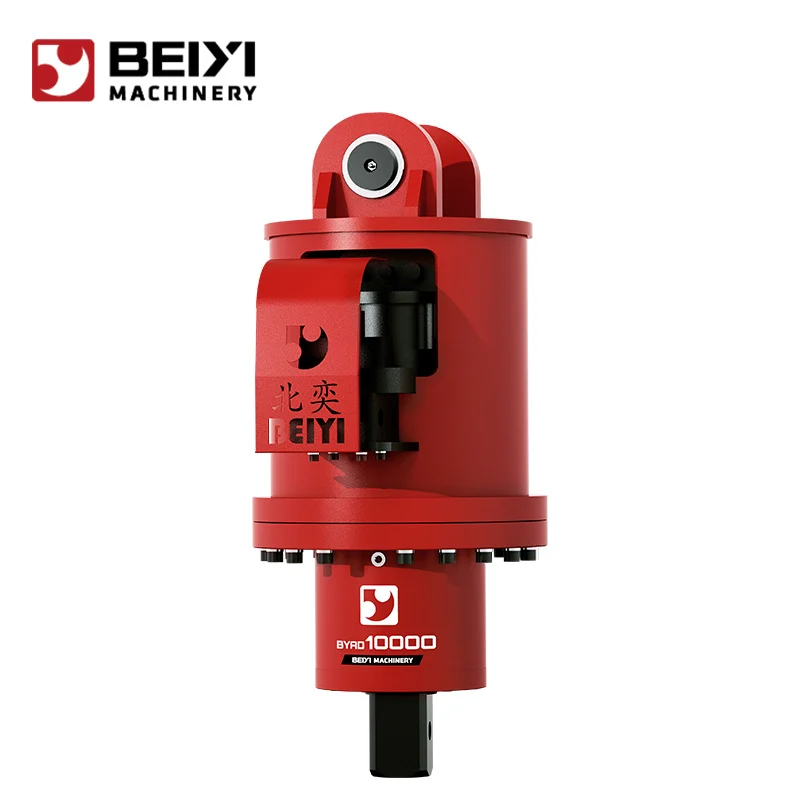
Match the drive to both machine and auger
Provide the machine make, model and available auxiliary flow and pressure. Request the drive operating range for the auger sizes being considered. Flow, pressure and auger diameter all enter the selection; an excavator tonnage label alone does not define the drilling combination.
Record the drive output shaft shape and size, and check the auger connection against it. Include a photograph when reusing an existing auger or extension. Ask the quote to identify the mount, hoses and connecting hardware.
Plan depth and working clearance
Record the space available to lift the auger clear of the hole and remove spoil. Tell us the required drilled depth and existing auger length before selecting an extension. A deeper hole needs a workable handling arrangement for the complete tool string.
List any access restriction, such as a low structure or narrow working area. Ask for the dimensions of the proposed drive and mounted auger so they can be compared with the site.
Send a drilling brief
Put the hole schedule, ground description and machine details together. The resulting quotation should separate the drive, mount, augers, extensions and spare cutting tools so you can select a useful combination.
- Hole diameters, finished depths and number of holes.
- Ground layers, rock or gravel content and available photographs.
- Machine model, auxiliary flow and pressure.
- Existing output connection or auger dimensions, if reusing tools.
- Working height, extension needs and delivery location.