
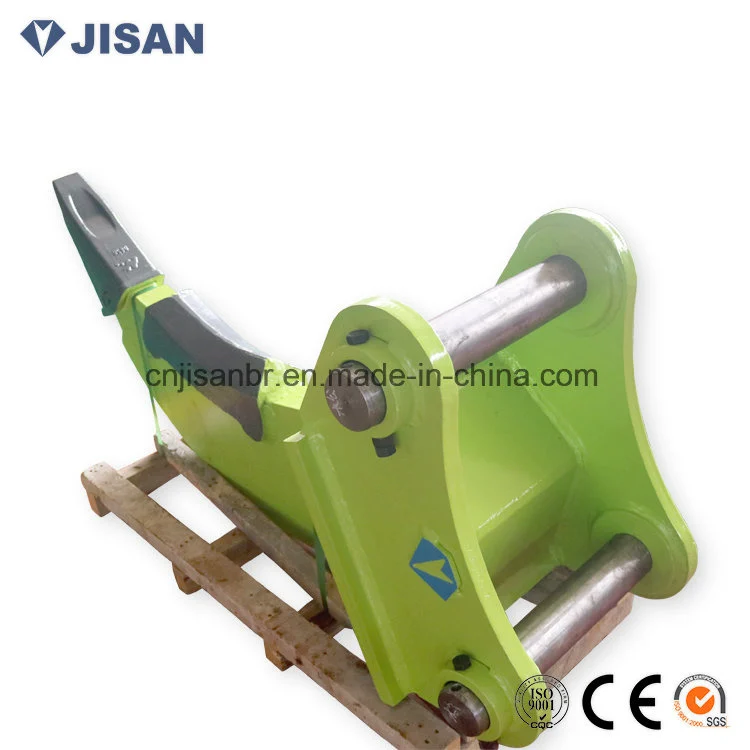
Excavator Single-Shank Rippers
Volvo EC290 Single-Shank Excavator Ripper
Machine-specific mechanical ripper with a replaceable tooth for Volvo EC290 ground opening.
EC290 · single shank
PRODUCT CATEGORY
Compare the JISAN mechanical ripper series and EC290 single-shank mounting, with carrier classes, pin geometry and replaceable tooth options.
| Product | Carrier / machine | Mounting | Wear system |
|---|---|---|---|
| EC290 single-shank | Volvo EC290 | Machine-specific pin-on or coupler pickup | Selected tooth and adapter |
| JISAN JSR10 | 23–30 t | 520 mm pin centres; 80–90 mm pin range | Selected tooth and retaining system |
2 products
Machine-specific mechanical ripper with a replaceable tooth for Volvo EC290 ground opening.
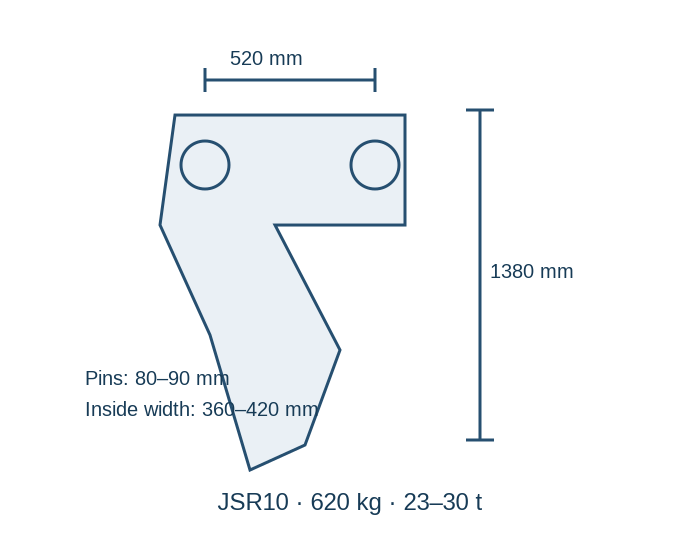
23–30 tonne single-shank series: 620 kg, 520 mm pin centres and 80–90 mm pin range.
Send the part number or describe the equipment you need.
Send a sourcing requestA single shank places the excavator’s digging force on a narrow tooth. It opens hard ground or a weathered seam before the bucket removes loosened material. Use the ripper and bucket as two stages in the excavation plan.
Order the ripper body, tooth, pin-lock set and machine mounting. A spare tooth is an easy replenishment item to ship with the initial attachment.
The manufacturer series separates 5 tonne, 20 tonne and 23–30 tonne procurement tasks. JSR10 is the current 620 kg catalog product; the EC290 page covers a machine-specific single-shank mounting. Read carrier class and pin geometry together, then select the removable tooth and wear protection.
| Series | Carrier | Weight | Pin centres | Pin diameter | Inside dipper width |
|---|---|---|---|---|---|
| JSR04 | 5–9 t | 160 kg | 310 mm | 50–55 mm | 180–200 mm |
| JSR08 | 16–23 t | 420 kg | 465 mm | 70–80 mm | 300–350 mm |
| JISAN JSR10 | 23–30 t | 620 kg | 520 mm | 80–90 mm | 360–420 mm |
The single tooth opens compacted or weathered ground in narrow passes. The digging bucket then carries the loosened volume. Specify the ripper mounting and tooth system beside the bucket: the two tools share the carrier but perform separate stages of the earthmoving task.
An excavator ripper is a single curved steel shank with a replaceable tooth at its tip. It pins to the dipper arm in place of the bucket and uses the same linkage and cylinders, so it needs no auxiliary hydraulics. What changes is where the digging force goes. A 1.2 m bucket spreads the breakout force of the bucket cylinder across a row of teeth; a single shank puts the whole of it onto one point a few centimetres wide. The pressure under that tip is many times higher, which is why a ripper penetrates ground that makes a bucket skate or bounce.
The ripper does not remove material. It opens and loosens it, and a digging bucket follows to load out. That two-stage method is slower per cubic metre than bucket digging in soft ground, but much faster than fighting hard material with a bucket, and it keeps bucket teeth, adapters and the bucket shell from heavy wear and cracking.
Three attachments compete for hard digging. They suit different ground, and many quarry and civil jobs use more than one.
| Tool | Energy source | Best ground | Limits |
|---|---|---|---|
| Single-shank ripper | Excavator digging force through the linkage | Layered, fractured or weathered rock; hardpan; frozen ground | Cannot break massive, unjointed rock |
| Hydraulic breaker | Auxiliary oil flow driving a piston | Massive rock, boulders, reinforced concrete | Slower on large volumes; noise; needs a hammer circuit |
| Rock bucket | Excavator digging force across heavy teeth | Blasted or ripped rock, dense gravels | Wears quickly if used to open unbroken ground |
As a working rule, if the ripper tooth can find a seam, joint or bedding plane and lift the rock along it, ripping is the cheapest method. If the tooth scratches the surface and the shank flexes without the rock moving, the material needs a hydraulic breaker or drilling and blasting. Once the ground is opened, a heavy-duty rock bucket such as the PC200 0.8 m³ rock bucket loads it out with less wear than digging unbroken ground.
Ripper size follows the carrier. A shank built for a 30-tonne machine is too heavy for a 15-tonne excavator to curl efficiently, and a light shank on a large machine will bend or crack at the first heavy pull. The series dimensions on this page step up with carrier class: weight, pin centres, pin diameter and plate thickness all increase together.
| Carrier class | Series | Weight | Typical use on that class |
|---|---|---|---|
| 5–9 t | JSR04 | 160 kg | Utility trenches in hard clay, root loosening, frost on small sites |
| 16–23 t | JSR08 | 420 kg | Site clearance, hardpan and weathered rock on civil jobs |
| 23–30 t | JSR10 23–30 tonne ripper | 620 kg | Bulk ripping of layered rock and heavy compacted fill |
| Volvo EC290 | EC290 machine-specific shank | Built to the EC290 mounting | Ground opening on an EC290 with its installed pin-on or coupler pickup |
Plate thickness is a useful comparison between suppliers. A thicker shank resists bending and side loads, but adds weight at the tip. Shank length and curvature matter too: a longer shank reaches deeper per pass but gives the bucket cylinder a longer lever to work against, so the tip force falls. For hard rock, a shorter, heavier shank usually performs better than a long one.
A ripper is ordered to the excavator’s bucket pins in the same way as a bucket. The four key dimensions are the two pin diameters, the pin-centre distance and the inside width between the dipper ears. The JSR10, for example, is listed with 520 mm pin centres, an 80–90 mm pin range and 360–420 mm inside dipper width. Measure the machine rather than relying on the model name, because arms, linkages and couplers vary within one model. The pin and hitch measuring guide explains each dimension.
Avoid side pulls, twisting the shank in a crack and using the ripper as a lever to lift the machine. These loads bend shanks and crack mounting ears. Do not hammer the tooth into the ground by dropping the boom; that is a breaker’s job. On slopes and near trench edges, keep the machine stable and the ripping direction towards the tracks.
Rock is not the only reason to keep a ripper on site. In cold climates a frost layer can be harder to dig than the rock beneath it, and a bucket on frozen ground mostly wears its teeth. A single shank breaks the frozen crust into slabs that the bucket can lift, and the unfrozen soil below digs normally. Rip in a grid pattern, first in one direction and then across, so the slabs are small enough to load. Frozen gravel is very abrasive; check the tooth every few hours.
On land clearing, the shank cuts lateral roots around a stump before the bucket or a grapple lifts it out, which reduces the pull on the machine and leaves less soil attached. On redevelopment sites, the ripper opens old asphalt, compacted hardstands and thin slabs so they can be lifted in pieces. Reinforced concrete is a different case: mesh and bars hold the broken pieces together, and a breaker or pulverizer does that work better.
Most contractors rip and load with the same excavator, so the swap between tools sets the pace. With a hydraulic quick coupler, changing between ripper and bucket takes a minute or two from the cab. With pin-on tools, each change means knocking out pins, so the work is organised into long ripping runs followed by long loading runs. Two practical patterns:
Record the volume loaded per hour of combined ripping and loading in the first days of a job. That figure, more than any published rating, shows whether ripping remains economical as the ground changes, or whether part of the cut should move to breaking or blasting.
The tooth at the tip of a ripper wears fastest and is designed to be replaced. Most rippers use a tooth, an adapter or nose welded to the shank, and a pin-and-retainer lock. The tooth goes first; the adapter lasts through several teeth; the shank wears along its leading edge and heel. Order the system as one identity so spare teeth fit the existing adapter.
| Wear point | Sign of wear | Action |
|---|---|---|
| Tooth tip | Blunt, rounded or shortened point; slower penetration | Replace the tooth before it wears into the adapter |
| Tooth lock and retainer | Loose tooth, movement when rocked by hand | Replace the pin and retainer with each new tooth |
| Adapter nose | Tooth sits loosely even with new locks | Replace or rebuild the adapter |
| Shank leading edge | Thinning behind the adapter | Fit or renew wear plates; hard-face as recommended |
| Heel and sides | Polished, thinned plate at the back of the curve | Add heel protection on abrasive sites |
| Mounting ears and bosses | Ovalled pin holes, cracks at welds | Line-bore, re-bush or repair before further use |
Keep at least one spare tooth and lock set on site. A ripper run on a worn adapter loses its tooth more often and eventually needs a nose replacement, which is a workshop job.
For full earthmoving and quarry tool sequences, including where a ripper sits beside breakers and rock buckets, see rock excavation and quarry attachments.
No. A single-shank ripper is a mechanical attachment. It pins to the dipper arm like a bucket and is driven by the excavator’s own boom, arm and bucket cylinders. No auxiliary circuit, hoses or motor are involved, which makes it simple to fit and cheap to maintain. Only the tooth, locks, wear plates and mounting pins need regular attention.
A ripper loosens rock that has weaknesses to work along, such as bedding planes, joints, cracks or weathering. It lifts and splits the rock along those planes. It cannot break massive, unjointed hard rock; for that you need a hydraulic breaker or drilling and blasting. Testing a few passes on site is the most reliable way to judge rippability.
A 20-tonne excavator falls in the 16–23 tonne class covered by the JSR08 series on this page, with 465 mm pin centres and 70–80 mm pins. Machines at the top of the range, around 23 tonnes and above, move into the JSR10 class. Measure your pins and ear width before ordering, as these vary between models and couplers.
A single shank gives the highest force at one point and suits hard, layered or frozen ground. Twin or multi-shank rippers loosen a wider strip per pass in softer material but split the force between tips, so they penetrate hard ground less well. For rock and hardpan on an excavator, the single shank is the usual choice.
Each pass is limited by the shank length and the ground. In hard rock, passes may only lift a few hundred millimetres before the loosened material must be removed. Working in layers, ripping and loading in turns, the total depth is limited only by the excavator’s digging depth. The ripper’s own height is not a depth rating.
Yes, single-shank rippers are widely used as frost rippers. The narrow tip breaks the frozen crust so a bucket can dig the unfrozen material below. Expect faster tooth wear on frozen gravel, keep spare teeth on hand, and work in short passes so the machine is not shock-loaded.
The common causes are a worn adapter nose, reused or worn locking pins and retainers, and teeth from a different system than the adapter. Fit a new lock with each tooth, check the tooth sits tightly on the adapter, and replace or rebuild the adapter when a new tooth still moves.
Send your machine model, required quantity and destination. Add installation items, wear parts and service quantities to the same inquiry.