
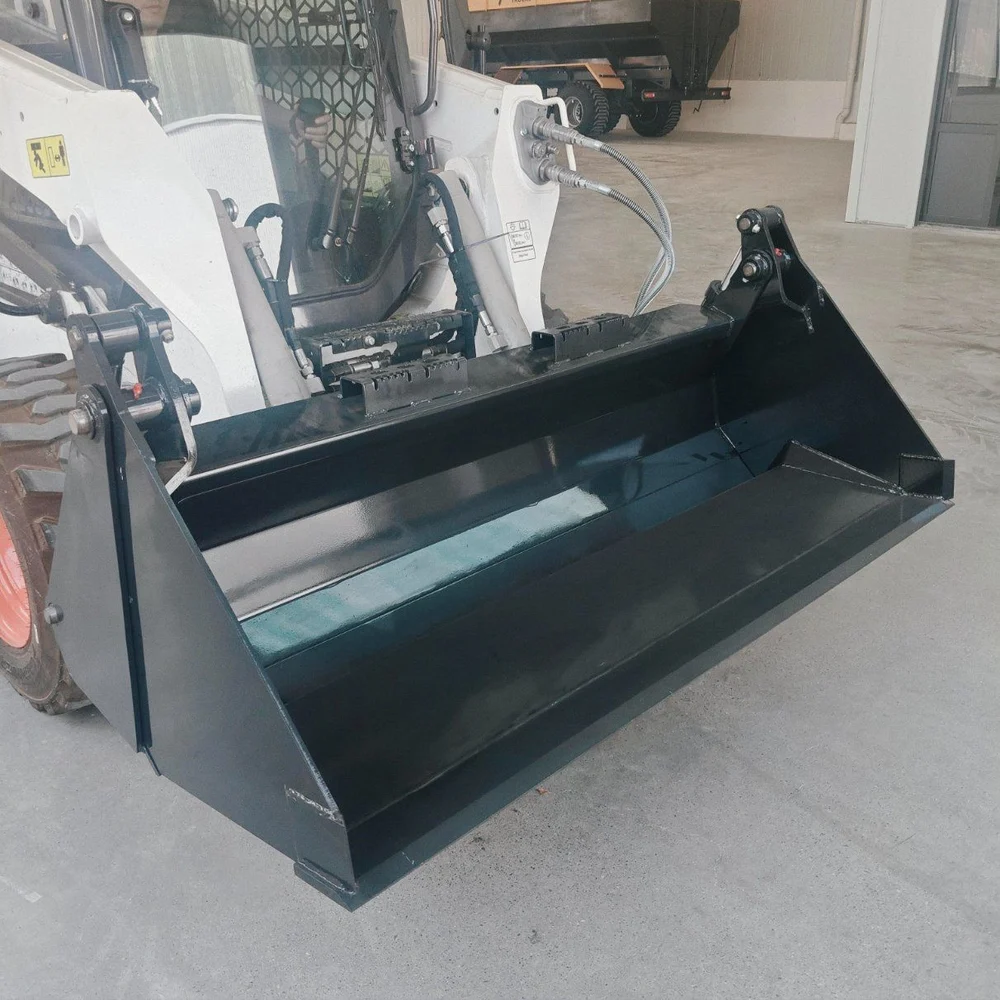
4-in-1 Buckets for Skid Steers & Wheel Loaders
HY010472 4-in-1 Skid Steer Bucket — 0.48 m³
Hydraulic combination bucket for loading, levelling, grabbing and unloading with a skid steer.
0.48 m³ · four functions
PRODUCT CATEGORY
Compare HY010472 skid-steer and HWN98789 wheel-loader combination buckets, capacity and mounting.
| Product | Machine type | Capacity | Working features |
|---|---|---|---|
| HY010472 | Skid steer | 0.48 m³ | Hydraulic opening jaw |
| HWN98789 | Wheel loader | 1 m³ | 2000 mm width · 800 kg · twin cylinders |
2 products
Hydraulic combination bucket for loading, levelling, grabbing and unloading with a skid steer.
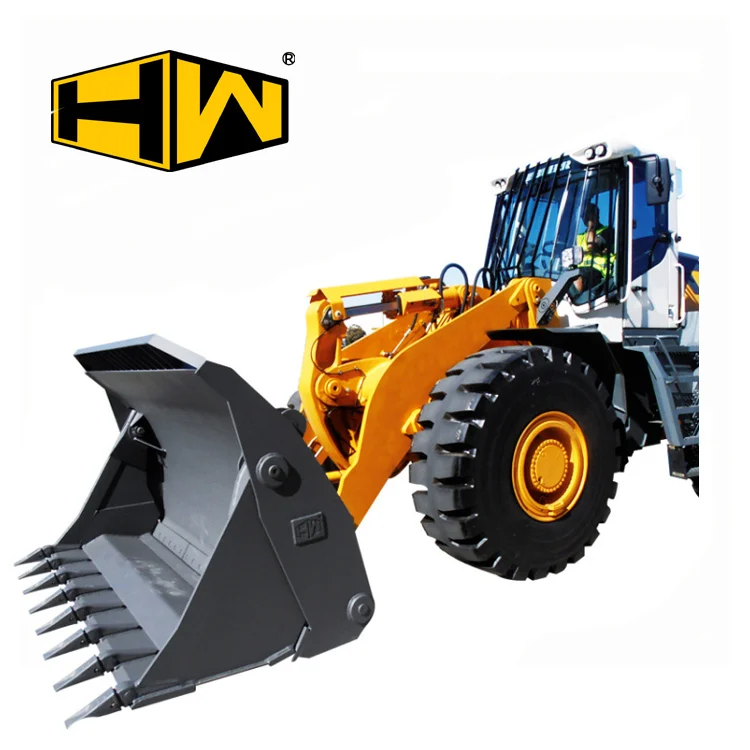
2000 mm wide, 800 kg combination bucket with two opening cylinders for the 2 tonne loader class.
Send the part number or describe the equipment you need.
Send a sourcing requestUse the closed bucket for loading, the exposed edge for dozing and levelling, and the jaw for gripping material. The opening section also releases material without relying only on forward tipping.
A skid-steer plate and a wheel-loader linkage are different interfaces. Keep mounting, hydraulic ends, cutting edge and cylinder service parts with the selected model on the quotation.
| Purchase line | HY010472 | HWN98789 |
|---|---|---|
| Carrier connection | Skid-steer plate | Wheel-loader linkage |
| Closed volume | 0.48 m³ | 1 m³ |
| Known envelope / mass | Selected closed/open drawing | 2,000 mm width / 800 kg |
| Jaw drive | Cylinder and hose package | Two opening cylinders |
| Working edge | Loading edge and opening-jaw wear surfaces | Straight or toothed edge |
| Repeat order | Edge fasteners, pivot group and seals | Edge or teeth, two-cylinder service group and pivots |
The machine curls and tips the entire bucket. The auxiliary circuit opens and closes the jaw, exposing the dozing edge and gripping material between the two sections. For cleanup and grading, list the jaw hose/coupler set and both working edges together. For digging, add the selected cutting or tooth system and its retaining parts.
A 4-in-1 bucket is a loader bucket split into two hinged parts. The rear wall stays fixed to the mounting plate or loader linkage. The front shell, often called the clam, carries the floor and the main loading edge and is swung open by one or two hydraulic cylinders. The same tool is sold as a combination bucket, a four-in-one bucket, a 4x1 bucket, a 4in1 bucket, a multi-purpose bucket, a clam bucket or, less often, a 4 way bucket. On backhoe loaders the front shovel with this layout is usually called a multi-purpose or 6-in-1 shovel. The number refers to jobs, not to moving parts.
Because the clam pivots near the top of the rear wall, jaw position decides what the bucket does. Closed, it is a loading bucket. Fully open, the rear wall’s lower edge works as a dozer blade. Slightly open and dragged backwards, it grades and levels. Closed on to an object, it grabs. Opening the clam while the bucket is raised also gives a controlled bottom discharge, which some suppliers count as a fifth function.
This category covers the principle at two machine sizes. The HY010472 skid-steer combination bucket holds 0.48 m³ and mounts on a skid-steer plate. The HWN98789 wheel-loader four-in-one holds 1 m³, is 2,000 mm wide, weighs 800 kg and uses two opening cylinders on a 2 tonne rated-load loader. They are not interchangeable, even with an adapter plate.
The jaw works the same way on every carrier. The mounting face, the hydraulic supply and the lifting limit change from one machine type to the next. Check them in that order before comparing widths.
| Carrier | Usual mounting | Jaw hydraulics | Check before ordering |
|---|---|---|---|
| Skid steer or compact track loader | Universal skid-steer quick-attach plate | Standard-flow front auxiliary, two couplers | Rated operating capacity, lock-pin engagement, coupler type |
| Mini skid steer or stand-on loader | Smaller mini-loader plate, not the full-size universal plate | Low-flow auxiliary | Plate pattern, attachment mass, width against the machine |
| Compact tractor front loader | Skid-steer-style plate, Euro (Global) hitch or the loader maker’s pin-on bracket | Third-function valve or diverter usually needed | Lift capacity at the pivot pins, valve kit, rear ballast |
| Telehandler | Carriage specific to the make, or a shared carriage pattern | Boom-head auxiliary line, where fitted | Load chart at working reach, carriage pins and width |
| Wheel loader | Pin-on linkage or loader quick coupler | Third-valve auxiliary piped to the jaw cylinders | Rated load, linkage pin centres and bore, bucket width |
A mini skid steer 4 in 1 bucket is a separate build. Stand-on and walk-behind loaders use a smaller plate and deliver much less oil, so a full-size skid-steer bucket will neither fit nor suit the machine’s lift. On full-size skid steers and compact track loaders the universal quick-attach plate is common across most makes, which is why skid-steer attachments are the easiest to source. Still confirm that both lock pins pass fully through the slots in the bucket plate before work starts.
A 4 in 1 tractor bucket is mostly bought for yard, farm and property work: scraping concrete, moving gravel, collecting brush and backfilling. Two checks decide whether it will work. The first is the hitch. Many compact-tractor loaders now use a skid-steer-style quick-attach plate, while others use a Euro (Global) hitch or the loader maker’s own bracket. The second is hydraulics. A tractor loader valve normally controls only lift and curl, so the jaw needs a third-function valve, an electric diverter or hoses run from a rear remote. A tractor loader also lifts less than a skid steer of similar engine power, and a four-in-one weighs more than a plain bucket of the same width. Check the loader’s rated lift at the pivot pins and fit the rear ballast the tractor manual asks for.
On a telehandler the bucket hangs on a carriage at the boom head and the jaw takes oil from the boom-head auxiliary line. Rated capacity falls as the boom extends and lowers, so the useful fill depends on the load chart at the reach you actually work at, not on the headline lift figure. A telehandler 4-in-1 bucket is popular on farms and building sites because the clam can open over a high trailer or hopper instead of tipping, which reduces the height the boom must reach. Confirm that the carriage pattern and the auxiliary coupler type match before ordering.
Neither listed model is offered as a tractor or telehandler version. For those carriers, send the hitch or carriage drawing so a matching mount can be quoted, rather than bolting an adapter to a skid-steer plate. Adapters move the load forward, reduce breakout force and add another wear interface.
Choose width against the machine first. On a skid steer or track loader, a bucket at least as wide as the outside of the tyres or tracks lets the machine drive on the surface it has just levelled; a narrower bucket leaves ruts beside each pass. A bucket far wider than the machine spreads the breakout force over a longer edge and makes the loader harder to steer in dense material.
Capacity is volume. The load is that volume multiplied by the material’s bulk density, plus the empty attachment. A four-in-one carries more steel than a general-purpose bucket of the same width because it has a second shell, a hinge line and cylinders, so more of the machine’s rated capacity goes on the bucket itself.
| Material (loose) | Typical density | 0.48 m³ fill | 1 m³ fill |
|---|---|---|---|
| Wood chip or bark mulch | 0.3–0.5 t/m³ | 145–240 kg | 300–500 kg |
| Dry topsoil | 1.1–1.3 t/m³ | 530–625 kg | 1,100–1,300 kg |
| Crushed stone or gravel | 1.5–1.7 t/m³ | 720–815 kg | 1,500–1,700 kg |
| Wet sand | 1.9–2.0 t/m³ | 910–960 kg | 1,900–2,000 kg |
Add the empty mass of the bucket (800 kg for HWN98789; ask for the HY010472 drawing mass with the quote) and compare the total with the rated operating capacity in the machine manual, which is already set below the tipping load. Densities vary with moisture and grading, so use the table as a planning figure. For wet or dense material, fill the bucket short rather than heaping it.
The jaw is driven by double-acting cylinders, not by a motor. A 4-in-1 skid steer bucket therefore runs on the standard-flow auxiliary circuit, and a loader bucket runs on the machine’s third valve. High flow is not needed; extra flow only makes the jaw move faster, which can make gripping harder to control. There is no motor housing, so no case-drain line is required. One open line and one close line run from the cylinders to the machine couplers.
| Task | Jaw position | Technique |
|---|---|---|
| Loading and carrying | Closed | Fill as a standard bucket and travel with the load low |
| Dozing and backfilling | Fully open | Push material with the rear edge; keep the clam clear of the pile |
| Grading and levelling | Slightly open | Back-drag with the loader arms in float so the rear edge planes the surface and the gap collects surplus |
| Grabbing | Closed on the object | Pick up logs, kerbs, brush, rubble or rocks near their centre and carry them low |
| Bottom discharge | Opening while raised | Release into a trailer or skip without full curl, or open slowly while reversing to spread a windrow |
Grabbing is where most structural damage happens. A jaw closed on a long log or a slab well off-centre twists the hinge and loads one side harder than the other. Grip near the centre of the load, keep it low and set it down before re-gripping. If most of the work is brush, roots or loose timber rather than soil, a dedicated skid-steer grapple clamps irregular loads more securely and lets dirt fall through.
For finish grading, open the jaw a little, lower the arms into float and reverse slowly. The rear edge cuts high spots, and the material it gathers drops into low spots as the bucket moves. Close the jaw to carry away any surplus.
Loader buckets differ mainly in where the material leaves. A standard bucket dumps forward over its front edge. Side-dump loaders tip the bucket sideways so the machine can travel alongside a trench, kerb or narrow road without turning. A four-in-one drops material through the open bottom and adds a grip. Choose by the move the machine repeats most often.
| Repeated job | Best fit | Reason |
|---|---|---|
| Loading trucks and stockpiling | General-purpose or 4-in-1 bucket | Forward dump; the 4-in-1 gains clearance by opening over the body |
| Backfilling a trench from beside it | Side-dump bucket | Discharges sideways while the machine runs parallel to the trench |
| Site cleanup with mixed debris | 4-in-1 bucket | Scrapes, grips awkward pieces and loads with one tool |
| Brush, roots and logs | Grapple bucket or root grapple | Open tines shed soil and the clamp closes on irregular shapes |
| Finish grading of a pad or drive | 4-in-1 bucket | The rear edge back-drags with a clear view of the cut |
A combination bucket has more moving and wearing parts than a plain bucket, and they all work on every open-close cycle. A typical inspection routine:
Order spares as a set: edges with their bolts, a pin-and-bush group for the hinge, cylinder seal kits identified from the cylinder markings, and hose assemblies with the correct ends.
Send the list through the quote request form with a photo of the machine’s mounting face and auxiliary couplers. A photo often settles the mounting question faster than a model name.
Yes. 4x1, 4in1, four-in-one, combination bucket and multi-purpose bucket all describe a loader bucket with a hinged clam opened by hydraulic cylinders. The four uses are loading, dozing, grading and grabbing. Real differences between products are in the mounting, width, capacity, steel grade and whether one or two cylinders drive the jaw, so compare those rather than the name.
Usually, if the loader hitch matches and the tractor can supply a third hydraulic function. Many compact tractor loaders use a skid-steer-style quick-attach plate; others use a Euro (Global) hitch or a pin-on bracket. The jaw needs its own pair of hoses, which most tractor loaders only have after a third-function valve or diverter is added. Check the loader’s lift capacity at the pivot pins, because a four-in-one is heavier than a standard bucket.
Start with the carriage. Telehandler carriages differ between makes, so the bucket must be built for that interface. Then confirm a boom-head auxiliary circuit and its coupler type. Finally, read the load chart: rated capacity falls as the boom extends, so the safe fill depends on reach. HY010472 and HWN98789 are skid-steer and wheel-loader builds, not telehandler versions.
No. The jaw is moved by cylinders, so standard auxiliary flow is enough and high flow only speeds up the jaw. There is no motor, so a case-drain line is not needed. What matters is the coupler type, hose length through the full jaw and bucket movement, and the auxiliary relief pressure set by the machine maker.
Clamshell grabs are made for excavators, but a loader-style four-in-one is rarely used on one. An excavator already grips by closing a thumb against its digging bucket, and it loads with a crowd-and-curl motion a loader cannot make. For an excavator, a hydraulic thumb or a grab is usually the better purchase. The 4-in-1 layout suits loaders, which push and back-drag with the bucket held level.
Most combination buckets hold the jaw with the machine’s auxiliary spool valve, which can leak slightly inside, and worn cylinder seals add to the drift. If the jaw moves with the engine running and the control centred, check the cylinder seals first, then the machine’s auxiliary valve. Where gripping and holding is a regular job, a pilot-operated check valve on the jaw cylinders holds position. Never work or stand under a raised, gripped load.
A straight bolt-on edge suits grading, spreading, cleanup and scraping hard surfaces because it leaves a flat finish. Bolt-on teeth or a tooth bar help the bucket enter compacted soil, clay or broken rubble, but leave grooves when back-dragging. Many owners keep teeth for digging seasons and a straight edge for finishing. Order the matching bolts or tooth retainers with whichever edge you choose.
A four-in-one has a solid clam that holds soil, sand and gravel as well as gripping objects. A grapple bucket has open tines above a bucket or fork floor, so loose soil falls through while the clamp closes on brush, logs or scrap. If most of the work is earthmoving with occasional gripping, choose the 4-in-1. If most of it is handling bulky material, choose a grapple.
Send your machine model, required quantity and destination. Add installation items, wear parts and service quantities to the same inquiry.