Four breaker sizes describe different purchases
A compact hammer and a medium excavator hammer need different carriers, brackets and hydraulic circuits. The tool diameter identifies the working steel; attachment weight and the flow/pressure window identify the installed combination.
| Product | Carrier | Weight | Tool | Flow | Breaker pressure |
|---|---|---|---|---|---|
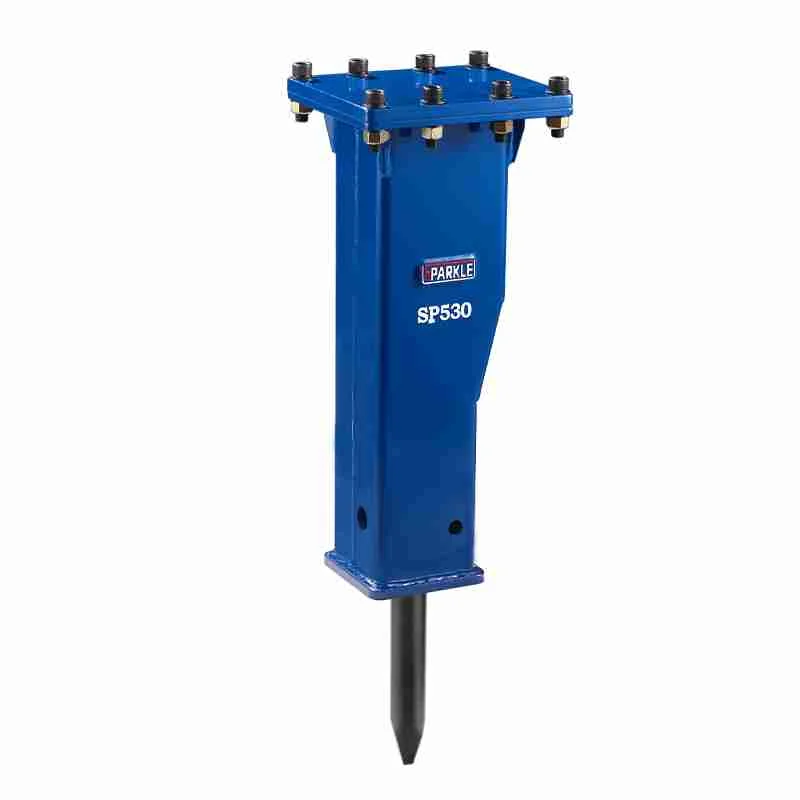
| Sparkle SP530 | 2.5–4.5 t | 155 kg | 53 mm | 25–50 L/min | 88–117 bar |
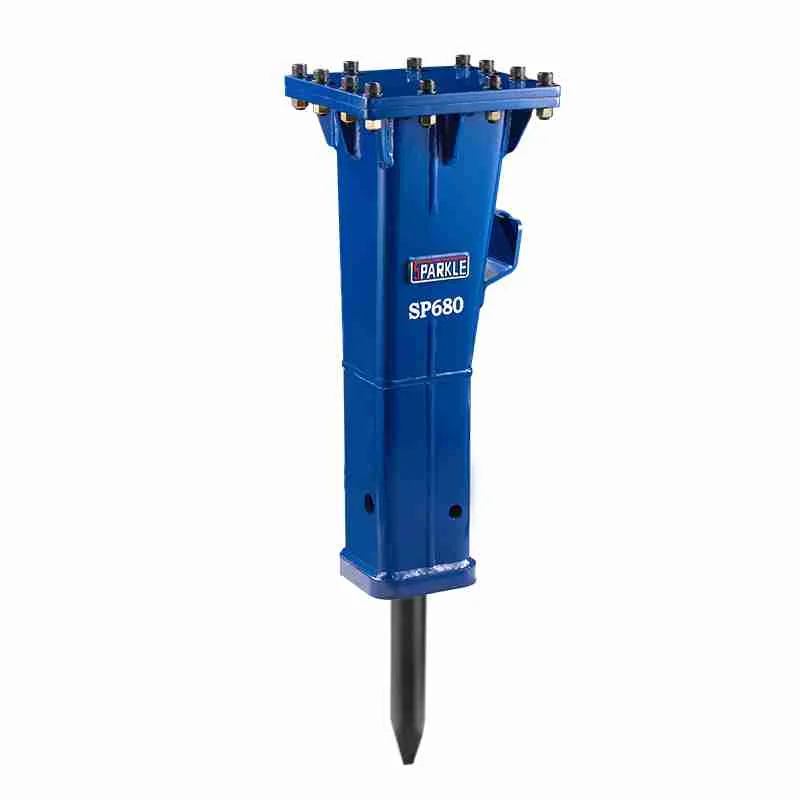
| Sparkle SP680 | 4–7 t | 361 kg | 68 mm | 40–70 L/min | 108–137 bar |
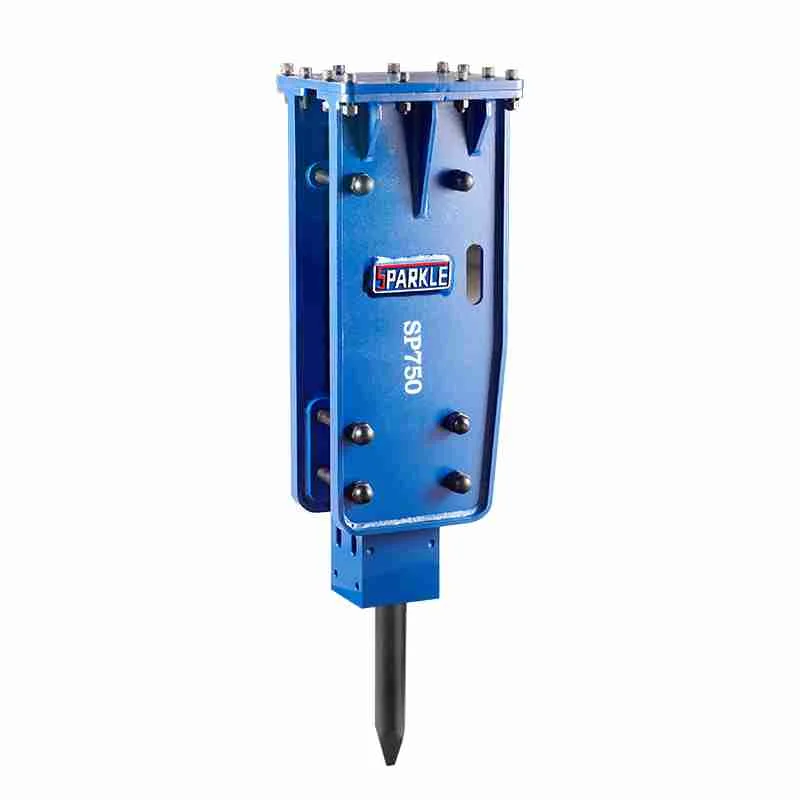
| SP750 | 6–9 t | 409 kg | 75 mm | 50–90 L/min | 118–147 bar |
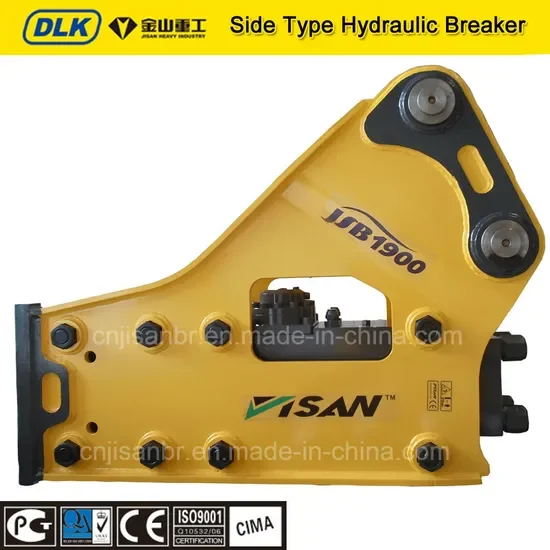
| SB81 | 19–26 t | 1898 kg | 140 mm | 130–170 L/min | 160–180 bar |
Compare oil flow and pressure together
The JSB1900S side type uses 130–170 L/min at 160–180 bar, with 400–600 blows per minute and a 140 mm working tool. Flow and pressure are separate selection fields. Include the excavator’s auxiliary-circuit information and return connection in the breaker package.
| Body | Mass | Oil flow | Impact frequency |
|---|---|---|---|
| Side / top | 1898 kg | 130–170 L/min | 400–600 bpm |
| Box-silenced | 2050 kg | 120–180 L/min | 350–500 bpm |
Choose the tool for the breaking task
A moil point applies the blow at a point; a chisel provides an edge. Concrete demolition, trench rock and quarry work also have different handling sequences. Breaking may be followed by a bucket, grapple or on-site crusher.
What happens to the broken material?
Choose the following operation beside the breaker purchase. A bucket or grab removes loose material; a pulverizer breaks demolition concrete and separates reinforcement; a crusher bucket reduces material through its jaw-processing cycle. The next attachment has its own mass, mount and hydraulic requirement.
| Material task | Attachment purchase | Details for the quotation |
|---|---|---|
| Lift broken pieces or timber with the bucket | Hydraulic thumb | Bucket / thumb mounting and gripping movement |
| Grip and load demolition material | Grapple | Opening, load, mounting and gripping / rotation controls |
| Reduce concrete and separate reinforcement | Concrete pulverizer | Jaw opening, crushing points, cutting blades and oil flow |
| Produce smaller aggregate | Crusher bucket | Feed dimensions, target output, hydraulics and jaw wear parts |
Compare complete packages, then the wear order
List the hammer body, machine bracket, hose pair, working tools and charging equipment. Add tool bushings, retaining pins and seal kits by the selected body version. A hammer-only price and a working package are different purchase lines.
Working steel has a shape and a connection
A moil point concentrates the initial contact. A chisel creates a working edge for breaking along a line. A blunt tool uses a broader face. Replacement steel also has a body-specific shank length, retaining groove and tool diameter. A 75 mm diameter alone does not describe every SP750-compatible tool.
| Purchase | Identity to retain |
|---|---|
| Working tool | Body, diameter, shank drawing and tip shape |
| Retaining pin | Body and retaining layout |
| Tool bush | Body and wear position |
| Seal kit | Hammer body version |
| Hose pair | Bore, finished length and both end connections |
Which excavator size is needed for a breaker on rail, road or trench work
Which excavator size is needed for a rail breaker, a road breaker or a trench hammer is answered the same way: the breaker’s working weight, tool diameter and oil-flow window set the carrier class, not the name of the job. The four configurations in this guide already pair each body with a carrier range.
| Carrier class | Listed breaker | Tool | Flow window |
|---|---|---|---|
| 2.5–4.5 t | Sparkle SP530, 155 kg | 53 mm | 25–50 L/min |
| 4–7 t | Sparkle SP680, 361 kg | 68 mm | 40–70 L/min |
| 6–9 t | SP750, 409 kg | 75 mm | 50–90 L/min |
| 19–26 t | SB81 / JSB1900S, 1898 kg | 140 mm | 130–170 L/min |
Work beside a railway or from a road-rail machine adds limits that the breaker data does not cover: reach and stability with the boom slewed, the working envelope allowed near the track, and any rules the rail operator sets for plant and attachments. Those rules come first. Within them, pick the breaker whose carrier range includes the machine’s operating weight and whose flow window includes the auxiliary circuit’s delivery.
Hydraulic breaker selection guide in seven checks
- Read the carrier’s operating weight with the hitch fitted, from the machine data or plate.
- Find the auxiliary circuit’s flow at working engine speed and the relief setting, from the machine manual or a flow test.
- Choose bodies whose carrier range includes that weight, then keep only those whose flow window includes the measured flow.
- Check the breaker’s operating pressure range against the relief setting; the machine manufacturer or breaker maker states the required margin.
- Confirm the return path: a low-restriction line to tank suits most breakers better than returning through the control valve.
- Choose the body type (side, top or box-silenced) for noise, visibility and the material.
- List the mounting bracket, hose pair, first set of tools and the charging kit on the same order.
If two bodies pass every check, the lighter one usually suits frequent repositioning and confined work, while the heavier one suits continuous breaking of hard, thick material.
Worked example: matching a 5-tonne excavator
Take a 5-tonne machine whose manual shows an auxiliary flow of about 55 L/min at working revs. The machine weight sits inside the SP680 carrier range of 4–7 t but below the SP750 range of 6–9 t. The 55 L/min flow fits inside the SP680 window of 40–70 L/min.
| Check | SP680 | SP750 |
|---|---|---|
| Carrier range includes 5 t | Yes, 4–7 t | No, 6–9 t |
| Flow window includes 55 L/min | Yes, 40–70 L/min | Yes, 50–90 L/min |
| Body weight on the arm | 361 kg | 409 kg |
| Result | Suitable candidate | Carrier too light for the listed range |
The next step is pressure. The SP680 breaker page lists 108–137 bar operating pressure, so the auxiliary relief must be set by the machine’s instructions to suit that range. The hoses, bracket and tools then complete the package.
Signs that a breaker and carrier are badly matched
| Symptom | Likely cause | What to check |
|---|---|---|
| Slow, weak blows | Flow below the breaker’s window | Auxiliary flow at working engine speed |
| Breaker runs fast and hot | Flow above the window | Flow restrictor or pump setting |
| Hydraulic oil overheats | High return restriction or excess flow | Return line route, cooler, oil level |
| Machine lifts or rocks | Breaker too heavy for the carrier | Carrier range on the breaker data |
| Rapid tool and bush wear | Blank firing or poor down-force | Operator technique and carrier size |
| Hoses jump and fittings loosen | Pressure spikes or incorrect accumulator charge | Charging pressure per the breaker manual |
Replacement hoses need the right bore, ends and pressure rating; the hydraulic hose guide covers how to specify them.
Operating and safety practice that protects the breaker
- Keep the tool square to the material and apply steady down-force before starting the blow.
- Stop within a short burst if the material does not break, and reposition rather than hammering in one spot.
- Do not use the breaker to lever, rake or lift material.
- Grease the tool at the interval the breaker manual gives, with the tool pressed into the body.
- Keep people well outside the flying-debris zone and use the machine’s guarding where fitted.
- Relieve hydraulic pressure and follow the breaker maker’s procedure before changing a tool or disconnecting hoses; nitrogen chambers stay charged after shutdown.
Breaker selection questions
Can I fit a heavier breaker than the listed carrier range?
It is not advisable. A breaker heavier than the range loads the arm, pins and bushes, and reduces stability, especially with the boom extended or slewed. The machine and breaker manufacturers’ ranges reflect weight and hydraulic balance together. Choose the body whose carrier range includes your machine’s operating weight.
What happens if my auxiliary flow is higher than the breaker needs?
The breaker may run too fast, heat the oil and wear quickly. Many machines can have the auxiliary flow adjusted or limited; follow the machine manual. If the flow cannot be reduced into the window, choose a body whose window includes it, provided the carrier range also fits.
Is a box-silenced breaker heavier than a side type?
Usually, because the box adds steel and damping material. On the SB81 the box-silenced body is listed at 2050 kg against 1898 kg for the side and top types, with a wider oil-flow window. Recheck the carrier range and lift stability when choosing the heavier body.
Does a breaker need a separate return line?
Many breakers work best with a low-restriction return straight to the tank or through a return filter, because back pressure reduces impact energy and raises heat. Whether a direct return is required depends on the breaker maker’s instructions and the machine’s auxiliary circuit. Check both before installation.
Which tool shape should I order first?
A moil point suits general demolition and trench rock because it concentrates the blow. A chisel suits breaking along a line or in layered rock. A blunt tool suits secondary breaking of boulders. Many buyers order the moil with the breaker and add a chisel once the material is known.