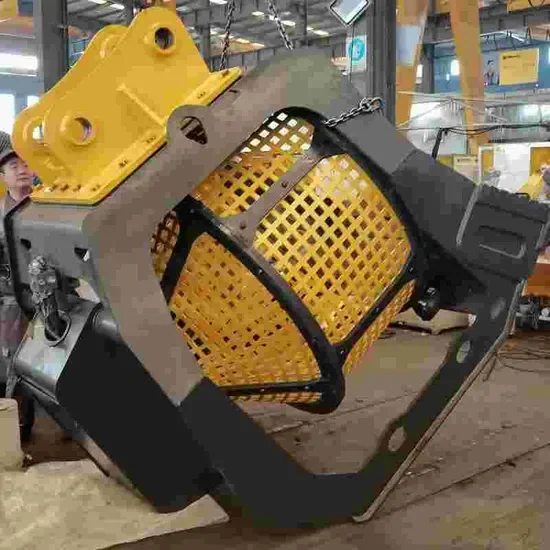
Break, reduce, separate and reuse
Demolition and roadstone work often need more than one attachment action. A breaker prepares oversize pieces. A jaw bucket reduces material. A screen separates fractions. A bucket or loader moves the processed aggregate to its reuse point.
Odisha: stone for a 15 km rural road
In Phulbani, Odisha, contractor Suresh Chandra Sahu used nearby stone to supply a 15 km PMGSY road project. His excavator’s breaker reduced boulders below 350 mm, then an MB BF90.3 crusher bucket processed them to 40 mm for granular sub-base. The on-site material supplied the project’s GSB requirement and reduced the need to transport crushed stone into the remote site.
| Stage | Equipment | Material target |
|---|---|---|
| Prepare boulders | Rock breaker | Below 350 mm |
| Produce roadstone | MB BF90.3 crusher bucket | 40 mm |
| Reuse material | Road-layer operation | Granular sub-base |
Define the product before choosing the bucket
Name the final use and aggregate size first. Then list source material, largest feed pieces, reinforcement and available stockpile space. The SCB 15T and HWPD40 serve different carrier sizes; PAB screening models add separation when the project needs sized fractions.
Match the demolition stage to the working tool
Concrete reduction, steel cutting, gripping and aggregate sizing produce different purchase lists. State the material form and the action first, then the selected tool and its mounting / hydraulic package. The crusher and screen remain the aggregate-processing stages after material has been prepared.
| Stage | Working-tool purchase | Order details |
|---|---|---|
| Secondary concrete reduction / reinforcement separation | Concrete pulverizer | Jaw opening, crushing and cutting positions, flow and wear teeth |
| Cut selected structural material | Demolition shear / jaw set | Material section, selected jaw, blade position and controls |
| Lift and sort loose pieces | Thumb or grapple | Mount, opening, gripping movement and supplied load / mass |
| Reduce prepared material to aggregate | Crusher bucket | Largest feed piece, target output, jaw plates and connections |
| Separate aggregate or soil fractions | Screening bucket | Screen mechanism / opening and spare screen sets |
Purchase the operating package
List the attachment body, mounting bracket, hydraulic connections and wear parts. For a crusher, include jaw plates; for a screen, include opening sizes and spare panels. Keep the handling sequence in the project inquiry.
On-site concrete recycling from structure to stockpile
On-site concrete recycling turns demolition arisings into a material the same project can use: fill, a working platform, haul-road surfacing or granular sub-base. The excavator carries out most of the stages, changing tools as the material moves along the route. Planning the whole route first shows which attachments you need and in what order.
- Survey and strip. Remove fittings, timber, plastics and other non-inert material before structural demolition. Hazardous materials must be identified and removed by qualified specialists under local regulations first.
- Pull down and segregate. Bring the structure down and keep concrete, masonry, steel and soil in separate piles.
- Primary reduction. Break or pulverize slabs, walls and footings into pieces the crusher can accept, freeing as much reinforcement as possible.
- Remove steel. Cut and pull out projecting rebar and collect it for scrap.
- Crush. Reduce the prepared concrete to the target top size with a crusher bucket.
- Screen. Separate the crushed material into the fractions the reuse requires and return oversize for another pass.
- Stockpile and place. Keep each fraction in its own pile until it is placed, and follow the project’s testing requirements before use.
Not every job uses every stage. A clean mass-concrete footing may go straight from breaker to crusher; a heavily reinforced slab needs a pulverizer stage first.
Feed preparation: matching piece size to the crusher mouth
A jaw crusher bucket can only accept pieces that fit between its jaws. Oversize pieces sit on top, bridge the opening or have to be repositioned, and each attempt costs cycle time. The published maximum feed size is therefore the most useful figure when planning primary reduction.
| Model | Carrier class | Maximum feed | Discharge adjustment | Weight |
|---|---|---|---|---|
| HWPD10 | 10 t | 450 × 400 mm | 10–100 mm | 1,500 kg |
| HWPD20 | 20 t | 650 × 520 mm | 10–100 mm | 2,300 kg |
| HWPD30 | 30 t | 800 × 520 mm | 12–120 mm | 2,800 kg |
| HWPD40 | 40 t | 900 × 520 mm | 12–120 mm | 3,500 kg |
As a working rule, break material so that its largest dimension sits comfortably inside the smaller of the two feed dimensions, not at the limit. In the Odisha example on this page, boulders were broken below 350 mm before crushing to 40 mm. For the HWPD40 crusher bucket, that means pieces well under 520 mm across.
- Trim projecting rebar before loading; long bars wrap around the jaws and stop discharge.
- Shake off soil where possible. Fines fill the crushing chamber and dilute the product.
- Load a part-full bucket of mixed sizes rather than a heap of large slabs, so the jaws can work through the charge.
Breaker or pulverizer for the first reduction
Both tools break concrete into crushable pieces, but they suit different structures and sites. A breaker fractures material by impact and works best on mass concrete and rock. A pulverizer closes a jaw on the concrete, crushes it and cuts the reinforcement in one action, which suits slabs, walls and beams with steel in them.
| Factor | Hydraulic breaker | Concrete pulverizer |
|---|---|---|
| Best material | Mass concrete, footings, boulders, rock | Reinforced slabs, walls, beams, removed sections |
| Rebar | Left in place; cut separately | Separated and cut by jaw blades |
| Noise and vibration | High; silent-type bodies reduce it | Lower; no impact cycle |
| Hydraulics | One-way flow with free return | Two-way jaw circuit |
| Site example | SB81: 140 mm tool, 130–170 L/min, 19–26 t class | BP 2050: 875 mm opening, 150–250 L/min at 350 bar, 18–27 t |
| Main wear items | Working tool, tool bushes, retaining pins | Jaw teeth and wear sections, 190 mm blades |
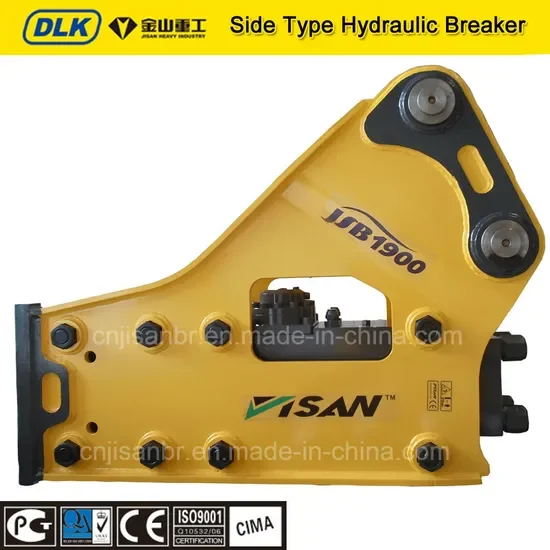
Many recycling spreads use both. The JISAN SB81 breaker takes down footings and oversize boulders; the BP 2050 pulverizer processes reinforced sections into crushable pieces with the steel removed. Where structural steel members must also be cut, a combination cutter such as the CC 2300 S with its 380 mm blades is a separate tool on the same carrier class.
Setting the crusher for roadstone and sub-base
The discharge setting of a jaw crusher bucket controls the largest piece that leaves it, not the whole grading. Crushed product always contains a range of sizes below the setting, from near-setting pieces down to fines. That is why the setting and the screen are chosen together.
- Top size. Set the jaws near the largest size the specification allows. In the Odisha example, the target was 40 mm for granular sub-base.
- Grading. The project specification sets the allowable spread of sizes. If the crushed product falls outside it, screen out the oversize and recrush it, or blend fractions.
- Shape. Cubical pieces compact better than flat, elongated ones. Feeding a mix of sizes and keeping the crushing chamber full usually improves shape.
- Cleanliness. Brick, timber and soil in the feed end up in the product. Segregation at the start is cheaper than rejecting a stockpile later.
Reuse in road layers is normally subject to the project engineer’s approval and testing. Agree the target material and how it will be sampled before crushing begins, so the crusher setting and screen opening answer that requirement from the first load.
Matching carriers to each processing stage
A recycling job can run on one excavator that changes tools, or on two or three machines working in parallel. Either way, each attachment must suit the machine that carries it. The range on the site covers the common combinations.
| Stage | Attachment | Carrier class | Hydraulic note |
|---|---|---|---|
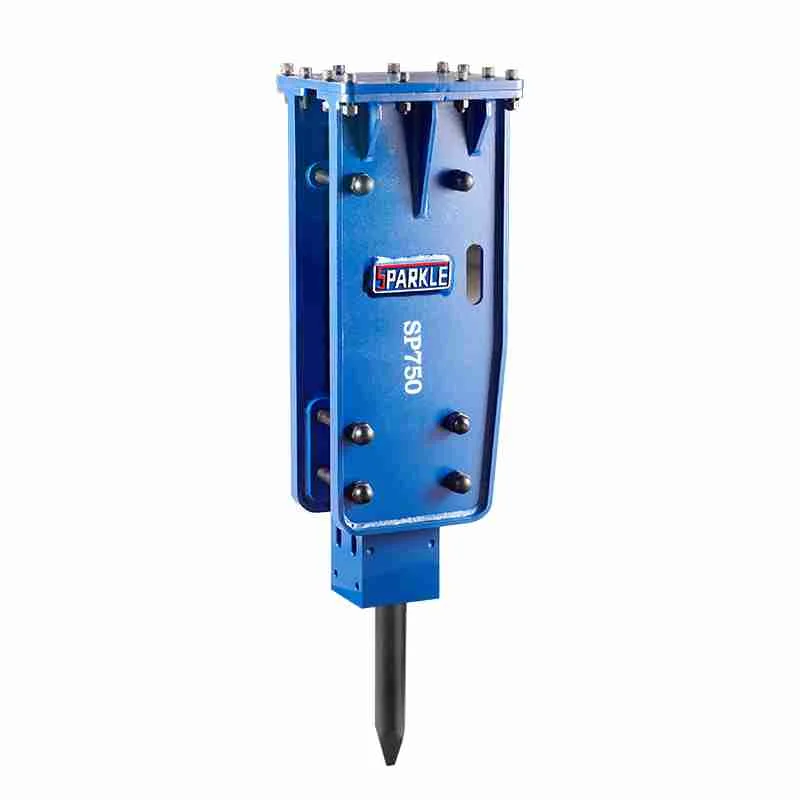
| Light breaking, tight areas | SP750 top-type breaker, 75 mm tool | 6–9 t | 50–90 L/min, one-way |
| Heavy breaking | SB81 side-type breaker | 19–26 t | 130–170 L/min, one-way |
| Reinforced concrete | BP 2050 pulverizer | 18–27 t | 150–250 L/min at 350 bar |
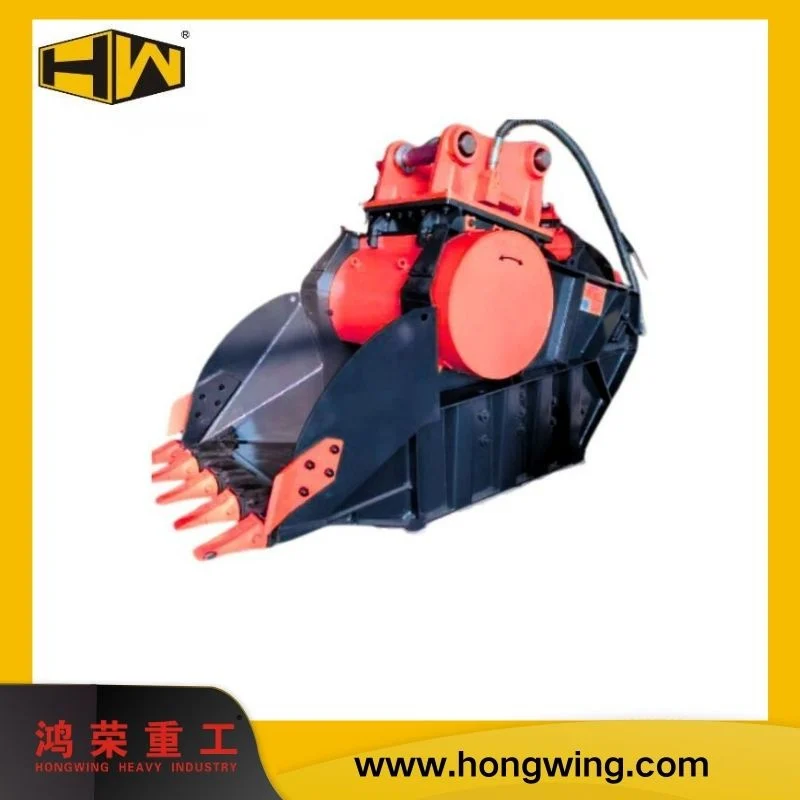
| Crushing, compact | SCB 15T crusher bucket | 15 t | Motor-driven jaw |
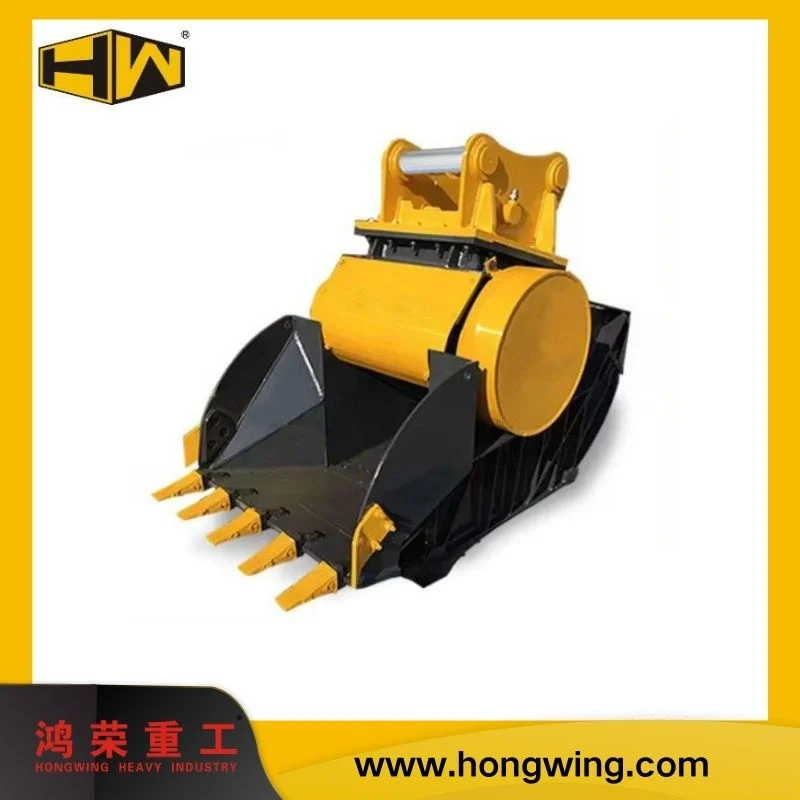
| Crushing, large | HWPD40 crusher bucket | 30–40 t | 25–35 MPa working pressure |
| Screening | PAB12-1 rotary screen | 12–17 t | 80 L/min |
When one machine does everything, the crusher bucket usually decides its size, because crushers are the heaviest and most flow-hungry tools in the sequence. When two machines are available, a common split is a larger excavator on the crusher and a smaller one breaking, sorting and screening. The PAB12-1 screening bucket suits that second machine in the 12–17 tonne class.
Laying out the processing area within reach
A crusher bucket is most productive when it loads, crushes and discharges without the excavator tracking. Arrange the piles so that the machine can swing between them from one position.
- Feed pile on one side, within easy reach at a comfortable digging depth.
- Product pile on the other side, with room to grow and an access route for the loader or trucks.
- Scrap steel collection point away from the swing path, so bars are not picked up again.
- Oversize return heap next to the feed pile if screened oversize will be recrushed.
- Separate heaps for each screened fraction, with clear spacing so they do not mix.
Keep people out of the excavator’s working radius and away from the discharge, where fragments can be thrown. Water spray or a light hose on the feed reduces dust; check the attachment manufacturer’s guidance before wetting the material inside a crusher. When the product heap reaches the edge of reach, move the machine and rebuild the layout rather than stretching the stick, which slows each cycle and loads the machine unnecessarily.
Jaw plates, blades and screens: wear in recycling work
Recycled concrete is abrasive, and the processing tools wear faster on it than most buyers expect. Watching for early wear signs avoids a sudden drop in product quality.
| Component | Typical wear sign | Order with the tool identity |
|---|---|---|
| Crusher jaw plates | Top size creeps up at the same setting; slower discharge | Fixed and moving plate profiles, bolts |
| Crusher drive | Noise, heat or loss of speed under load | Motor, bearing and shaft service items |
| Pulverizer teeth | Rounded teeth, concrete slipping in the jaw | Tooth or wear-section set by position |
| Pulverizer blades | Rebar bent rather than cut | Blade profile and fasteners |
| Breaker tool and bushes | Tool wobble, mushroomed tip, uneven impact | Tool shape and shank, upper and lower bushes |
| Screen panels or baskets | Splits, enlarged openings, oversize in the fines | Bucket model, opening size, panel set |
Some jaw plates can be turned end for end to use the less worn section; the crusher manufacturer’s manual states whether that applies to a given model. Keep a spare jaw set on site for any job that will run more than a few weeks.
Material that should stay out of the crusher
A crusher bucket is built for inert mineral material. Some arisings shorten its life, spoil the product or create a safety problem.
- Structural steel, long rebar, cables and mesh. Cut these out with a shear or pulverizer blades first.
- Timber, plastics, membranes and insulation. They pass through, contaminate the product and can wrap the jaws.
- Large amounts of soil or clay. Screen them off first or keep them for separate reuse; they pack the chamber.
- Pieces beyond the feed specification. Break them again rather than forcing them.
- Any suspect or hazardous material. Stop and have it assessed by a qualified person before any processing.
Where the reuse is a screened fill or a landscaping product rather than a crushed aggregate, the topsoil screening workflow explains how the same screening bucket is set up for soil instead of crushed concrete.
Concrete recycling and roadstone questions
Can a crusher bucket process reinforced concrete?
It can handle concrete with small amounts of loose rebar, but long or heavy reinforcement should be removed first. Bars that project from pieces can wrap the jaws and block discharge. A pulverizer with cutting blades, or a shear, separates the steel before the concrete reaches the crusher, which also produces a cleaner aggregate.
What size should concrete be broken to before crushing?
Below the crusher bucket’s maximum feed size, with some margin. Check the published feed specification, for example 900 × 520 mm on the HWPD40 or 450 × 400 mm on the HWPD10, and aim for pieces comfortably inside the smaller dimension. Smaller, well-prepared feed keeps the jaws working instead of repositioning oversize lumps.
Can recycled concrete be used as road sub-base?
Often yes, if it meets the project specification for grading, cleanliness and strength. The Odisha example on this page produced 40 mm material for granular sub-base. The engineer normally sets the requirement and the testing, so agree those before crushing and set the crusher and screen to meet them.
Do I need a screening bucket as well as a crusher bucket?
When the specification sets a grading rather than only a top size, usually yes. The crusher limits the largest piece; the screen removes oversize for recrushing and can split the product into fractions. For a general fill where only the top size matters, the crusher alone may be enough.
What excavator size do I need for a crusher bucket?
Follow the crusher’s published carrier class: the SCB is for 15 tonne excavators and the HWPD series runs from the 10 tonne to the 40 tonne class. Then check flow and pressure at the auxiliary outlet against the crusher specification, and the machine’s stability with a loaded bucket at the working reach.
When should I choose a pulverizer instead of a breaker?
Choose a pulverizer for reinforced sections, for work close to occupied buildings where noise and vibration matter, and where steel must be separated as the concrete is reduced. Choose a breaker for mass concrete, footings, boulders and rock. Many recycling jobs use both on different parts of the structure.
How often do crusher jaw plates need replacing?
It depends on the material, the feed preparation and the hours worked, so there is no fixed interval. Watch the product: when the top size grows at the same setting or the bucket discharges more slowly, inspect the plates. Keep the plate profiles and bolt details with the crusher model so a replacement set can be ordered quickly.
Can brick and masonry go through the same crusher bucket?
Yes, inert masonry can be crushed, and it is softer than most concrete. The product is a mixed aggregate, however, and some specifications limit the brick content of sub-base or fill. Keep brick and concrete in separate piles at demolition if the reuse needs a clean concrete aggregate, and crush them as separate batches.
What should a recycling inquiry include?
Describe the structure or arisings: concrete type, reinforcement, the largest pieces and roughly how much material there is. State the reuse and target size, the excavators available with their weights and auxiliary flow, and any noise or access limits. Add the spare jaw plates, screens and breaker tools you want supplied with the attachments.