
Excavator Crusher Buckets for Rock & Concrete
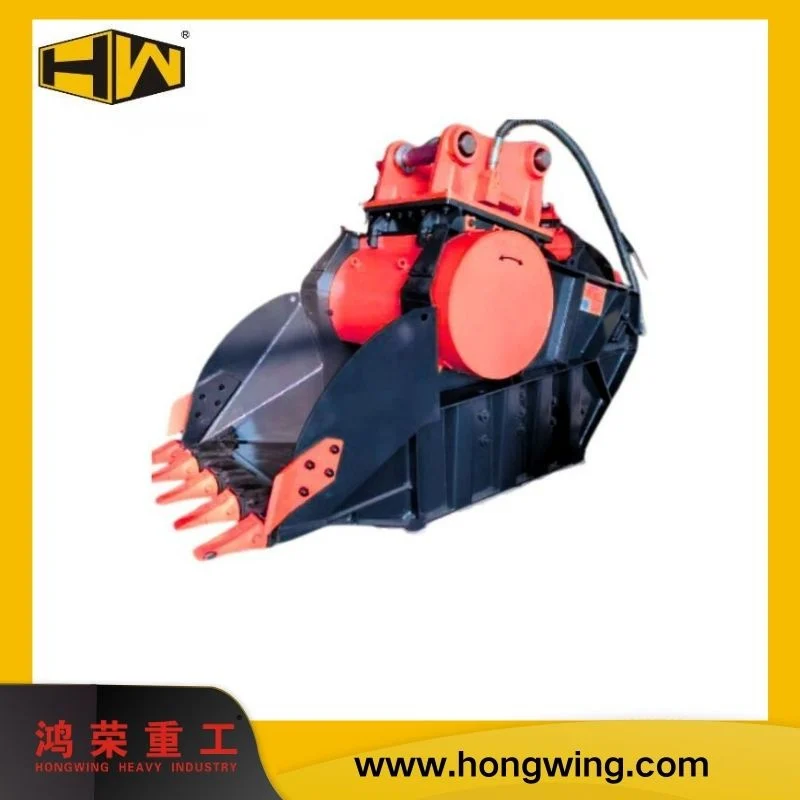
SCB Crusher Bucket for 15 Tonne Excavators
1394 kg hydraulic jaw-crushing attachment for on-site rock and concrete processing.
15 t carrier · 1394 kg
Excavator Crusher Buckets for Rock & Concrete
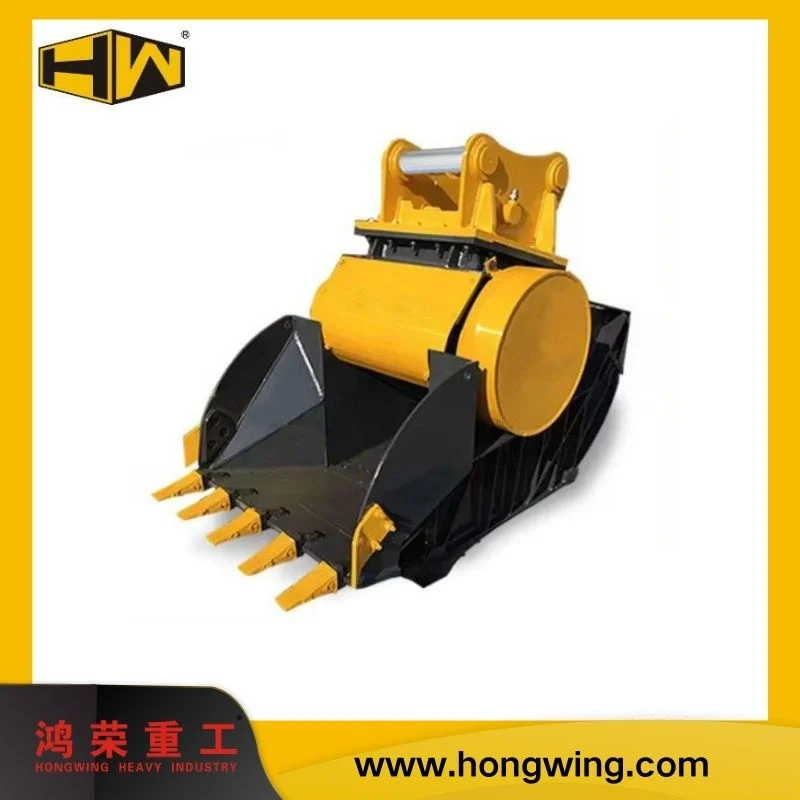
HWPD40 is the large Hongwing hydraulic jaw crusher bucket for 30–40 tonne excavators. It weighs 3, 500 kg, with a 900 × 520 mm maximum-feed specification and a 12–120 mm discharge-adjustment range. Use it to size rock or concrete close to the excavation and reuse point.
| Model / part number | HWPD40 |
|---|---|
| Excavator weight | 30–40 t |
| Weight | 3500 kg |
| Maximum feed size | 900 × 520 mm |
| Discharge adjustment | 12–120 mm |
| Working pressure | 25–35 MPa |
| Rotation speed | 230–350 rpm |
| Material selection | Q355B / Q690D / Hardox 500 |
HWPD40 is the 3, 500 kg jaw-crusher model for 30–40 tonne excavators. Its published maximum feed specification is 900 × 520 mm and its discharge adjustment is 12–120 mm. The selected jaw setting defines the opening through which reduced material leaves; the required product grading defines the downstream screening or reuse task.
The table separates the manufacturer’s HWPD series. The SCB 15T belongs to a separate compact configuration. For the HWPD40 project, compare the largest feed size with the excavator and the finished-material requirement before choosing the jaw adjustment.
| Model | Carrier class | Feed specification | Weight | Working pressure | Discharge adjustment |
|---|---|---|---|---|---|
| HWPD10 | 10 t | 450 × 400 mm | 1, 500 kg | 25–28 MPa | 10–100 mm |
| HWPD20 | 20 t | 650 × 520 mm | 2, 300 kg | 25–35 MPa | 10–100 mm |
| HWPD30 | 30 t | 800 × 520 mm | 2, 800 kg | 25–28 MPa | 12–120 mm |
| HWPD40 | 40 t | 900 × 520 mm | 3, 500 kg | 25–35 MPa | 12–120 mm |
Locate the raw-material pile, separated debris, crushed product and receiving area around the excavator’s reach. If the bucket must repeatedly travel between remote stockpiles, the site layout becomes a handling operation as well as a crushing operation. A breaker can prepare large blocks; a screener can sort the reduced fraction.
Q355B, Q690D and Hardox 500 appear in the model’s material specification. The fixed/moving jaw plates and their fasteners form the wear order; the motor, eccentric-shaft drive and bearings form the drive-service group. The excavator bracket, hoses and mounting pins form the installation group. List these groups separately so the initial project and later replacement orders have the same product identity.
The 25–35 MPa entry equals 250–350 bar, or approximately 3,626–5,076 PSI. Pair that pressure entry with the selected drive-motor package, feed pile and 12–120 mm jaw adjustment. The 900 × 520 mm feed specification is about 35.4 × 20.5 inches.
| Group | Purchase definition |
|---|---|
| Feed / discharge | 900 × 520 mm feed; selected 12–120 mm adjustment |
| Drive | Motor/shaft/bearing arrangement, hydraulic ports and hose package |
| Wear | Fixed and moving jaw profiles, bolts and replacement set |
| Mount | 30–40 t carrier bracket and pins |
| Material route | Prepared feed, crushed stockpile and selected screening fraction |
On a large carrier, a crusher bucket stops being a tool for tidying up a small pile and becomes a production machine. The HWPD40 takes feed up to 900 × 520 mm, which is a size a 30–40 tonne excavator can dig and lift without strain. That means oversize rock from bulk excavation, broken slabs from heavy demolition and stone from tunnel or shaft spoil can go into the jaw with less pre-breaking than a smaller crusher would need.
The larger carrier also brings reach. A 30–40 tonne machine can stand on a feed pile, load from one side and drop crushed material onto a product pile on the other, swinging rather than tracking. That layout keeps the cycle short. Where a 15-tonne crusher suits clearing rubble from one building plot, the HWPD40 suits jobs where thousands of tonnes of material are to be reused as fill, haul road or sub-base on the same site.
The trade-off is weight and oil. At 3500 kg empty, the bucket uses a large share of the carrier’s lifting capacity at reach, and the drive needs a high-pressure circuit capable of continuous work. Both have to be confirmed for the specific excavator before ordering.
| Check | HWPD40 figure | What to confirm |
|---|---|---|
| Carrier class | 30–40 t | Operating weight and arm length of the actual machine |
| Empty bucket | 3500 kg | Lift chart at working radius with bucket, bracket and a full load of broken rock |
| Working pressure | 25–35 MPa (250–350 bar) | Auxiliary relief setting and hose pressure rating |
| Drive speed | 230–350 rpm | Flow to the drive motor that holds speed under load; ask for the motor flow figure |
| Return line | Not stated on this page | Low back-pressure return direct to tank; drain line if the motor needs one |
| Feed size | 900 × 520 mm | Largest pieces the digging plan will produce |
The flow figure for the drive motor package is not listed in the HWPD40 table on this page, so request it with the quote and compare it with the excavator’s auxiliary output. A circuit that can only supply part of that flow will turn the eccentric below its 230–350 rpm range, and output falls off quickly. Heavy carriers often have the flow but not the plumbing: a second auxiliary line, a dedicated return and larger hoses may be needed. The hydraulic hose specification guide helps when sizing new lines.
The HWPD40’s discharge adjustment runs from 12 to 120 mm. Choose the setting from the product the site needs, then accept that a jaw crusher will produce a spread of sizes around it. Finer settings cut output and increase jaw wear; coarser settings do the opposite. The values below are typical starting points, to be checked against the project’s material specification.
| End use | Typical setting range | Follow-up step |
|---|---|---|
| Bulk fill and embankment | 80–120 mm | Usually used as crushed; remove steel and soil first |
| Haul road and working platform | 60–80 mm | Compact in layers; screen out fines if drainage matters |
| Sub-base type material | 30–50 mm | Screen to the grading envelope the specification requires |
| Pipe bedding and fine fill | 12–30 mm | Expect lower output and faster wear; screen the result |
Change the setting with the drive stopped, the excavator shut down and the circuit depressurised, following the manufacturer’s instructions. Record the setting and measure the product after the first few loads. Jaw wear gradually opens the gap, so re-check the product size at regular intervals rather than relying on the original setting.
The published feed size is a maximum, not a target. A block that measures 900 × 520 mm will enter the mouth, but it bridges across the jaws and takes many strokes to start breaking. Output is usually best when most pieces are well under the mouth size in both directions, with only the occasional piece near the limit. Pre-sorting at the dig face costs a few seconds per bucket and saves minutes at the crusher.
The HWPD40 material specification lists three steels. Q355B is a common Chinese structural steel grade with a nominal minimum yield strength of 355 MPa, typically used for general body plate. Q690D is a high-strength structural grade with a nominal minimum yield of 690 MPa, used where parts must carry high loads without excessive thickness. Hardox 500 is a wear-resistant plate with a nominal hardness of about 500 HB, used where abrasion is greatest. Which steel is used for which part is a question for the manufacturer’s drawing; ask for it with the quote if wear life on abrasive rock matters. Jaw plates are separate wear parts and should be ordered as the HWPD40 set, whatever the shell material.
| Interval | Item | Check |
|---|---|---|
| Start of shift | Bearings | Grease at every point; listen for new noise once running |
| Start of shift | Jaw plate bolts and wedges | Tightness; replace damaged fixings |
| Start of shift | Hoses and fittings | Leaks, chafing, loose clamps |
| Weekly | Jaw plates | Tooth height, cracks, and whether plates can be reversed |
| Weekly | Discharge setting | Measure the gap and product size |
| Monthly | Shell and bracket | Cracks at welds, wear on the mouth lip and bracket bosses |
Keep the excavator’s oil and filter changes on schedule. A crusher motor turning for hours at high pressure heats the oil and carries any contamination through the whole carrier system.
| Symptom | Likely cause | Action |
|---|---|---|
| Output drops through the day | Oil overheating or jaw wear | Check oil temperature and cooler; inspect plates |
| Jaw stalls on normal feed | Low flow, low relief setting or a blocked chamber | Test the circuit; reverse or clear the chamber as the manual describes |
| Product coarser than set | Worn jaws opening the gap | Reset the gap; reverse or replace plates |
| Material packs in the jaw | Wet clay or fines in the feed | Screen or remove fines before crushing |
| Bearing area runs hot | Missed greasing or bearing wear | Stop, grease and inspect; plan bearing replacement |
The HWPD series table on this page puts the HWPD30 one step below, at 800 × 520 mm feed and 2800 kg for a 30-tonne carrier, with the same 12–120 mm adjustment. The HWPD40 adds 100 mm of feed width and 700 kg of mass for 30–40 tonne machines. If the excavator is at the light end of the 30-tonne class, the lift chart may favour the smaller unit. The SCB-15T crusher bucket serves a different job altogether: 1394 kg for 15-tonne carriers and smaller sites. The crusher bucket category explains the wider selection, and the screening bucket range covers the grading stage that often follows.
With these details the bucket, bracket, hose package and jaw spares can be quoted as one installation rather than separate items that may not match.
It describes the adjustable discharge opening. A finished-material grading describes a size distribution or specified fraction; use screening when the job requires separation through a particular opening.
They have different carrier classes and empty weights. HWPD40 is the 3, 500 kg unit for 30–40 tonne machines; the SCB 15T configuration is 1, 394 kg for a 15 tonne carrier.
The HWPD40 table lists a 230–350 rpm drive-speed range. That is not a hydraulic-breaker blows-per-minute rating; the crusher uses a rotating drive to operate its jaw mechanism.
Identify the HWPD40 fixed and moving plates, their profiles, mounting bolts and plate orientation. A photograph of the installed jaws connects the wear parts to the correct crusher configuration.
The HWPD40 is listed for 30–40 tonne excavators. The machine must lift 3500 kg of bucket plus a load of broken rock at your working radius, and its auxiliary circuit must supply the drive motor’s flow at a working pressure in the 25–35 MPa range, with a low-pressure return. Send the excavator model and circuit details for a fitment check.
It can crush concrete, but long rebar and mesh should be removed first because they wrap around the jaw and block the discharge. Reduce reinforced slabs with a pulverizer or shear, separate the steel, then feed the crusher. Short bar ends usually pass through with the crushed material and can be picked out with a magnet.
There is no single figure, because output depends on the rock or concrete, the feed preparation, the discharge setting, the circuit flow and the operator. Coarse settings with clean, pre-sized feed give the highest rate. Time the first day’s loads and weigh or measure the product pile to plan the rest of the job.
1 MPa equals 10 bar, so 25–35 MPa is 250–350 bar, or about 3,626–5,076 PSI. This is the working pressure range listed for the HWPD40. Set the excavator’s auxiliary relief and choose hoses rated for that pressure, and keep the drive-motor flow figure on the same installation record.
It suits small-scale or occasional crushing at a quarry, such as processing oversize, reject stone or material for internal haul roads, on a 30–40 tonne excavator already working there. For continuous high-tonnage production, a dedicated mobile jaw crusher fed by an excavator is normally more economical. The bucket earns its place where moving a plant is not justified.
Often both. Screening before crushing removes soil and fines that would pack the jaw and waste capacity. Screening after crushing separates the product into the grading the job needs, because a jaw crusher produces a range of sizes around its setting. A rotary screening bucket on a second machine can do either step.
1394 kg hydraulic jaw-crushing attachment for on-site rock and concrete processing.
Send your machine model, required quantity and destination. Add installation items, wear parts and service quantities to the same inquiry.